... A FORUM TO STIMULATE DEBATE ... ... JUST ADD A COMMENT AT ANY ENTRY BELOW... ... FOR THE SUSTAINABLE DEVELOPMENT OF TOWN AND VALLEY ...
Showing posts with label wiltshire. Show all posts

Thursday, 3 May 2018

Devon may soon be the only non-unitised county in the South West

Yesterday, the BBC broke the news that yet another West Country area will be going 'unitary': 

Scrapping Somerset councils 'may save £28m a year'

2 May 2018
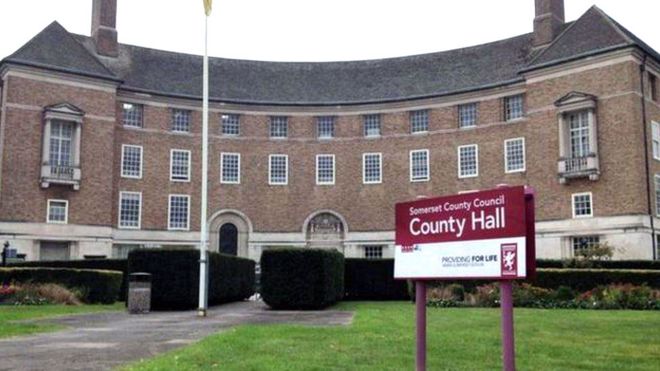


The plan would see the abolition of six local authorities including the county council

Abolishing all six local authorities in Somerset could save £18m to £28m each year, the county council leader says. Conservative David Fothergill has asked for work to begin to look at how a unitary arrangement could work. The plan would see several single-tier authorities - or one - replacing local councils including the county council.

The idea has been met with mixed responses with one councillor saying it would mean getting "turkeys to vote for Christmas".

Mr Fothergill said: "At a time of unprecedented financial pressures on all councils we are all looking at different ways to be more efficient, make savings and protect the front-line services that our residents value so much. I believe that we owe it to our residents to look at this option too. I want start the ball rolling on work to establish the benefits and costs of such a change so that we can all make an informed decision as to whether a unitary model is the right way to go."

News 'a bombshell'

He said savings from introducing a single-authority would include £500,000 per year by moving from five chief executives to one, and about £1m per year by reducing the number of councillors covering the county by about half from the current 300.



Analysis: Ruth Bradley - BBC Somerset politics reporter

While it's relatively unusual for councillors to decide to get rid of their own authorities, it's not unheard of.

In fact Somerset has been looking to the example of its near-neighbours to see just how it could work here - and how much money it could save.

Wiltshire became a unitary authority in 2007 - the same time as Cornwall - merging four districts and a county council into what is now the biggest local authority in the West of England. But that was in a different political era, pre-austerity rather than as a reaction to government cuts.

And next year Dorset is due to scrap its nine councils and set up two new unitaries.

Interestingly it has managed to achieve this with near-consensus from all the councils involved - something which Somerset will be keen to emulate, given the fractured nature of the last attempt at this here in 2007.

Buckinghamshire was also signed off by the government earlier this year to go unitary at the same time as Dorset.

Somerset is hoping to have its model in place by the 2021 local elections.


Other savings would come through reducing the number of HR, customer services and finance teams, and reducing the number of IT and utilities contracts and transport costs.

The Conservative leaders of West Somerset and Taunton Deane said they were prepared to discuss the idea, while the Liberal Democrat leader of South Somerset described the news as "a bombshell" and said "none of us [district council leaders] want to go down this route but we have to put the people of Somerset first".

Independent county councillor, Mike Rigby, said he was pleased with the plan and "had been calling for this for years. It's going to require some turkeys to vote for Christmas so it's not in the bag yet, though I suspect the momentum will become irresistible," he added.

There were protests outside parliament in London in 2007 when the Liberal Democrats made a similar proposal.


Scrapping Somerset councils 'may save £28m a year' - BBC News

With comment from the EDW blog:
Unitisation … today Somerset, tomorrow? Will the (very fat) turkeys vote for Christmas? | East Devon Watch 

DEVON MAY SOON BE THE ONLY NON-UNITISED COUNTY IN THIS PART OF THE SOUTH WEST – BUT FOR HOW LONG?

2 MAY 2018

So, Somerset is moving towards a unitary authority (see below). Inevitable really, isn’t it.

The new HQ for the already combined Taunton Deane and West Somerset authority is ten minutes walk from Somerset County Hall. Taunton Deane and West Somerset are intending to spend £11 million altering their building to accommodate their merger requirements – when Somerset County Hall has a lot of spare capacity.

Meanwhile EDDC proceeds apace with Blackdown House, their new HQ in Honiton, at a minimum cost of £10m – and an ultimate cost of probably MUCH more than that – without at any factoring into their calculations of the likelihood of a unitary Devon proposal similarly coming forward with the same arguments for big savings.

EDDC’s consultants apparently estimated the open market value of Blackdown House on completion of the building to be £3 million. Given the current economic situation, even that might be optimistic.

So a potential BIG loss looming – with the local taxpayer picking up the bills? And that’s if HQ builder Interserve s

If Somerset goes unitary, that will be Somerset, Cornwall and Wiltshire all unitary and Dorset double unitary. Devon will be an anachronistic exception.

Has Devon County Council leader John Hart anything to tell us?

And Owl bets soon-to-be-ex-Leader Paul Diviani may be very pleased with the timing of his exit!

Friday, 12 August 2016

Brexit: and rural development grants on hold

Rural projects are in doubt following the referendum:
Futures Forum: Brexit: and the future of rural services in the South-West
Futures Forum: Brexit: and the rural economy

This is the latest - from Wiltshire:

Rural grants 'in limbo' after Brexit vote

Written by Ruralcity Media Friday, 05 August 2016 11:16

Rural grant applicants face uncertainty following the UK referendum vote to leave the European Union. Rural development grants and Countryside Stewardship applications appear to be on hold following the referendum on 23 June.

Michael Asbury, chairman of a charity that runs Pewsey Heritage Centre in Wiltshire, applied for a grant to convert a local building into a research and education facility. The grant of £7,500 from the LEADER programme was initiated in March, said Mr Asbury. Hoops were successfully jumped through, reams of paper forms filled in, and the grant application was submitted to the reviewing board at a meeting on June 24, he said. Weeks later, Mr Asbury said he was still waiting to be told whether the application was successful.

The ongoing delay prompted Mr Asbury to write to the Daily Telegraph saying he understood that "decisions were made and grant funding may or may not have been awarded". In the letter, Mr Asbury said he was told an embargo had been put on the results of the application by Defra's Rural Payments Agency.

"I was under the impression that until Article 50 of the Lisbon Treaty was invoked, relations between Britain and the rest of the EU should continue as they are," he said. "They obviously are not. Based on the performance of the Rural Payments Agency, it is not European bureaucracy that we should be afraid of in any Brexit negotiations, it is our own dear civil service. Frightened of its own shadow, it seems completely unable to make constructive and beneficial decisions."

The National Farmers Union has also complained that its members are being left in the dark over whether Countryside Stewardship applications will be honoured. The stewardship payments reward farmers who undertake environmental measures on their land.

The Daily Telegraph has now published an article headlined "Farmers and rural business in limbo amid Brexit cash freeze".

A Defra spokeswoman told the newspaper: "The government recognises the need for certainty when it comes to EU-managed projects and will make an announcement in due course." She added: "We will do what is needed to support our farmers as we leave the EU and make a success of Brexit."


Rural grants 'in limbo' after Brexit vote
.
.
.

Tuesday, 22 September 2015

BBC's Inside Out looks at the lack of affordable housing

There are not enough 'affordable homes' being built:
Affordable housing project values fall | News | Inside Housing

There is a lot of pressure coming from the construction industry:
'Government should support affordable housing' | News | Inside Housing

But not that much perhaps:
Housebuilders' profit fears over affordable homes | News | Construction News

Here is a very clear viewpoint from the OpenDemocracy blog:
Affordable housing and the future of London as a creative city | openDemocracy

With the LibDems pushing their latest ideas:
Lib Dems urge Tory MPs to follow their lead on housing, as Tim Farron unveils new policies | Western Morning News

Meanwhile, here is an example of what one South-West council is doing:
Wiltshire Council to build over 200 affordable homes thanks to approval of £42.5million scheme (From Wilts and Gloucestershire Standard)

On Monday, the BBC documentary strand 'Inside Out' looked at the 'housing crisis' - with each and every region of the UK saying how people are 'being locked out of the affordable homes market':
BBC One - Inside Out South West, 21/09/2015
BBC One - Inside Out London, 21/09/2015

This companion piece from the BBC looks at some of the issues:

'Million' new homes aim declared by minister Brandon Lewis

  • 21 September 2015
  •  
  • From the sectionEngland
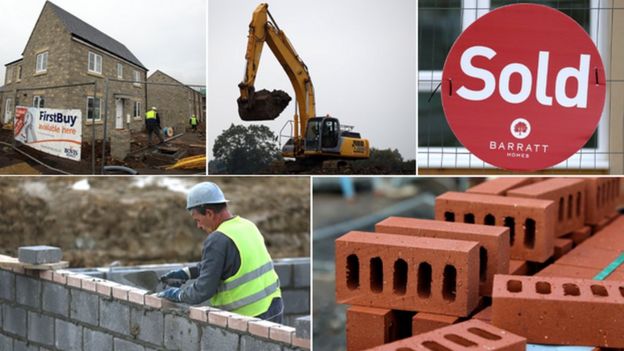
Images of housebuilding (clockwise from top left): house under construction; digger; "sold" sign; bricks; bricklayerImage copyrightGetty Images; PA
Image captionOnly 47% of the new houses estimated to be needed in England over the past four years have been built
The government says it wants a million homes built in England by 2020, as the scale of the housing crisis is revealed in a BBC Inside Out investigation.
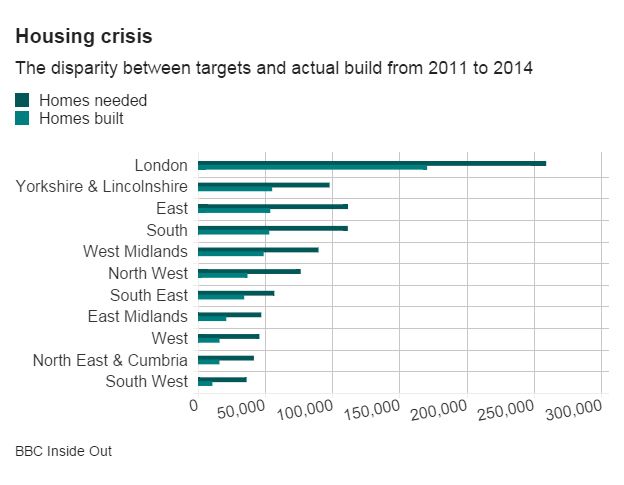
The National Housing Federation estimated 974,000 homes were needed between 2011 and 2014.
But figures from 326 councils showed only 457,490 were built.
Housing minister Brandon Lewis said the government aimed to see one million new homes over this Parliament, but Labour said the Tories had failed on housing.
Chart showing difference between houses being built and needed
The federation said about 245,000 new homes were needed each year in England.
Gill Payne, director of policy and external affairs, said: "In some areas, there is a drastic shortage causing prices to soar, putting homes out of the reach of many people.
"Families and young people across the country are crying out for genuinely affordable homes so they can put roots down and achieve their dreams of owning a home.
"Skyrocketing rents and ballooning house prices are eating up more and more of people's wages and forcing people out of their local communities or into smaller, lower quality housing.
"We haven't built enough homes in this country for decades, and if the gap between the number of households forming and the number of new homes being built continues to grow, we are in danger of not being able to house our children."

Sign reads Image copyrightALAMY
Image captionA number of factors have been blamed for the failure to build more homes
Numerous factors have been blamed, ranging from planning procedures being too slow to developers sitting on large tracts of empty land instead of building on it.
In 2012, the government introduced changes to the National Planning Policy Framework, aimed at making the planning process simpler and quicker.
Some 240,000 planning applications have been given detailed permission in 2014 compared with 158,000 in 2011.

Worst performers

  • Kingston upon Thames
  • Harrow
  • Maldon
  • Harrogate
  • Camden
But critics say the change has also made it easier for "inappropriate and unwanted" developments to progress.
They also say the rise may be simply a response to low numbers of applications caused by the 2008 financial crash.
A shortage of land has also been cited by homelessness charity Shelter, while criticism has been levelled at developers who build slowly rather than progressing quickly.

Top performers

  • Liverpool
  • Lincoln
  • North East Lincolnshire
  • Blackburn with Darwen
  • North West Leicestershire
By keeping the number of new homes available at any one time low, the price of those houses can be kept high, said Matthew Pointon, property economist at Capital Economics.
"By building them more slowly it means they can maximise the value of their assets," he told the BBC earlier this year.
A shortage of skilled labour, a big drop in the number of councils building new homes and regulations restricting housing associations have also been blamed.

Artist's impression of a skyscraper vertical villageImage copyrightUniversity of Nottingham
Image captionAcademics from the University of Nottingham believe homes of the future will be a mixture of vertical village skyscrapers and flat pack houses which will be highly energy efficient

What might houses of the future look like?

What sort of homes will we need to build to meet housing shortages over the next 40 years?
Dr Philip Oldfield and the Sustainable Tall Buildings Design Lab at the University of Nottingham have been attempting to predict what new houses will look like in 2050.
From vertical villages and flat pack housing to eco homes, they have devised alternative schemes to solve future housing problems.
"We need the ability to provide housing en masse, there is a huge housing crisis at the moment," said Dr Mark Gillott from the university.

Mr Lewis said he wanted to make it "easier" for people to develop "especially on brownfield sites".
He said further changes to planning rules would create a "principle of development" on brownfield sites to help councils determine applications quicker.
The Campaign to Protect Rural England estimates there are enough brownfield areas to accommodate 1.8 million homes.
Mr Lewis said: "Ultimately, it is up to local authorities to look at what their housing needs are and where they feel it is appropriate to build.
"I trust local people to get that right."
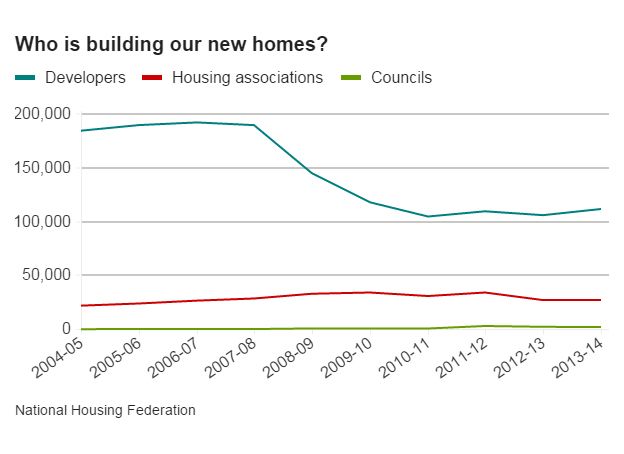
Chart showing who is building new houses
He said schemes such as Help to Buy, which sees the government assist buyers, should give developers the confidence that their builds will be sold.
Ms Payne said the federation wanted housing associations to build more.
She said: "Last year housing associations built 50,000 homes, 40% of all new homes across the country, and they have ambitions to work in partnership with government to vastly increase this."
Labour's shadow housing minister John Healey said: "Ministers making big promises about homes in the future won't wash any more. People have seen five years of failure with Conservatives in charge of housing."
Shelter's chief executive Campbell Robb added: "We are past the time for another grand statement of ambition. To give ordinary families back the hope of a stable home, we need to see investment and a comprehensive plan that can actually get these homes built."

Inside Out is broadcast on BBC One on Monday, 21 September at 19:30 BST and nationwide for 30 days thereafter on the iPlayer

'Million' new homes aim declared by minister Brandon Lewis - BBC News

And this is the commentary from the East Devon Watch blog earlier today:
Fantasy v. reality and localism v. centralism in housing supply | East Devon Watch
.
.
.