The Government has asked for an independent review of England's National Parks and Areas of Outstanding Natural Beauty (AONBs). You can find more about the work of the review and our Terms of Reference. Already the review team, led by Julian Glover and a panel with a range of experiences and interests, has carried out visits and meetings in many parts of England.
We will do more in the months ahead - but we want everyone to have a chance to contribute, whether you live in a National Park or AONB, run a business in them, enjoy visiting, care about landscapes and biodiversity, or represent an organisation with views that might shape and improve our findings.
The questions (available as a list in the related documents section below) are a guide: please do not feel you must answer them all – or have to write at great length. We have not set a word length on answers, as we know some people and organisations will want to reply in detail on specific points. However, we ask that where possible you keep each individual answer to no more than 500 words. It is not necessary to reply to every question so please ignore those which you do not think relevant to you. You may find it easier to write your answers elsewhere before pasting them into the text boxes which follow.
Bridget Betts, coordinator of the Dorset Coastal Forum recently spoke at the House of Lords Select Committee on Regenerating Seaside Towns and Communities which launched an inquiry into the challenges facing seaside towns and cities.
By Sam Sterrett with Daniel Clark, local democracy reporter
Case not yet made for National Park across East Devon and Dorset
A new national park could be created along the Jurassic coast - but not for a while, after Devon County Council decided not to press ahead with a case until someone comes up with clear benefits - and money.
Councillor Martin Shaw had called for Devon County Council to support the establishment of a Dorset and East Devon National Park and to submit a case for this to the DEFRA (Department for Environment, Food and Rural Affairs) review of national parks.
If the area became a national park, it would give the highest status of protection as far as landscape and scenic beauty are concerned and gives a national part authority very strong direct control over residential and industrial development, and the design of buildings and other structures; as well as strategic matters such as mineral extraction.
Councillor Rob Hannaford said: “If it does happen, it should have additional funding so it doesn’t dilute the work that the existing national parks in Exmoor and Dartmoor are doing. If it happens, it should come with new money.”
Right now, Britain has 15 national parks, but Defra is reviewing them. The one spanning East Devon and Dorset will surely have the most enthralling name of all, encompassing the Jurassic Coast. How long before the government authorises the real Jurassic Park? Cautious councillors defer Jurassic Park - Radio Exe . . .
West Dorset for Europe, campaigning for a People’s Vote on the final Brexit deal, are holding a meeting in Dorchester tonight.
The effect of Brexit on the NHS is high on the agenda.
Among the speakers at the meeting at the Dorford Centre will be Exeter MP Ben Bradshaw, a former health minister.
The meeting was arranged after warnings of a potential for shortages of medicines as well as the risk of an increased spread of diseases made national headlines. Organisers of the meeting, which they say has cross party support, say there are also worries locally about the impact on the NHS workforce as fewer EU nationals apply to work in the UK.
Other speakers include Edward Morello, the Liberal Democrat prospective parliamentary candidate for West Dorset and Helen Hancox from the Royal College of Nursing. The group has invited Conservative councillors who have yet to confirm their participation.
Kay Wilcox, Chair of the local West Dorset for Europe group said: "We regularly campaign in towns across the county asking people how they think the Brexit negotiations are going. There is a widespread feeling that we are not being well served by our politicians and people feel they should be consulted before such huge final decisions are made about the future of our country."
The Bournemouth Echo covered Office for National Statistics figures showing that rural and coastal areas have the highest proportion of older residents.
The ten local authorities with the highest percentage of the population over 65 were on the coast, with five being in the South West region. Within 20 years it is estimated that 40 per cent of the population of west England will be over 65.
The ONS warned that there would be far smaller growth in numbers of young people moving to the countryside, and said that the demographic changes risked elderly people living in these areas 'isolated and struggling to access services'.
A new wave of national parks could be created after the environment secretary, Michael Gove, announced plans for a review of protected areas. The review, which will also consider areas of outstanding natural beauty (AONBs), will look at how they can bolster wildlife, improve visitor access and support people who live and work there. Gove said the UK’s growing population and a decline in certain habitats meant it was time to re-examine the system in England.
Officials stressed that existing protections would not be weakened and indicated the review would consider whether there was scope for the network of 34 AONBs and 10 national parks to expand.
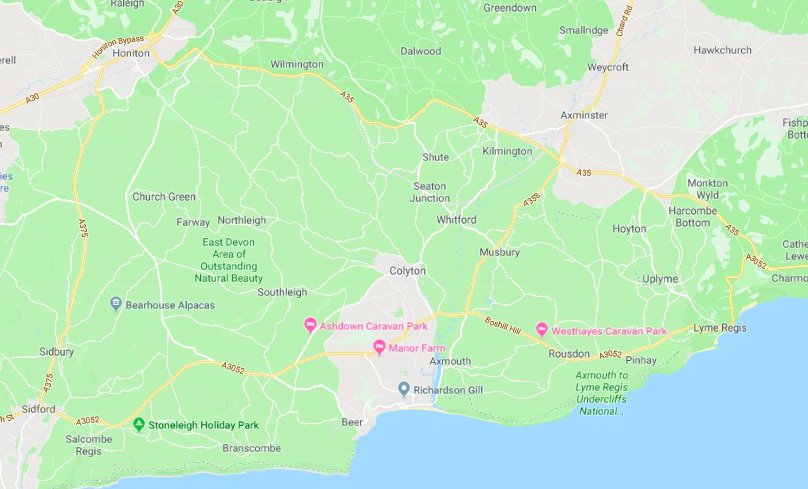
In Dorset and east Devon, a campaign group has been carrying out detailed studies for the past five years in an effort to convince local and national authorities that the Jurassic coast, which is already a world heritage site, and what remains of Hardy’s Egdon Heath should become a national park. This, it claims, would bring a wide range of economic and social benefits to the region.
The Dorset National Park Team welcomes the statement by Michael Gove, Secretary of State for DEFRA, that the Government’s review of designated areas to be led by Julian Glover will consider whether more national parks are needed. A Dorset National Park was first proposed along with others which have subsequently gone ahead in a Government report of 1945. For reasons specific to the time it was not then progressed. But now there is cross-county and cross-party support for conserving and enhancing a landscape that includes the World Heritage Jurassic Coast, inland Ridgeways and the area of Thomas Hardy’s novels.
A Dorset National Park would be at the heart of southern England, next to the largest non-industrial conurbation in the country – Poole/Bournemouth – and within easy public transport reach of London, the South East, Midlands and Bristol. The Purbeck area of Dorset has the greatest biodiversity of any area in the country. But Dorset’s landscape, heritage and wildlife need to be safeguarded and enhanced. A Dorset National Park would work in partnership with its communities, councils, landowners, farmers and businesses to ensure its communities thrive and are sustainable.
Next Tuesday, a three part documentary exploring the Jurassic Coast airs on BBC4 and Weymouth is due to be featured.
Dan Snow hits Weymouth Beach – copyright BBC iplayer
The three part programme, ‘Beach Live: Jurassic Coast Revealed’, will air on BBC4 on 17th, 18th and 19th July, at 8pm and is presented by historian Dan Snow, with wildlife experts Lucy Cooke and Niall Strawson.
The series comes live from the Jurassic Coast in Dorset, revealing the hidden treasures of Britain’s beaches. As described by the BBC, the series hopes to ‘inspire people to look beyond sandcastles and ice creams, and be motivated to discover more about Britain’s fascinating and varied shoreline’.
In the first hour long episode, historian Dan Snow examines the royal origin of beach huts and sees how varied their use is in modern-day Britain. Lucy Cooke demonstrates how a humble mollusc helps to train racehorses in Devon. And Niall Strawson is in charge of the Discovery Centre, where a panel of experts examine and assess the significance of beach finds from all over the country.
Cllr Richard Kosior, Weymouth & Portland Borough Council Briefholder for Tourism, Culture and Harbour, said:
“Weymouth beach and the Esplanade is rich in Georgian history. It held the title of King George III’s seaside resort of choice and it remains as popular today as it was with royalty in Georgian times. We are very pleased that the town is being recognised for the important part it played in historical resort bathing and we look forward to seeing it televised next Tuesday”.
A park-and-ride car park aimed at reducing congestion in the summer in Lyme Regis is again set to open this summer. The car park would be seasonal and would operate from March 30, 2018 to September 30, 2018, and follows the granting of planning permission for the site in 2017 on land right on the border of Devon and Dorset.
> The landowners of the site are willing to make their fields available for P+R:
Park and ride extension approved
29th March
Deputy town clerk Mark Green said: “Having obtained planning permission and being in a position to go with the bus company, the landowner of the Charmouth Road site has advised that the ground conditions are simply too wet for it to be used for parking over the coming weekend, especially with significant rainfall forecast between now and the weekend. “We completely agree with this decision and we will continue to liaise with the landowner and bus company regularly over the coming days. “We understand the land drains quickly and it should be useable given a clear week of largely dry weather.”
Lyme Regis park and ride saved by town council 19th December 2013 Town Clerk John Wright told the councillors: “What used to happen was Dorset County Council made an allocation of £11,000 to one of the coach operators to find another coach operator to run the Charmouth Road site, who would then be given £5,700. “What we would be doing, if this is passed, is provide the finance direct to the operator, so we will only pay the £5,700. We have a very good working relationship with the current coach operator who ran the Charmouth Road site.”
> However, the District Council's planning committee has just rejected a planning application “due to a lack of evidence and harmful visual impact upon the AONB”. In other words, the District Council is concerned about green belt land around built-up areas:
East Devon planning authority rejects Lyme Regis Town Council park and ride application 25 May 2018 Planning permission for temporary use of land for a park and ride in Uplyme refused due to a lack of evidence and harmful visual impact upon the AONB East Devon District Council has refused planning permission (ref: 18/0584.FUL) for further temporary consent for a park and ride facility off the A3052 in Uplyme to serve Lyme Regis. The application was refused on the basis of a lack of evidence submitted with the application to justify a need for the facility and that as a result this would have a harmful impact upon the Area of Outstanding Natural Beauty (AONB) within which the site is located.
The Dorset National Park Team welcomes the statement by Michael Gove, Secretary of State for DEFRA, that the Government’s review of designated areas to be led by Julian Glover will consider whether more national parks are needed. A Dorset National Park was first proposed along with others which have subsequently gone ahead in a Government report of 1945. For reasons specific to the time it was not then progressed. But now there is cross-county and cross-party support for conserving and enhancing a landscape that includes the World Heritage Jurassic Coast, inland Ridgeways and the area of Thomas Hardy’s novels.
A Dorset National Park would be at the heart of southern England, next to the largest non-industrial conurbation in the country – Poole/Bournemouth – and within easy public transport reach of London, the South East, Midlands and Bristol. The Purbeck area of Dorset has the greatest biodiversity of any area in the country. But Dorset’s landscape, heritage and wildlife need to be safeguarded and enhanced. A Dorset National Park would work in partnership with its communities, councils, landowners, farmers and businesses to ensure its communities thrive and are sustainable.
We look forward to working closely with Julian Glover in his review.
A couple of warnings in yesterday's letters page in the Guardian, though:
National parks are more than natural
Our special landscapes are cultural constructs, says Tom Greeves. And public authorities need to think more about urban green spaces, says Ann Sharrock
Letters
Mon 28 May 2018
Sunset in the Yorkshire Dales - Photograph: Daniel Kay/Adobe
‘Our existing parks are the least democratic part of the English local government system,’ writes Tom Greeves. Michael Gove needs to be careful in his choice of vocabulary about national parks (England may get more national parks after Gove announces review, 28 May). His review suggests that it is part of a process to enhance protection of “natural” landscapes and habitats. But our English national parks and all areas being considered for designation are equally cultural landscapes created by some 10,000 years of human presence, also needing protection. He should beware the fashionable concept of “natural capital” without balancing it with one of “cultural capital”. And he should be aware that our existing parks are the least democratic part of the English local government system, having no directly elected members. New designations balancing nature and culture, and with direct elections, might be welcomed – otherwise our special landscapes will be no better off. Tom Greeves Chairman, The Dartmoor Society
• Michael Gove should develop and support the people who live and work in areas with poor-quality green infrastructure. While supporting and developing statutory designated sites is laudable, it is unlikely to offer direct positive benefits for urban and suburban dwellers not within easy access of such sites. Biodiverse habitats are not restricted to statutory designated sites and should be developed and nurtured as community assets providing recreation, education, physical and mental health benefits, and climate regulation. Failure to develop and set aside green spaces in our towns and cities shows the unwillingness of public authorities to invest in spaces which do not give an easily quantifiable cash return, despite progress in including natural capital assets in an economic framework. Ann Sharrock Stockport National parks are more than natural | Letters | Environment | The Guardian . . .
Anew generation of National Parks could be created under Michael Gove’s plans for a “Green revolution”, The Telegraph can disclose. The Environment Secretary is announcing on Sunday a sweeping review of the country’s protected landscapes, 70 years after the designation of the first National Parks. The review, to be conducted by a panel led by Julian Glover, a former Downing Street adviser, “will look at both extending existing sites or creating new ones”, Mr Gove’s department said.
“A Jurassic National Park makes sense Says East Devon Councillor
East Devon’s new leader Cllr Ian Thomas has been contacted regarding Mr Michael Gove’s announcement that the government is considering creating new National Parks within the UK.
Cllr Geoff Jung who is Ward Councillor for Raleigh Ward that includes several rural villages including Collaton Raleigh, Otterton, Bicton and Yettington and most of Woodbury Common that are all within the “Area of Outstanding Natural Beauty” of East Devon has written to Cllr Thomas asking for his and full council support in creating a Jurassic National Park to cover the length of the Jurassic Coast from Poole Harbour in Dorset to Exe Estuary which would include Woodbury Common and the villages he represents.
This is because a few years ago the Council discussed the concept of creating a joint Dorset and East Devon National Park which they considered neither appropriate or achievable.
However, Cllr Geoff Jung points out that since then a lot has changed as the District Council is now working with Exeter, Teignbridge and Mid Devon Councils with the Greater Exeter Strategic Plan, to provide for extra housing and commercial development in the Greater Exeter growth area it would now make sense to open a dialogue with Dorset and the Government.
To the Leader of East Devon District Council.
(An open Letter to the leader of East Devon District Council)
Michael Gove the Environment Secretary has stated today (27/05/2018) plans for a new “Green revolution”, with a possible new generation of National Parks and changes to the boundaries to our Areas of Outstanding Natural Beauty (AONB).
This review is our one opportunity in East Devon to protect and enhance our beautiful area!
Within East Devon we have the Pebblebed Heaths (commonly known as Woodbury Common) and the Blackdown Hills designated as AONBs. We also have the World Heritage Jurassic Coast which covers the coast line area from Exmouth through to Lyme Regis in Dorset, and the Exe Estuary which is a most important habitat being designated a SSSI and RAMSAR site.
The review is to be conducted by a panel led by Julian Glover, a former Downing Street adviser. They will look at both extending existing AONB and National Parks or possibly creating new ones.
Mr Gove says the review will consider landscapes such as the Chilterns and South Devon Areas of Outstanding Natural Beauty (AONB) to join the list of 10 National Parks.
It should be noted that Mr Gove mentions South Devon which may not include our own district but would possibly include the “South Hams” only.
It is well known that National Park status “provides safeguards at the highest level “In most National Parks the decisions on planning matters are dealt with through the “National Park Authority.” However, in the recently formed South Downs National Park, the Local Authority administer the planning process, on behalf of the National Park.
I understand that Dorset and East Devon were in discussions a few years ago regarding a “Jurassic National Park” which would cover the coast line of the Jurassic Coast and the hinterland of some of East Devon and Dorset including the areas of AONB in each area. However, I understand that the proposals were not considered appropriate at that time.
I understand from colleagues in Dorset that they are now considering applying to Mr Gove to designate the Dorset area of the Jurassic Coast from Poole Harbour to Lyme Regis to be included in a National Park.
This very important review of the AONBs and National Parks could mean that with the current policy of EDDC we may find ourselves having a new National Park in Dorset and in the South Hams but none in our area!
This would be a travesty in East Devon considering that one of the Jurassic Coast`s most important areas is the undercliff between Lyme Regis and Seaton and we already have the Pebblebed Heaths and the Blackdown Hills. The loss to East Devon’s Tourist trade and the exclusion of funding and grants that will be allocated to the new National Parks would mean our area lose out on a once in a lifetime opportunity for protecting our beautiful unique landscape.
East Devon District Council is discussing with their neighbours in the west (Exeter, Teignbridge, Mid Devon Councils) a plan development. The GESP (the Greater Exeter Strategic Plan) is looking at the “Growth Area” for possible expansion of housing and commerce within the confines of commuting distance of the main driver which is the growth of the City of Exeter.
However up to now our dialogue with our eastern neighbours has resulted in a negative response to a joint National Park.
I would strongly support that we endeavour to work with our growth point neighbours to the East but at the same time discuss with the National Park Panel and our Dorset neighbours to plan a balanced and unique area of managed economic growth to provide the required housing, infrastructure and commerce, and at the same time expand the AONB designated areas and strive for a joint Jurassic National Park that would include the most important natural areas in our district.
East Devon is about to be placed at a crossroads, do we ignore our wonderful and unique selling point which is our countryside and only concentrate on growth or do we aim to deliver on both these important issues?
This issue most not become a Party-Political tool, but be endorsed by all the parties and independents at East Devon District Council.
I therefore ask for your support and urgent consideration.
Councillor Geoff Jung Raleigh Ward. East Devon District Councillor”
Yesterday, the BBC broke the news that yet another West Country area will be going 'unitary': Scrapping Somerset councils 'may save £28m a year'
2 May 2018
The plan would see the abolition of six local authorities including the county council
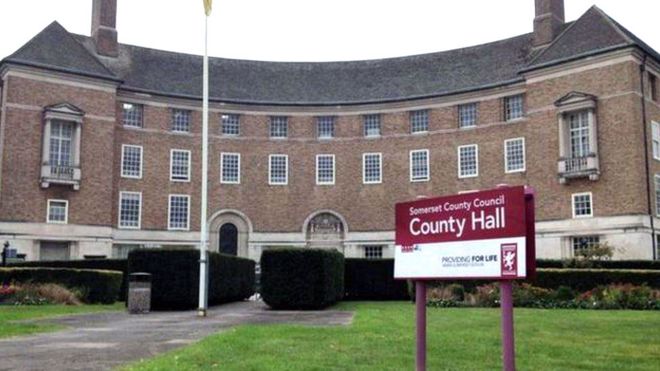
Abolishing all six local authorities in Somerset could save £18m to £28m each year, the county council leader says. Conservative David Fothergill has asked for work to begin to look at how a unitary arrangement could work. The plan would see several single-tier authorities - or one - replacing local councils including the county council.
The idea has been met with mixed responses with one councillor saying it would mean getting "turkeys to vote for Christmas".
Mr Fothergill said: "At a time of unprecedented financial pressures on all councils we are all looking at different ways to be more efficient, make savings and protect the front-line services that our residents value so much. I believe that we owe it to our residents to look at this option too. I want start the ball rolling on work to establish the benefits and costs of such a change so that we can all make an informed decision as to whether a unitary model is the right way to go."
News 'a bombshell'
He said savings from introducing a single-authority would include £500,000 per year by moving from five chief executives to one, and about £1m per year by reducing the number of councillors covering the county by about half from the current 300.
Analysis: Ruth Bradley - BBC Somerset politics reporter
While it's relatively unusual for councillors to decide to get rid of their own authorities, it's not unheard of.
In fact Somerset has been looking to the example of its near-neighbours to see just how it could work here - and how much money it could save.
Wiltshire became a unitary authority in 2007 - the same time as Cornwall - merging four districts and a county council into what is now the biggest local authority in the West of England. But that was in a different political era, pre-austerity rather than as a reaction to government cuts.
And next year Dorset is due to scrap its nine councils and set up two new unitaries.
Interestingly it has managed to achieve this with near-consensus from all the councils involved - something which Somerset will be keen to emulate, given the fractured nature of the last attempt at this here in 2007.
Buckinghamshire was also signed off by the government earlier this year to go unitary at the same time as Dorset.
Somerset is hoping to have its model in place by the 2021 local elections.
Other savings would come through reducing the number of HR, customer services and finance teams, and reducing the number of IT and utilities contracts and transport costs.
The Conservative leaders of West Somerset and Taunton Deane said they were prepared to discuss the idea, while the Liberal Democrat leader of South Somerset described the news as "a bombshell" and said "none of us [district council leaders] want to go down this route but we have to put the people of Somerset first".
Independent county councillor, Mike Rigby, said he was pleased with the plan and "had been calling for this for years. It's going to require some turkeys to vote for Christmas so it's not in the bag yet, though I suspect the momentum will become irresistible," he added.
So, Somerset is moving towards a unitary authority (see below). Inevitable really, isn’t it.
The new HQ for the already combined Taunton Deane and West Somerset authority is ten minutes walk from Somerset County Hall. Taunton Deane and West Somerset are intending to spend £11 million altering their building to accommodate their merger requirements – when Somerset County Hall has a lot of spare capacity.
Meanwhile EDDC proceeds apace with Blackdown House, their new HQ in Honiton, at a minimum cost of £10m – and an ultimate cost of probably MUCH more than that – without at any factoring into their calculations of the likelihood of a unitary Devon proposal similarly coming forward with the same arguments for big savings.
EDDC’s consultants apparently estimated the open market value of Blackdown House on completion of the building to be £3 million. Given the current economic situation, even that might be optimistic.
So a potential BIG loss looming – with the local taxpayer picking up the bills? And that’s if HQ builder Interserve s
If Somerset goes unitary, that will be Somerset, Cornwall and Wiltshire all unitary and Dorset double unitary. Devon will be an anachronistic exception.
Has Devon County Council leader John Hart anything to tell us?
And Owl bets soon-to-be-ex-Leader Paul Diviani may be very pleased with the timing of his exit!
On Chesil Beach: but will merging Dorset’s nine councils into just two bring a chill wind to the county? Photograph: Stuart Fretwell/REX/Shutterstock
On 26 February, the government gave the go-ahead for Dorset’s nine councils to create two new authorities. On paper, this looks like a no brainer. But it’s a decision officials, councillors and residents in the county may yet come to regret.
The new structure, aimed at saving £108m over six years, would come into effect in April 2019, assuming it gets parliamentary approval. Separate councils for Bournemouth, Christchurch and Poole will be replaced with one new unitary council, while the second unitary council will comprise what is now Dorset county council and the district councils of East Dorset, North Dorset, Purbeck, West Dorset, and Weymouth and Portland.
Support for the decision is hardly surprising. There are 353 local authorities in England: 27 county councils, 201 district councils, and 125 unitary authorities, including 33 London boroughs and 36 metropolitan boroughs.
In 2016 a report by EY for the County Councils Network (CCN) concluded (pdf) that creating 27 unitary authorities in England could save up to £2.9bn. The single unitary option has the shortest payback period and the most effective platform for financial sustainability and reducing council tax for residents. Counties also have the lowest back office and management overheads – just 6% of their budgets, compared to 46% at the average district council.
However, there is no official government guidance on what constitutes an acceptable model for local government. A range of models are being proposed, many of which make little sense and may actually end up adding extra cost. Proposals in Oxfordshire and elsewhere suggest creating four or even five “district unitaries” and then a small combined authority to provide additional capacity to deliver strategic services.
Breaking up counties into smaller unitary authorities doesn’t make sense geographically, and could unnecessarily fragment services at a county level if they don’t have the same boundaries as other public services like fire, police and the NHS. It’s true that there may be value in rethinking who delivers services such as housing and planning, but strategically that would mean looking to larger, not smaller, units.
But the real point is that local government reform is not and has never been about efficiency; it’s about politics, with a large and small “p”. There can be elements of gerrymandering – when the Labour government sought to consolidate its power base in Devon in 2009 by creating a unitary authority in Exeter, it would have effectively cut the heart out of the county both financially and geographically, and impoverish the parts of the county more likely to support the opposition. The whole notion of localism is too often about what the government wants, rather than what makes most logical sense for residents and communities.
In Dorset’s case, the councils’ chief finance officers have stated that authorities within Dorset are solvent and have sufficient balances to remain this way for the foreseeable future . Four options were proposed for Christchurch council after consultation in 2016, one of which was no change, an option later rejected by the Ministry for Housing, Communities and Local Government.
Many believe t the whole debate about reorganisation could simply distract councils from delivering savings and ambitious devolution deals. Paul Carter, leader of Kent county council and CCN , has claimed (paywall) it could result in three years of misery, as well as creating friction and tension between councils.
I can heartily agree, having myself lived through a tense legal battle over local government reform that wasted an estimated £200,000 of our council’s budget and reduced our capacity to deliver essential services because of the chaos it created.
Of the nine councils that will be scrapped in Dorset, three did not fully support the proposal and Christchurch council still plans to find a legal means to oppose being merged with neighbouring councils.
Local government reform is like Brexit: at best, a disingenuously simple answer to a complex question, at worst a smokescreen. Either way, it’s a wasteful and lengthy wild-goose chase where nobody can clearly define how to deliver a way forward that works for everyone.