... A FORUM TO STIMULATE DEBATE ... ... JUST ADD A COMMENT AT ANY ENTRY BELOW... ... FOR THE SUSTAINABLE DEVELOPMENT OF TOWN AND VALLEY ...

Thursday, 3 October 2013

Knowle relocation project: hot-desking

Following on from looking at open-plan offices
Futures Forum: Knowle relocation project: open-plan offices
is the issue of hot-desking:


From hot beds to hot desks

A sailor in his bunk
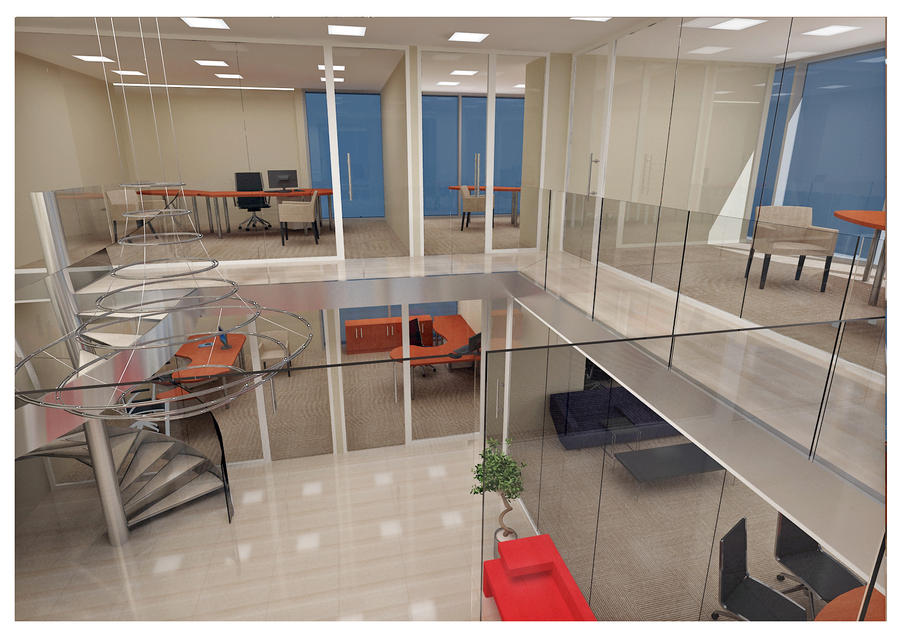
Hot-desking - the idea that employees don't retain a fixed desk in an office - is a key part of organisations' move towards cheaper, more flexible workplaces. The more employees work from home, the more organisations can shrink their offices to accommodate only the number of people who are in every day.
According to Franklin Becker, a social psychologist at Cornell University, the idea came from the navy. On a ship there are far fewer bunks than there are sailors. When a seaman ended his shift he would get into a bed that has just been vacated, and would still be warm. Or perhaps, if the previous occupant had a fever, hot.
In North America, the term is not thought very appealing. Increasingly the word used is not "hot-desking" but "hotelling".
BBC News - The pleasures and perils of the open-plan office

The efficient use of office space by having employees share desks and other facilities seems to make sense. 
For example, Seaton Town Council has considered the usefulness of hot-desking:

On behalf of Seaton’s Voice, Mrs Manley thanked Members for their positive comments and support. Concerns from STC were acknowledged and it was hoped that they could embrace the notion of the Group’s ‘virtual office’ and ‘hot desk’ proposal with regard to the Town Manager, whom, it was envisaged, would spend a great deal of time out of the office.

www.eastdevon.gov.uk/oscc_180310.pdf

This is an idea which has come from the private sector, offering a flexible, cheap alternative to renting office space:

LOW CARBON WORKSPACE TO MEET THE NEEDS OF MICRO AND SMALL BUSINESSES IN DEVON
www.devon.gov.uk/redc_final_report.pdf

And here's a very interesting overview:
How productive is hot desking? - Blog - Knowledge Hub

And indeed, the Dept for Communities is encouraging this trend:

17. Hot-desking, estate rationalisation and sub-letting: By moving to hotdesking across the main floors of its headquarters in Eland House, DCLG 
has freed up space which has been let to other organisations35, saving 
money. The Planning Inspectorate has vacated one floor of its Bristol 
office that is now being sublet. The Homes and Communities Agency has 
reduced its accommodation costs by 49% (£6.5 million) through 
rationalisation of its estates and facilities requirements. Councils should 
undertake a comprehensive review of accommodation costs and identify 
savings through rationalisation, sub-letting and early lease breaks. 
Southwark Borough Council introduced Hot-desking as part of an attempt 
to develop modern and cheaper office accommodation. The programme 
overall has freed up 27 properties and managed to save about £55m.36

https://www.gov.uk/government/uploads/system/uploads/attachment_data/file/39264/50_ways_2.pdf

The District Council's proposals for relocating from Knowle focus on calculations that fewer desks will be necessary in future:

7.0 New Build Office Running Costs
7.1 Calculation of anticipated running costs of a new build office assumes the following:- 
2. The number of staff employed in the new facility will remain at the current level. It is 
understood desk spaces will be reduced to allow for modern working practices.


4.0.0 Office accommodation requirements 
4.1.0 Engagement
4.1.6 The Corporate Organisational Development Manager is investigating the 
potential for staff to work in more mobile and flexible ways. Work Smart is 
the council’s name for its home, mobile and flexible working arrangements 
for staff which will be developed through the Council’s management team 
and subject to consultation with staff and fit with operational requirements. It 
will involve more staff working away from the office or dividing their time 
between the office and another location. In doing so EDDC hopes to have a 
more flexible workforce and service delivery available and accessible to 
customers around the district. More desks can be shared, storage space 
reduced, communal and shared space more effectively provided and less 
traditional office space overall will be required. Initial staff survey work, 
Member requirements and office layout planning has resulted in an office 
size projection that involves a mix of communal space, meeting space, 
reception area, 250 desks and Council specific space such as the Council 
Chamber itself. This leads to an overall total floor space of 3,352m2. 
Further detailed operational and design work will be conducted to refine the 
mix and usage of that space. 


However, the question has been raised as to why the resulting reduction in office space through such innovations cannot also be accommodated at the current site at Knowle:

The 1973 offices plus the upper floor of the Chamber building could comfortably house all EDDC’s office staff, with ‘hot desking’ and home-working allowing part-timers and transient office users to be housed economically.

Futures Forum: "A truly green alternative to EDDC's proposal"

South Somerset District Council have simply reduced the number of offices at their headquarters - rather than building new premises to move into:

1st March 2013

SOUTH SOMERSET: County making progress with money-saving office scheme

PROGRESS is being made by Somerset County Council in plans to save millions of pounds by reducing its number of offices, as part of its “Smart Office” programme.


View From Online - News from West Dorset, East Devon & South Somerset
.
.
.

Knowle relocation project: open-plan offices

Looking at the proposals to relocate, a local researcher has concluded that:
"It seems EDDC sees open-plan offices as the way forward…"


Agenda Item 12 
Cabinet
17 July 2013
RC
EDDC Office Accommodation

EAST DEVON DISTRICT COUNCIL 
OFFICE ACCOMODATION PROJECT 
Project Viability Report – Rev D (4) - June 2013

page 91

4.3.0 Spatial analysis layout

4.3.1 Kensington Taylors, Charter Architects (KT), have been assisting EDDC with the Office Accommodation Project since 2010. In August 2012 they prepared spatial analysis drawings advising how a new build office could be laid out. This is not a formal building design but a simple layout that identifies space requirements and departmental functional inter-relationships.
4.2.2 Several options both in desk numbers and space per desk were produced and comments were subsequently returned by Members and Senior Staff.
4.2.3 In the event, a preferred spatial analysis has been identified based upon approximately 7m2 per desk, which together with specific Council, Ancillary and core areas provides an overall gross internal area (GIA) of 3,352m2, incorporating:
 Departments – 1,799 m2 250 desks allowing a space of circa 7.0m2 per desk Storage


www.eastdevon.gov.uk/cabinet_agenda_170713_-_public_version.pdf


The research shows there's considerable doubt about the effectiveness of open-planning:


Advantages and Disadvantages of Open Plan Office Spaces

MAY 16, 2013 VIEWS: 3085
Open plan office spaces can provide a social, more interactive environment for your employees, especially in smaller offices. However, open plan offices will not suit everybody so if you’re considering making the switch to open plan, you may want to weigh up the advantages and disadvantages first.

Advantages

1. Cost Effective
Having an open plan setting will certainly cut unnecessary costs of hiring additional office space that in all honesty you don’t really need, particularly in the case of smaller businesses. Electricity and heating bills will be cut due to the smaller space; lighting will be used less often due to it being lighter and more airy. It can also accommodate more employees particularly if the business expands and you do not wish or may not be able to relocate.
2. Improves Communication
Open Plan offices make communicating with employees and work colleagues much more efficient and easier. It allows ideas to flow freely with everybody being in the same room and helps the various roles in the office come together effectively. It can help to promote a good professional and personal relationship between colleagues, helping with the overall morale of the office and will encourage them to work as a team as opposed to isolated working in separate offices.
3. Allows Different Departments To Merge Together
A company can run far more competently if the staff is all working in the same room. It’s easier to delegate, discuss ideas and carry out tasks if everyone needed is in close proximity. It makes for much smoother running of the business and gets jobs done far quicker than if everyone was in separate offices.

Disadvantages

1. Can Be A Noisy Environment
Those who are easily distracted by noise and what’s going on around you may not perform well in an open plan office. If your office is a generally quiet environment, it could be very disconcerting for your staff. It can be very easy to get preoccupied by what the person at the desk next to you is doing or saying and can leave you very unfocused and likely to make mistakes through lack of concentration.
2. Lack Of Confidentiality
If you have clients or customers visiting the office and they need to discuss certain things they may not want everyone to be privy to the information. It can be tricky to discreetly discuss things in an open plan office, either over the phone or in person. Same goes for your employees, this lack of privacy may not be welcomed in certain situations and does not make it very easy for you to be discreet when dealing with private and personal information.
3. Spreading Of Germs
There’s no doubt that germs spread like wildfire around offices, particularly in the cold and flu season. They will spread even quicker in an open plan office setting, particularly where people are sharing phones, computers and even pens. Expect your staff to take more sick days in an open plan office as germs can be spread much more easily.
Written by Andy D, a contributor at LeraBlog on behalf of Foxhall Business Centres.
Advantages and Disadvantages of Open Plan Office Spaces


Open-plan offices make employees 'less productive, less happy, and more likely to get sick'

  • Open-plan office workers are exposed to more germs and are more stressed
  • People who have their own space take 62 per cent less sick days
  • They are less productive because they are distracted by other people talking
  • People over the age of 45 are the most distracted by office noises
  • Open plan workers are less motivated and have lower job satisfaction levels
| 


Open-plan offices make employees 'less productive, less happy, and more likely to get sick' | Mail Online
BBC News - The pleasures and perils of the open-plan office
Could open plan offices be bad for your health? - Health News - NHS Choices
.
.
.

Wednesday, 2 October 2013

Sidmouth Arboretum events in October

Coming up over the next couple of weeks from the Sidmouth Arboretum:

logo


TUESDAY 8 OCTOBER 2013
COACH TRIP to WESTONBIRT ARBORETUM
With guided tour by former Curator, Hugh Angus 
'Autumn Wonderland, a focus on fruits and foliage'
SATURDAY 19 OCTOBER
MEDICINAL PLANTS : the science behind herbal remedies
Anne Stobart, lecturer and consultant medical herbalist from the Medicinal Forest Garden Trust will give us an opportunity to have hands on experience in identifying plants, to see a variety of herbal preparations and to gain some knowledge about key plant constituents and their medicinal actions. From historical recipes to modern pharmacological research, both adults and children can learn about safety and herbal medicine.       Based at Kennaway House, free entry 11am -5pm.  
Sidmouth Science Festival - Home
Sidmouth Science Festival - Plant Heritage Exhibition

SUNDAY 20 OCTOBER
JOIN AN AUTUMN WALK LED BY HUGH ANGUS  - Hugh is our dendrologist consultant and is building up a loyal following for his spring and autumn walks around the town and surrounding valley.
2pm Tickets available from early October – Please send cheque £5 made out to Sidmouth Arboretum, together with your address and contact details if you would like tickets (£5 each) by post.  Send to Diana East, ‘Maybury’, Salcombe Hill Road, Sidmouth EX10 8JS.
Sidmouth Arboretum - News
Sidmouth Science Festival - Arboretum Walk

Hope you can join us in October!

Sidmouth Arboretum - Home

Plus: through the Devon Gardens Trust...

Devon Gardens Trust is devoted to the preservation and enhancement of gardens in the UK county of Devon


from the Exeter Civic Society: Exeter Civic Society Gardens meeting
Garden History of Exeter and Devon | Devon Gardens Trust
Exeter Civic Society
.
.
.

Cycling and the Sidmouth Science Festival

Here are reports back from events held during the cycling week:
Futures Forum: The physiology of cycling: Sidmouth Science Festival @ Tour of Britain: Weds 18th Sept
Futures Forum: The art and science of riding a bike: Cafe Scientifique @ Tour of Britain: Tues 17th Sept

Tour of Britain Events from Sidmouth Science Festival


CHERC at Tour of Britain event Sep 2013
The Science Festival team arranged two supporting events during the week that the Tour of Britain set of from Sidmouth

The regular monthly Café Scientifique had a cycling theme when Dr Andrew Middlebrooke from Exercise Science Consulting Ltd talked about what technologies cyclists today could use to improve their performances all of which are readily available to the amateur. Once the floor was open to discussion topics such as diet and general health, how the top cyclists differ from the rest of us etc were discussed.

The second event took place in the Market Square where in conjuction with the Chamber of Commerce, CHERC (Children’s Health and Exercise Research Centre) from the University of Exeter showed how they measure cyclists’ performance on a cycle machine, measuring oxygen levels and power output etc.
There was also an opportunity to cycle a 250m route on a turbo trainer as quickly as possible where times were recorded. 

Similar activities will be demonstrated at the Science  Festival on Saturday 19th October. 
CHERC will be in the Methodist Hall.


Vision Group for Sidmouth - Tour of Britain Events from Sidmouth Science Festival
.
.
.

Back to the Future: SVEAG at the Observatory: Thursday 14th November

A preview of an important event coming up next month from the Sid Valley Energy Action Group:


Sid Valley Energy Action Group has recently been awarded a "Ready for Retrofit Grant" of £2500 for an open homes project over next 3 years, in order to promote energy efficiency and renewable energy locally.

As a result of this, the project will be launched at the Observatory on Thursday November 14th, together with a proposal to set up an Industrial Provident Society to involve as many people within the community as possible.This will be a not for profit company.

The event will be entitled "Back to the future" and will look at energy production, past and present  and this is an invitation to everybody to come along and discuss the importance of local energy production and the contribution to local sustainability.

Derek Chant


Wadebridge Renewable Energy Network (WREN) is a model to follow:

Wadebridge: Britain's first solar-powered town?

This is just part of a wider attempt to turn Cornwall into Britain's solar Texas, writes Geoffrey Lean.

Here comes the sun. . . or so Wadebridge hopes
Here comes the sun. . . or so Wadebridge hopes  Photo: Alamy
Nothing so revolutionary has happened to the Cornish town of Wadebridge since 1460, when its 17-arch crossing of the river Camel was built by a local divine, lengthening its moniker from the original Wade. For today it will launch an attempt to become Britain's first solar town.
Backed by the local MP and chamber of commerce, the scheme aims to generate a third of the electricity used by the town's 10,000 people from renewable sources – mainly the sun – by 2015, and make up to £450,000 a year for community projects from the Government's feed-in tariff.
The Wadebridge Renewable Energy Network, a not-for-profit co-operative, will put solar panels gratis on the roofs of local homes and businesses, allow them to use the free electricity, and collect the tariff for the community fund. Local landowners will be offered attractive deals to install larger arrays and a couple of wind turbines will be added to the mix. Anyone from the town can join the co-operative and decide how the money is spent. Nothing of this scale has ever been attempted in Britain before, says Dr Bridget Woodman of Exeter University, who is monitoring the project. And it is just part of a wider attempt to turn Cornwall into Britain's solar Texas. The county council has already granted planning permission for four new solar farms and has sent plans for five more out for consultation. After all, it's not going to mind getting a reputation as the sunniest place in the country.


Wadebridge: Britain's first solar-powered town? - Telegraph
.
.
.

Tuesday, 1 October 2013

Fracking in East Devon: and in the US and in the EU

The issue of fracking is very heated in North America, as the lastest news reports:
Wait for research before allowing fracking, scientist says - Newfoundland & Labrador - CBC News
Fracking shakes up gas economics
Study: Natural gas industry can cut fracking emissions
California law to regulate fracking signed by governor | Reuters
Friction over 'fracking' grows in South
Center for a Stateless Society » Stop Construction! Tear Down Walls!

Meanwhile, this video has been very popular on YouTube:


Fracking: The Music Video - ProPublica
Fracking - ProPublica
The Fracking Song (My Water's On Fire Tonight) - YouTube

The European Union is considering measures similar to those passed in California:
EU Shale Gas: Mandatory Environmental Impact Assessments Favoured
Shale gas: member states need robust rules on fracking
Natural Gas Europe - Environment - News
South West Green Party | Key vote on fracking in European Parliament

The South-West's MEP is more positive about shale gas:

In my opinion: Shale gas offers opportunity to cut bills and boost jobs


Wednesday, May 01, 2013
In his State of the Union address to the nation, President Obama reassured the American people that they would have an energy-secure future. He informed them it was intended to go "hell for leather" in the exploitation of national shale gas resources which would guarantee US energy security for decades to come and help create 600,000 new jobs. Already production of shale gas has enabled the USA to cut all imports of liquefied natural gas, particularly from the Middle East. It is estimated that shale gas will meet half of USA gas demands within 15 to 20 years.
Shale gas is to be found in underground reservoirs extending for thousands of square kilometres throughout the world. There are estimated to be worldwide reserves of shale gas, equivalent to 3 trillion barrels of oil. According to the International Energy Agency, based on current demand, there are only 60 years of worldwide reserves of natural gas. However, the availability of shale gas will extend gas reserves to more than 250 years.
The potential of shale gas has been known for some time but it is only in recent years that technological improvements used in its extraction have made it economically viable.
It emits 30% less carbon than oil and 60% less than coal when used for power generation and is a much cheaper alternative to wind and solar power which currently require considerable consumer subsidies.
In Britain, test drilling has identified a huge reserve of recoverable shale gas in North West England. Preliminary results have been rewarding but the hydraulic fracturing – "fracking" – process used to unlock the gas from shale rock has alarmed environmental groups who warn that it will cause earthquakes, despite research to the contrary carried out at Durham University Energy Institute. Quadrilla Resources Ltd has been granted a license to carry out exploration throughout the 1,200 sq km of the Bowland Basin in Lancashire which, they assess, holds at least 200 trillion cubic feet of recoverable shale gas reserves. They intend to seek Lancashire County Council approval to "frack" for gas at a site at Lytham St Anne's, near Blackpool.
The success of shale gas extraction in the USA over the past two years has almost halved the price of gas, thus encouraging investment in new businesses and manufacturing which has contributed to a considerable reduction in unemployment. Britain, which is dependent upon costly gas imports and is concerned about the security of its energy supply, has need for a similar shale gas boom to stimulate the economy and get the country back to work. Undoubtedly green energy campaigners, who over recent decades have pressured our government into taking the expensive road to a low carbon green economy, will not be happy but those of us who wince every time the fuel bill falls through the letter box will rejoice.
A Devon Councillor poses other questions:

“Fracking” – Coming to Devon?

You may have heard of “fracking”. But what is it? and why should we be worried about it?
Our present economic system is addicted to fossil fuels but we are running out fast. As a result we are turning to more and more extreme measures to feed our habit. Welcome to the world of extreme energy. Tar Sands, Mountain Top Removal, Deep Water Drilling,Coal Bed Methane and Shale Gas are all symptoms of this scramble to suck the last and most difficult to reach drops out of our planet.
In the UK a new method of Shale Gas extraction method called hydraulic fracturing (or fracking) is being trialled in Blackpool. Fracking has already become wide-spread in the United States.

What is fracking?

Hydraulic Fracturing is a method used to free gas trapped in rock (that would usually be inaccessible) by cracking the rock using a pressurised fluid. Wells are drilled and the fracking fluid injected into them under high pressure to crack the rock. The fracking fluid consists of water, sand and a lot of chemicals. Millions of gallons of water are used to frack a well.

Why is fracking a problem?

In the vicinity where fracking takes place the largest worries are water contamination. Fracking uses huge amounts of water mixed with toxic chemicals, a large fraction of which are never recovered. The fracking fluid also leaches chemicals like arsenic out of the rocks when it is used making it even more toxic and so the fluid that is recovered becomes a big disposal problem. Even more worryingly the fracking fluid can also leach radioactive elements out of the rocks causing radioactive contamination as well. Fracking in the United States has already resulted in numerous spills of these fluids.
In addition fracking has been shown to result in the contamination of water tables with methane. In some cases in the United States this has resulted in people being able to set the water coming out of their taps on fire. Fracking also appears to trigger earthquakes and the first test well in the UK appears to have caused two earthquakes.
Fracking, like other forms of extreme energy (e.g. Tar Sands), is very carbon intensive. You use a lot of energy (and therefore emit a lot of carbon dioxide) in order to get a bit more energy back. In the case of fracking this is because you have to drill a lot wells, since each one only produces gas for only a short while. Fracking has the additional problem that the natural gas (methane) that it is trying to extract is a stronger greenhouse gas than the carbon dioxide emitted by burning it and the method results in significant amounts of methane leaking directly into the atmosphere (fugitive emissions).
What has happened so far in the UK?
So far there is only one test well using hydraulic fracturing to access shale gas in the UK. Cuadrilla Resources has drilled Preese Hall 1 well five miles east of Blackpool. However following the outcry over two earthquakes in the vicinity of the drilling operation in the space of two months, the operation has been apparently temporarily suspended. Cuadrilla have drilled (but not yet fracked) a second well nearby and are in the process of moving their drilling to a third site. France, the states of New York and New Jersey, the Canadian province of Quebec and the Swiss canton of Fribourg have all recently banned fracking. Fracking needs to be banned in the UK too.
Under the Onshore Oil and Gas Licensing Round, the government have disclosed the areas likely to be developed for fracking.
This includes the eastern part of Devon (including south-east Devon), where licences might be expected at any time!!.
Why not send a letter to your local County Councillor letting them know what you think about fracking.  Click on this link   http://www.writetothem.com/
Jackie Brodie | “Fracking” – Coming to Devon?

In East Devon, there are recent developments:

> The District Council's house magazine from July notes the loss of local powers:

 Local councils lose powers to oppose fracking:
Local communities are set to lose control over key environmental decisions affecting  whether the controversial gas extraction technique of fracking can go ahead in their area. 
Under new planning guidelines, councils will no longer be able to investigate issues such as  seismic activity, flaring and venting as well as the potential impact on ground water suppliers before granting planning permission for new fracking wells. Instead the Department of Energy and Climate Change, the Environment Agency and the Health and Safety Executive will take responsibility for regulation.
www.eastdevon.gov.uk/the_knowledge_260713_issue_10.pdfwww.eastdevonaonb.org.uk/uploads/documents/ourwork/

> The East Devon AONB Consultation Draft Management Strategy is out to consultation until 10th October, and mentions 'new technologies':

Trends and Forces for change:
New technologies and techniques for extracting energy may well place demands on the landscape and geology of the AONB in the future. eg: fracking.
AONB Management Plan/AONB Strategy no image_Layout 1.pdf

A campaign has started in East Devon to collect signatures:

We call on the local council to reject all fracking applications.

Why is this important?

Horizontal hydraulic fracturing, ‘fracking’, is a way of extracting oil and/or gas. Water, sand and toxic chemicals are injected at high pressure into underground rocks to shatter them. This releases the gas/oil which can be collected.
But investing in carbon-intensive fossil fuels is a distraction from the need to decarbonise our electricity supply.
And it's hazardous. Studies show that fracking pollutes water supplies (with arsenic and lead), causes earthquakes, and spoils local communities. 
And there are nightmare stories coming form the States. 
Like in the town of Dimock, PA, residents have reported their water turning so brown that it stains crockery. Their water was later found to contain methane, and a host of toxic chemicals.
We call on the council to preserve the quality of life of its residents, and reject all planning applications for fracking.
Stop Fracking in East Devon | Campaigns by You

See also: Futures Forum: Fracking: pros and cons
Futures Forum: Fracking in East Devon?
.
.
.

District Council - Submission of the new Local Plan........... deadline Monday 7th October..... pro forma letter from SOS

As part of the District Council's current consultation period on its Local Plan:
East Devon District Council - Submission of the new Local Plan 
[which concludes at noon on Monday 7th October],
this is a suggested pro forma letter produced  by the SOS campaign: 


FROM: 
xxxxx
TO:        
Planning Policy,               
East Devon District Council,
Knowle,
Sidmouth, EX1O 8HL


DATE: xx.xxxx


Dear Sir,

The following are my comments on the Sidmouth sections of the East Devon Local Plan in response to the consultation on post publication changes.

A. In changed paragraph “Our vision for Sidmouth is one of. ® 6.129”, because of the total unsuitability of the Sidford site for development, I suggest the further deletion of the words:
“although it may be necessary for provision to be located outside of the existing built up area boundary if no alternative sites are available within the town.”

B. In changed paragraph “Strategy 26 - Development at Sidmouth: ® 6.133”, for the same reason as above, I suggest the following rewording. Also, no retail use should be allowed.
‘2. Jobs - provision of up to 5 hectares of additional employment land with a particular onus on BI space at Sidford is only a remote contingency, and because of its situation in an AONB, the flood risk (zone 3b), and very poor road infrastructure, it must be stressed that the development of the following allocation would only be considered after the 5 year review of the plan if exceptional need could be demonstrated and serious drawbacks overcome; the development to be compatible with the historic and Regency qualities and current uses and nature of the town.’
This would require some further amendment, in the following sentences, to the  time frame (first/second 5 year review, etc.), and to the grammar (will/would).

C. I am unhappy with the limited changes to “Current Council Offices, Knowle — 50 homes ® 6.295”,  including the totally unacceptable extension of zone C southwards into the gardens. To save further waste of taxpayers’ money, Robin Fuller’s proposal to use the old building for 40/50 apartments and to refurbish the newer buildings for council offices is far preferable to the wasteful relocation ‘ambition’; I thoroughly support Sidmouth Town Council Planning Committee’s response to planning application 12/1847/MOUT on 6 February 2013 regarding the site:
           “Support development in Zone C subject to development being restricted to the footprint of the existing office buildings and subject to sympathetic and appropriate design in keeping with the character of the area and adjacent properties.
           “Advisory notes:
•             The existing access to Knowle Drive from the western edge of zone C should be closed off with all access to zone C being the main driveway to avoid the creation of a through road.
•             All current and proposed public Rights of Way throughout the site should be maintained. Unable to support development in zones A, B, D, and E.”

I support other paragraphs relating to Sidmouth, and thank you for this opportunity to comment.

Yours sincerely,


Public consultation on changes to Local Plan ..some advice from SOS | Save Our Sidmouth
Comments on changes to Local Plan | Save Our Sidmouth
.
.
.