... A FORUM TO STIMULATE DEBATE ... ... JUST ADD A COMMENT AT ANY ENTRY BELOW... ... FOR THE SUSTAINABLE DEVELOPMENT OF TOWN AND VALLEY ...

Saturday, 5 September 2015

Knowle relocation project: Cabinet meets Weds 9th Sept

Although the District Council would prefer to call any now-published documentation on its relocation project as 'historical':
Moving and Improving - East Devon

... there are still many issues to be addressed as to how we have got to where we are now:
Four supermarkets were competing for EDDC’s new HQ site in Honiton | East Devon Watch
Relocation to SkyPark - a Freedom of Information request to East Devon District Council - WhatDoTheyKnow

Meanwhile, the District Council is to survey the public about its relocation plans:

Now the decision has been made we specifically want to understand how our residents would like us to organise services in the future from: 
 Offices in Honiton and Exmouth 
 Surgeries (drop in sessions) in our main towns where customers can come in and see us on specific days between particular times 
 A greater number of online services. 

eastdevon.gov.uk/media/1243178/110815-scrutiny-and-overview-agenda-combined.pdf

... although it does seem rather difficult to pinpoint exactly what is meant by 'surgeries/drop-in-sessions' - which seems to be a downgrade from what had been promised earlier:
District Council costing the provision of hubs - a Freedom of Information request to East Devon District Council - WhatDoTheyKnow

Meanwhile, a paper has been put together looking ahead to where the relocation project is going:
Cabinet agenda 9 September: informationon on relocation arrangements | East Devon Watch

These are the points re Knowle:

Agenda for Cabinet Wednesday, 9 September 2015; 5.30pm

Agenda Item: 10

Report in full Following on from the Council’s reassertion of its commitment to relocate at an extraordinary Council meeting in 3 June 2015, the project has moved forward on a number of fronts:

4. Knowle Park: 

a. Sidmouth Town Council - 
The Deputy Chief Executive has proposed key terms to Sidmouth Town Council regarding the transfer of the remaining parklands and lower car park area into the ownership of Sidmouth. Detailed negotiation is expected to follow that will include more specific detail on conditions, timing and the financial considerations. 

b. Rights of Way (RoW)- 
As has been previously advised, an inquiry will be held shortly (15 September 2015) following an objection by EDDC, to the proposed registration of RoW across parts of the Knowle site. The outcome of the appeal does not affect the ability of the project to move forward but is a matter to be considered within the planning process if the appeal fails and rights of way are registered. 

c. Community Asset 
There has been a threat of challenge to the Council’s decision to reject an application to register the Knowle as an Asset of Community Value. The original application was made by the Knowle Residents Association although they are not the party now seeking to challenge the decision (rather it is an individual). The Council has rejected the basis for the challenge and we wait to see if the matter will be pursued. Should the challenge be successful then in all likelihood the Council will have to take the decision again. At this stage it is not possible to determine what the outcome of any such decision would be, but even if it was to register the land claimed as an Asset of Community Value it would not prevent or delay the sale to Pegasus Life Limited. 

Cabinet: 9 September 2015: Relocation Update

There has been much talk about a 'transfer' of the remaining parkland to the Town Council:
Minutes of the Annual Meeting of Sidmouth Town Council 18 May 2015
Trinitymatters.co.uk website of Cllr Ian Thomas EDDC - A new future for The Knowle? - EDDC Cabinet resolves to leave Sidmouth…
Futures Forum: Knowle relocation project: contracts exchanged: >>> >>> "The council's continued commitment to hand over the remaining parkland to the ownership of Sidmouth Town Council."

The District Council's appeal against the granting of RoW through the parkland is imminent:
Decision due this summer on Knowle public rights of way - News - Sidmouth Herald
Futures Forum: Public Rights of Way through Knowle: County Council have now included three footpaths in the Definitive Map
Futures Forum: Public Rights of Way through Knowle: public hearing due

With a very pertinent case brought to light by the East Devon Watch blog:

DOES THIS DECISION ABOUT A PUBLIC GREEN IN EXETER AFFECT KNOWLE PARKLAND

Judge upholds challenge over town green and local authority land

Friday, 04 September 2015 09:43

A High Court judge has recently upheld a judicial review challenge by a campaigner over an inspector’s refusal of an application to register land in Exeter as a town green, it has been reported.


Local Government Lawyer - Judge upholds challenge over town green and local authority land
Does this decision about a public green in Exeter affect Knowle Parkland | East Devon Watch

The District Council hopes to dismiss the application to declare the complete parkland as an Asset of Community Value:
APPLICATION TO LIST KNOWLE PARK AS ASSET OF COMMUNITY VALUE | Save Our Sidmouth
Council minutes for 25 March 2015 - Public Speaking - East Devon
Knowle Relocation | East Devon Alliance
Exmouth is not alone in having a problem... - Exmouth Splash - Public Opinion & Discussion Page
Save historic Knowle Parkland - CrowdJustice
Futures Forum: Knowle relocation project: crowd-funding campaign launched >>> legal challenge to rejection of application to list Knowle park as an Asset of Community Value

This is the front page of the latest Herald:


Breaking news & sport in Sidmouth | Sidmouth Herald

A principal for objecting to the relocation project is that it is about appropriation of public land:
Futures Forum: Knowle relocation project: expropriation & eminent domain >>> "The principle that there is a public realm of common citizenship and essential public goods and space which ought not to be appropriated for private benefit."

The Town Council and SOS have made their opinions very clear:
Sidmouth Town Council adamantly opposed to EDDC “appropriating” extra land to develop at Knowle | Save Our Sidmouth
.
.
.

The Undercliffs National Nature Reserve >>> under threat?

The nearest coastal National Nature Reserve to Sidmouth is at the Axmouth to Lyme Regis Undercliffs:
Devon's National Nature Reserves - GOV.UK

They are part of the Jurassic Coast:

The Undercliffs National Nature Reserve

The Undercliffs national nature reserveLocation: Between Axemouth in East Devon and Lyme Regis in Dorset.
Landform Type: the 'undercliff' is a term used to describe the sloping section of coast between the top of the cliff and the beach. It is characterised by landslides that slowly, but continually move, giving rise to a rich mosaic of habitats.
Age: recently active from 20,000 years ago to the present day
Where to go: The Axemouth to Lymw Regis Undercliffs can only be accessed using the Saouthwest Coast Path. It is 7 mile stretch of rugged path that is difficult in places.
Look out for: Spectacular wildlife – wild woodland, nesting Peregrine Falcons and Ravens as well as various wild flowers and insects.

The torn land between the fields and the sea

The huge landslides that occur between Lyme Regis and Axemouth happen because of the geology. Chalk and sandstone above sit on clay and limestone below. The chalk and sandstone absorb water like a sponge, becoming very heavy, and move across the impermeable and slippery surface of the clay beneath. This often happens slowly, pushing rock and soil before it, causing breaks in the established paths and pushing trees over. Occasionally it happens in spectacular fashion as it did in 1839 When Goat Island was formed.
The Bindon Landslide of 1839 was a famous event at the time. One night, a huge slab of land, known locally as goat Island, moved towards the sea and a large chasm opened up behind it. The front of the landslide was lifted up out of the sea creating a small natural harbour, although this was quickly eroded away. Today, Goat Island and the chasm are two of the most noteworthy features within the Undercliffs.
The National Nature Reserve is managed by Natural England to preserve and protect the amazing wildlife that lives there.

The Undercliffs National Nature Reserve - Jurassic Coast

They are on the South West Coast Path:
Seaton to Lyme Regis Undercliffs - Part 1 - Walk - South West Coast Path

And they are under threat:
European Commission - PRESS RELEASES - Press release - Daily News 05 / 05 / 2015
UK NGOs launch major campaign to defend EU biodiversity laws

This was released today from the Friends of the Earth:

Is your favourite seaside hideaway under threat?

"Oh I do like to be beside the seaside" goes the famous song. But why?
For some it'll be the bingo, the two-pence slot machines and the karaoke. Others will dig the buckets and spades and the smell of fish and chips.
But what about our coastal nature reserves? Do we still love to stroll along the cliffs, past the rockpools and through the meadows?
And does it matter that the European Commission is currently considering whether to weaken the laws which protect these nature sites?
I caught up with some friends to find out.

The Isle of Mingulay, Outer Hebrides, Scotland.

"It's everything; deserted white sand beach, tropical clear blue bay where you swim among the seals, the hugest cliffs chattering with seabirds..."
Sarah Lawrence
Sarah and I went to University together. She's always loved seabirds and was chuffed to be able to study them for her thesis on the Isle of Mingulay. Located on the southern tip of the island chain of the Outer Hebrides, Mingulay and the nearby Isle of Berneray are classified as a Special Protection Area (SPA) because of their impressive and important seabird populations.

Sarah took this picture of a Northern Fulmar whilst working on the island. Mingulay is famous for hosting 2% of the UK population, with 7000-9000 nesting pairs. Not bad for an island of only 640 hectares (41 times smaller than the city of Edinburgh).

Blakeney Point National Nature Reserve, Norfolk, England.

Verity and I first met at school 14 years ago. Studying medicine in Norwich, she relishes a trip to the Norfolk coast. Who can blame her?
Blakeney Point National Nature Reserve is a four-mile-long sand and shingle spit within the Wash and North Norfolk Special Area of Conservation (SAC).
"I love it's unspoilt natural beauty... I love walking along it to see the seals and how peaceful and quiet it is."
Verity Griffiths
Over hundreds of years, sand dunes have formed on Blakeney Point, creating a rare habitat for numerous plants, insects, birds and seals. A total of 2,426 grey seal pups were born here last year, making Blakeney Point the largest colony in England.

Singing Sands, Kentra Bay, West Scotland.

Ash is a colleague at Friends of the Earth. When I asked him the question, he was quick to choose the Singing Sands of Kentra Bay on the West coast of Scotland as his favourite seaside location. Located in the Sound of Arisaig, another Special Area of Conservation (SAC), this area is recognised for its incredibly biodiverse sandbanks.
There are no ice cream vendors here. There are no deckchairs...This is a place where you can convince yourself nature has taken over."
Ash Stally-Chudasama
The singing sands take their name from the distinctive sounds they produce. The small grains of sand particles here are completely round and consistent in size. This coupled with the addition of natural silica and humidity means they make a squeak when you press down on them with bare feet.

So it seems that nature reserves really are important to us. How then do we go about ensuring they are protected?

The European Commission has launched a review of crucial European Laws, known as the Birds and Habitats Directives, that protect our favourite nature reserves. Over half a million of you responded to a public consultation earlier this summer, calling for these laws to remain.
Now we need to make sure our voices are listened to. Let's continue to tell the Commission and our own politicians how much we care about nature and how important it is that these laws are not only maintained but also better enforced to stop damage to precious sites. You can use our map to do this.

As for me...

Skomer Island, Pembrokeshire, Wales

It has to be Skomer Island. I first went to this tiny island off the coast of Pembrokeshire in 2009 and I've been back every year since. With its sister island Skokholm, Skomer is designated as a Special Protected Area (SPA) for its impressive array of avian inhabitants. The coastal habitats support a strong population of the red-billed crow, the Chough, and over half of the world population of Manx Shearwater.
And of course, how could I not mention these clowns...
Subscribe to this blog by email using Google's subscription service

Is your favourite seaside hideaway under threat? | Friends of the Earth
.
.
.

Friday, 4 September 2015

Neighbourhood planning initiated in Sidmouth

There are some very innovative approaches to neighbourhood planning out there:
Futures Forum: Citizenship and planning

And:
Futures Forum: Flatpack Democracy: 'Vote for Chaos'
Futures Forum: Transition Conference 2015: Friday 18th - Sunday 20th Sept

The Town Council has set up its own task force to look at the process:
Futures Forum: Neighbourhood planning @ Sidmouth Town Council >>> meeting Monday 6th July

This is from the minutes of that meeting:

SIDMOUTH TOWN COUNCIL 
Minutes of the meeting of Sidmouth Town Council 
held at the Council Chamber, Woolcombe House, Sidmouth, on Monday 6 July 2015 at 6.30pm 

Public Open Question Time 
 Mr Thurlow, SVA Conservation and Planning Committee, supported the implementation of a Neighbourhood Plan for Sidmouth and offered the SVA’s involvement and financial assistance.

Neighbourhood Plan for Sidmouth 
Councillor Cole presented her discussion paper for Members consideration. 
RESOLVED: that a Neighbourhood Plan Feasibility Task and Finish Forum be set up to consider and make recommendations to Council on a possible Neighbourhood Plan for Sidmouth to consider matters including the plan scope and boundaries, resources required, costs and funding sources. 
TaFF membership would be Councillors Barlow, Cole, Dent, Earthey, Kilsbie and Wright and would report back to a future meeting of the Town Council.

Minutes of the meeting of Sidmouth Town Council Monday 6 July 2015

This is from a posting earlier today from SOS:

Sidmouth Town Council to examine feasibility of a Neighbourhood Plan

September 4, 2015 by sidmouthsid Leave a comment

A feasibility study for producing a Neighbourhood Plan, is now underway. At the instigation of newly-elected members, Sidmouth Town Council has set up a Neighbourhood Plan Feasibility Task and Finish Forum. (TaFF). The members of this TaFF are Cllr Ian Barlow (Con), and Independent Councillors Louise Cole (Ind), Kelvin Dent, Michael Earthey, Marc Kilsbie, and Paul Wright.

Following an initial meeting held on 31st July 2015, there will be a consultation next Monday (7th Sep) with representatives from three stakeholder groups: Sid Vale Association (SVA), Sidmouth Chamber of Commerce, and the Vision Group for Sidmouth (VgS). All three groups are founder members of the Save Our Sidmouth campaign.


Sidmouth Town Council to examine feasibility of a Neighbourhood Plan | Save Our Sidmouth
.
.
.

Citizenship and planning

From a correspondent:

For an interesting conversation on citizenship and planning:


BuroHappold Engineering Meets Gehl Architects from BuroHappold Engineering on Vimeo.

Home - Gehl Architects
Gehl Architects - Wikipedia, the free encyclopedia
.
.
.

Transition Conference 2015: Friday 18th - Sunday 20th Sept

Next weekend sees a big event in Devon:


TRANSITION CONFERENCE 2015


18TH -20TH, SEPTEMBER, SEALE HAYNE, NEWTON ABBOT, DEVON, UK

#TNCONF2015


TRANSITION NETWORK IS PROUD TO BE HOSTING THE FIRST INTERNATIONAL CONFERENCE OF THE TRANSITION MOVEMENT.


From it’s inception in 2007, the Transition movement has grown and spread to all corners of the globe and this gathering will showcase some of the best and most innovative ideas, organisations, and projects that have come out of the worldwide experiment in creating resilient communities.
As always this conference will be about you, we will all be contributing (as we all do in Transition) our experience, our hopes, and our dreams


Transition Conference - What to expect - YouTube
2015 Transition Conference

There will be lots going on, including a session with Peter McFadyen from Frome:


FLAT PACK DEMOCRACY – LESSONS FOR REINVENTING LOCAL DEMOCRACY


 Seale-Hayne  19th September 2015  2:30 pm - 4:00 pm

PETER MACFADYE
Peter founded Sustainable Frome and, more recently, Independents for Frome, the local political movement that took Frome Town Council in 2011 and followed it up this year by taking 17 seats out of 17. This experience led Peter to write Flatpack Democracy.
Peter started Sustainable Frome, an early Transition Town in many ways as this was before Transition Towns. His role as part of this group was liaising with the Council, which identified a complete lack of relevant ‘green’ thinking. So, with others, Peter founded non-political party ‘Independents for Frome’ which took power in 2011. From this strategic position they were able to reinvent local (Parish/Town) ambition ethos and structures.
Key to that has been massively ramped up work with community groups including some such as the Renewable Energy Coop which raised £300K in a week for PV now in place; and community share purchase of threatened fields (another £300K).
Peter and colleagues continue to be inspired by others working around the world on similar projects including through Podemos in Spain.
In this workshop you will explore:
The principles of Flatpack Democracy and what they mean in practice.
What it can mean to work for the community in politics and how to make the system work for us all.
Why confidence in breaking down barriers with people is key to local change.
What we can learn and influence through other systems like local Neighbourhood Plans in the UK.
This session will be useful to people new or more established Transition initiatives, and those working with REconomy ideas and projects. Whilst the examples that Peter will use are from the UK, many of the principles and lessons will have relevance and resonance with communities around the world. Where there is politics, there is potential for democratic change!
Flat Pack Democracy – Lessons for Reinventing Local Democracy « 2015 Transition Conference
Futures Forum: Flatpack Democracy: 'Vote for Chaos'

And here's an overview from Sophy Banks:
On why the 2015 Transition Network Conference is guaranteed to buzz | Transition Network
.
.
.

Climate change: and carbon pricing >>> emissions trading isn't working

To what extent is the business world taking climate change seriously?
Futures Forum: Climate change: Paris 2015: Climate Finance Day

One approach has been 'carbon pricing':
Pricing Carbon - World Bank
Carbon price - Wikipedia, the free encyclopedia
Decarbonising development: Thinking beyond a global carbon price | The Economist

which had led to a market and so the phenomenon of 'emissions trading':
The EU Emissions Trading System (EU ETS) - European Commission
Emissions trading - Wikipedia, the free encyclopedia

However, it has been wracked with controversy since its inception:
Futures Forum: Climate change: the great carbon offsetting scam
Futures Forum: Climate change: the absurdities of carbon offsetting  >>> or, producing pollution in order to sell it >>> or, creating national parks by evicting indigenous tribes

It depends what you mean by 'carbon pricing':

How to curb emissions: Put a price on carbon

Experts suggest opening up access to power grid, ending fossil-fuel subsidies to make wind and solar power cheaper

Date: September 3, 2015

Source: Princeton University, Woodrow Wilson School of Public and International Affairs

Summary:

Literally putting a price on carbon pollution and other greenhouse gasses is the best approach for nurturing the rapid growth of renewable energy and reducing emissions. While prospects for a comprehensive carbon price are dim, especially in the US, many other policy approaches can spur the renewables revolution, according to a new policy article.

How to curb emissions: Put a price on carbon: Experts suggest opening up access to power grid, ending fossil-fuel subsidies to make wind and solar power cheaper -- ScienceDaily

It's not just the Guardian which is proposing to 'keep it in the ground':
Futures Forum: Climate change: keep it in the ground
Futures Forum: Climate change: 'stranded assets' and 'unburnable oil' ...... or the pressures to leave oil and gas in the ground

The compelling case for global carbon pricing


To wean the world off use of fossil fuels they must become less cheap


June 1, 2015 6:44 pm


Carbon must have a higher price tag if the risk of catastrophic global warming is to be contained. On this question environmentalists and economists agree — joined, perhaps, by an increasing number of industrialists. On Monday, in letters to the Financial Times and the UN Framework Convention on Climate Change, six major oil and gas companies argued for the global adoption of carbon pricing. This is vital to discourage use of carbon-based energy and “to help stimulate investments in the right low carbon technologies and the right resources at the right pace”...

Scientists have determined beyond reasonable doubt that there remains too much carboniferous fuel in the earth’s crust to be safely extracted and burnt. The best way to keep it underground is through a rigorously enforced carbon price. But that alone is unlikely to prove sufficient.


The compelling case for global carbon pricing - FT.com

Or you could just tax it:
Futures Forum: Climate change: carbon tax >>> "the polluter pays"
Carbon tax or cap-and-trade? | Climate solutions | Climate change | Science & policy | Climate solutions | Issues

Now, serious doubts have been cast about the current system:


Carbon credits undercut climate change actions says report

By Matt McGrath Environment correspondent, BBC News

25 August 2015

From the section Science & Environment

Image copyrightSPLImage caption
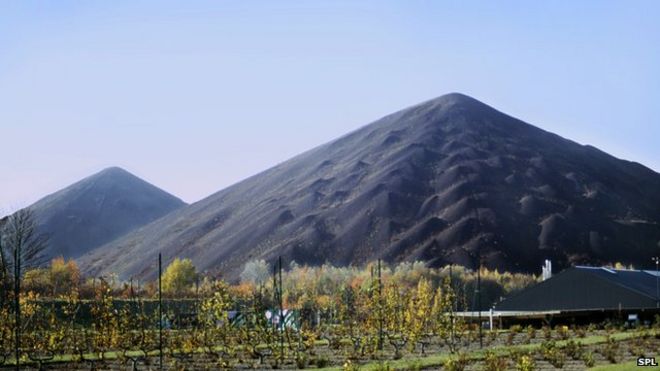
Curbing fires in coal waste is one way of generating carbon credits

The vast majority of carbon credits generated by Russia and Ukraine did not represent cuts in emissions, according to a new study. The authors say that offsets created under a UN scheme "significantly undermined" efforts to tackle climate change.

The credits may have increased emissions by 600 million tonnes. In some projects, chemicals known to warm the climate were created and then destroyed to claim cash.

As a result of political horse trading at UN negotiations on climate change, countries like Russia and the Ukraine were allowed to create carbon credits from activities like curbing coal waste fires, or restricting gas emissions from petroleum production. Under the UN scheme, called Joint Implementation, they then were able to sell those credits to the European Union's carbon market. Companies bought the offsets rather than making their own more expensive, emissions cuts.

But this study, from the Stockholm Environment Institute, says the vast majority of Russian and Ukrainian credits were in fact, "hot air" - no actual emissions were reduced. They looked at a random sample of 60 projects and found that 73% of the offsets generated didn't meet the key criteria of "additionality". This means that these projects would have happened anyway without any carbon credit finance.

"Some early projects were of good quality, but in 2011-2012, numerous projects were registered in Ukraine and Russia which had started long before and were clearly not motivated by carbon credits," said Vladyslav Zhezherin, a co-author of the study. "This was like printing money."

According to the review, the vast majority of the offset credits went into the European Union's flagship Emissions Trading Scheme. The authors estimate these may have undermined EU emissions reduction targets by 400 million tonnes of CO2, worth over $2bn at current market prices.

I
Image copyrightSPLImage caption
Reducing emissions from the oil and gas industry is another way of earning credits

Unlike the Russian and Ukrainian projects, similar offsetting plans in Poland and Germany were said to meet very strict criteria.

"We were surprised ourselves by the extent, we didn't expect such a large number," co-author Anja Kollmuss told BBC News. "What went on was that these countries could approve these projects by themselves there was no international oversight, in particular Russia and the Ukraine didn't have any incentive to guarantee the quality of these credits."

Because Germany and Poland had tougher emissions targets to meet, they were very careful with their certificates. This wasn't the case in Russia and the Ukraine.

One part of the larger review has been published in the journal Nature Climate Change. It concerns the activities of projects that made money from the removal of chemicals HFC-23 and sulphur hexafluoride, which add significantly to global warming. They found that, in 2011, all three projects in the study significantly and simultaneously ramped up the amount of the chemicals they were destroying.

"As researchers we can not prove the fraud, we can just point to the facts so in the HFC case at the moment when they could gain credits they immediately increased production of this greenhouse gas in order to destroy them, and that lead to them getting many more credits than if they had produced it like they did before," said Anja Kollmuss.

Experts familiar with the Russian carbon projects said that there had been longstanding and well acknowledged issues with the destruction of chemicals for carbon credits. This had been seen in China for several years.

Michael Yulkin, from Russia's Environmental Investment Centre rejected the idea that many of these Eastern projects broke the rules. "That's just not true," he told BBC News. "All the projects have been validated and the additionality has been proved - it was all following the rules and if the rules allowed them to be in, so you have them in." Mr Yulkin pointed out that the projects were no longer an issue. The EU emissions trading scheme no longer accepted the credits - and Russia was not taking part in the next commitment period of the Kyoto Protocol.

The authors of the study argue that lessons must be learned for any future market mechanisms that are incorporated into a new global agreement on climate change, expected to be signed later this year at a conference in Paris. "In future, we need to do better and we can do better, but the devil will be in the detail and tighter controls will be needed," said James Wilde from the Carbon Trust. "If firms are to invest at scale driven by a price for carbon, they need to know that the schemes setting this price in future will be robust and survive for the lifetime of investments."


This report forms the basis of the latest fortnightly report from the New Economics Foundation:
New Economics Foundation

Energy round-up: 

carbon markets have failed

Photo credit:   freefoto
SEPTEMBER 3, 2015 // BY: STEPHEN DEVLIN

In theory, the world has the solution to soaring emissions – it’s called carbon pricing.
Carbon pricing is an attempt to reduce carbon dioxide emissions by charging polluters to cover their external costs. Most economists and policy-makers argue the only efficient way to do this is through establishing a market for carbon. This is done through an emissions trading scheme (ETS): a fixed number of emissions permits are issued and a cap is set on the total emissions allowed.
Those who then pollute more – oil and gas firms and others who find it harder to make cuts, for example – can cover their higher emissions by buying more permits from those who make reductions easier. But it’s also possible to cover emissions by purchasing offsets from foreign ETS.
In fact, a new report released by the New Zealand government reveals that almost all of their emission reduction obligations for 2014 were met by paying for offsets in transition countries such as Russia and Ukraine, cheaper options because emissions cuts are easier to make there.
The problem is that many analysts believe these foreign emissions reductions would have happened anyway. Cutting waste from coal or pipeline leakages, for example, is win-win for industry as it also keeps their costs down. As a result, the impact of New Zealand’s ETS is close to zero. This also applies to the EU ETS, in which about a third of total emissions reductions come from international offsets.
Not only has this overestimated emissions reductions, it may have also contributed to the collapse of carbon prices. In both New Zealand and EU, markets remain far below the estimated cost of carbon. The actual social cost of carbon emissions is far higher than emissions permit prices imply. This also undermines long-term incentives to innovate as it’s much cheaper to just pay for your pollution.
But reforming emissions trading schemes has been a headache so far. Companies benefit from low prices as offsets depress the market and windfall profits – as permits are issued for free – and those unused can be sold on. Chances are they are not looking to give up paying far below the actual cost of pollution and making a profit from selling excess permits, too. At least in other carbon markets this problem is tackled by auctioning permits.
Financial incentives are a powerful force, but for carbon pricing the market design is flawed.

Don't miss these:

  • How polluters cause more damage than they pay for: 
  • Scrap that: The UK government made a surprise announcement to cut subsidies for solar by 90%. Sign this petition to voice your opposition.

In other news…

UK renewable gloom
Energy Secretary Amber Rudd followed up new restrictions to onshore wind development with huge cuts in subsidies to small-scale solar. DECC also announced a new project to examine the “true costs” of electricity generation, in particular the cost of connection to the grid. Some commentators suspect such a study would pave the way for future attacks on renewables policy.
Solar
While under threat from subsidy cuts in the UK, solar is still projected to grow strongly worldwide, to about 652 GW by 2025 as a new report by GlobalData shows. Yet growth may plateau soon after as governments around the world continue withdrawing support for the technology. In fact, most of 2014’s growth can be attributed to China and Japan alone.
The intermittency issue I
With renewables playing an increasing role in German energy, new data suggests that Germany’s power system was more reliable than ever in 2014 - despite persistent claims that intermittent renewables will threaten the stability of our power system.
The intermittency issue II
Panasonic is launching its suite of home batteries in Germany, which is also key market for Tesla as homeowners receive greater incentives to install solar panels on their rooftops. Batteries store power during peak production which can then be dispensed later, useful for bridging the intermittency of renewables. In Japan, Panasonic’s batteries already let households replace as much as 70 percent of energy usage by storing solar-generated power.
Netherlands appeal
After a landmark judgement in June forcing the Dutch government to make steeper emission cuts to combat climate change, the environment minister has now announced that the ruling will be contested. The minister argues the court’s verdict could set a precedent for other similar cases.
COP21
Much of the analysis around COP21 in Paris later this year is still focused on the size of different country’s pledges, but others have been considering how to draft an agreement that keeps up the pressure in later years. LSE’s Grantham Institute suggests that success will depend on whether the deal presses countries to scale up their ambition every five years as new technologies emerge.

Energy round-up: carbon markets have failed | New Economics Foundation
.
.
.