... A FORUM TO STIMULATE DEBATE ... ... JUST ADD A COMMENT AT ANY ENTRY BELOW... ... FOR THE SUSTAINABLE DEVELOPMENT OF TOWN AND VALLEY ...

Tuesday, 30 January 2018

Climate change and the importance of halting rainforest destruction

Deforestation is one of the biggest contributors to climate change:

Commitments to reduce destruction of forest are not being met - from industries as diverse as palm oil, timber, cattle and soya:

DEFORESTATION TARGETS LIKELY TO BE MISSED


January 4, 2018

There is no chance of hitting targets to tackle deforestation by 2020 at the current rate of progress, according to this year’s Forest 500 analysis.

Forest 500 identifies the most influential players in the supply chains of the four key forest risk commodities: palm oil, timber, cattle and soy. The companies, financial institutions and governments are ranked annually on their commitments to tackle deforestation.

This year marks the halfway point from when Forest 500 began to track progress towards the 2020 deadlines of the New York Declaration on Forests and the Consumer Goods Forum goals, which many of the companies assessed have signed up to.

There are clearly businesses leading the way, including Marks and Spencer, Mars, Unilever and Danone – all of which received top marks for zero-deforestation policies linked to specific commodities.

However in general efforts need to improve dramatically in the next three years, especially in relation to cattle production, said the report’s author Sarah Rogerson. “Our 2017 analysis of company commitments shows that at current rates of policy uptake, the 2020 goals to eliminate commodity driven deforestation will not be met. At current rates, the 250 most influential companies will not have introduced, let alone implemented, policies covering the key forest risk commodities by 2020.”

Only 16% of the Forest 500 companies have an overarching deforestation policy. Nearly 40% of the companies assessed have a forest policy for one, but not all, of the commodities in their supply chains.

Cattle supply chains still have the fewest forest policies – just 15 of the 86 companies assessed have a deforestation policy for production or procurement. There has been “almost no improvement” at all in the last four years, said Rogerson, with some companies “going backwards”. Nike Inc., Burger King, VF Corp’s subsidiary Timberland and Eagle Ottowa have removed deforestation policies for beef or leather procurement from their website over the last three years, she said.


Deforestation targets likely to be missed - Foodservice...

When it comes to palm oil production - which is speeding up forest clearance - its use in biofuels is not helping any reduction in CO2 emissions:
Palm Oil Biofuel
Biofuels needed but some more polluting than fossil fuels, report warns | Environment | The Guardian

But we need rainforests to help the battle against climate change - because they help to cool things down:

Study reveals forests have yet another climate-protection superpower

by Morgan Erickson-Davis on 16 January 2018

Scientists looked at reactive gases emitted by trees and other vegetation, finding they have an overall cooling effect on the atmosphere globally.

As forests are cleared, emissions of these cooling reactive gases are reduced. The researchers estimate the loss of this function this may contribute 14 percent towards deforestation-caused global warming.

The authors write that effective climate policies will require a “robust understanding” of the relationship between land-use change like deforestation and climate, and urge more research be done toward this goal.

As big carbon storehouses, forests have the power to influence the climate. So much so that the protection and expansion of forests is a key part of the Paris Agreement, which seeks to lower greenhouse gas emissions and stave off the worst effects of global warming.

A new study, published last week in Nature Communications, finds forests may have an even bigger cooling effect on climate than we thought. And that without them, the world may be heating up more quickly than expected.

Living vegetation emits gases that can react and combine with other gases in the atmosphere. Some of these, called biogenic volatile organic compounds (BVOCs), affect the formation of other compounds like aerosol, ozone and methane, the presence of which can influence atmospheric temperature.


Study reveals forests have yet another climate-protection superpower
.
.
.

Climate change, sustainability and corporate responsibility

An interesting overview yesterday from Green Biz in Davos:

Here are 5 ways climate became part of the 2018 Davos dialogue


Climate change was a hot topic among the almost 2,000 leaders in snowy Davos, Switzerland, for the 2018 annual meeting of the World Economic Forum.
Will the real Donald Trump please stand up?
One week ago, the U.S. president showed his stripes as an "America First" trade protectionist by blessing a tariff that is likely to raise costs for corporate solar purchases and cost domestic jobs among installers and developers. Five days later, a "restrained" POTUS stood before world leaders at the World Economic Forum in snow-blanketed Davos, Switzerland, encouraging them to invest in a "strong and prosperous" United States.
The money quote from his speech: "America First does not mean America alone."
Much of the media coverage remarked on the relative lack of drama associated with Trump's WEF debut (he skipped last year). As is to be expected, his remarks completely ignored the topic of climate change. However, plenty of the other leaders there — notably France's President Emmanuel Macron and Chinese economist Liu He — were more than willing to position their nations as champions of inclusive economic growth engineered to address the threat of global warming.

World Economic Forum / Sandra Blaser2018

Liu He, general office director, Central Leading Group for Financial and Economic Affairs, People's Republic of China, speaks during the session "China's Economic Policy" Jan. 24 at the Annual Meeting 2018 of the World Economic Forum in Davos.


Macron's commitments included a pledge to shut all of his country's coal-fired power plants by 2021 (in part, amid the revelation that France blew its emissions reductions targets in 2016.) Liu He talked up his country's focus on "high-quality growth." As he put it:
Green and low-carbon development is what the Chinese people want the most in a break with the traditional growth model. In the next three years, China will scale up pollution control to substantially cut the total emissions of major pollutants and lower the intensity of resource consumption. Such efforts are expected to improve the environment. They will make our development more eco-friendly and our skies blue again.
As has become the case for the past several years, climate action advocates representing both the private and public sectors used WEF to issue research supporting the principles of clean economics and to highlight heightened corporate commitments. Here are some developments and questions that had both attendees and those watching from afar talking. 

1. Will economists embrace an alternative to GDP?

The common practice of relying on gross domestic product — without factoring in the social and environmental impacts — as a measure of economic prosperity is causing nations to miss out on "a virtuous circle in which growth is strengthened by being shared more widely and generated without unduly straining the environment or burdening future generations."
That WEF-authored proclamation accompanied the organization's latest Inclusive Development Index, which points up two particularly troubling trends among the world's most advanced economies: First, they're "flatlining" when it comes to improving wealth among all households. And second, their standing has deteriorated since 2012 when it comes to addressing the depletion of natural resources, carbon intensity of GDP and other intergenerational factors.
"Broad, sustainable progress in living standards is the bottom-line result societies expect," said Richard Samans, managing director and head of Global Agenda, WEF. "Policy-makers need a new dashboard focused more specifically on this purpose."
To be fair, this isn't a new theme: the sustainability community and environmental economists have been talking up this idea for more than a decade. But when WEF speaks, world leaders and CEOs tend to listen.

2. A heightened focus on the future of food — and waste

Alongside the inclusion theme, WEF researchers also issued new data exploring the link between meat and protein consumption and environmental sustainability. Its analysis blames global livestock production for 15 percent of all annual greenhouse gas emissions and, more specifically, for 75 percent of all the forest-clearing activities in the Amazon rainforest. 
"We must work together to evolve our current meat production, explore alternative proteins and encourage new consumer behaviors, especially on reducing food waste," said Tom Hayes, president and CEO of Tyson Foods, the largest U.S. meat processor, who was on hand in Davos discussing the report. Tyson's venture fund is an investor in alternative protein company Beyond Meat.


One company using the WEF platform to make a statement on food waste was Cargill, which has entered into a three-year partnership with Gastromotiva, a nonprofit in Brazil addressing this issue. The initiative focuses on training local chefs to manage their kitchens differently.
Incidentally, last week marked the publication of a new "action guide" dedicated to helping U.S. grocery retailers do their part in reducing the estimated $218 billion annual American food-waste problem. The analysis by nonprofit ReFED includes advice from programs at Albertsons, Kroger, Walmart, Target, Wegmans and Whole Foods. Among the prevention strategies: dynamic pricing and markdowns.

World Economic Forum / Boris Baldinger2018
Paul Polman, CEO of Unilever, during the session "Standing Up for Social Progress" Jan. 25 at the Annual Meeting 2018 of the World Economic Forum in Davos.


3. One word: Plastics

The Ellen MacArthur Foundation orchestrated one of the larger corporate-driven events at WEF last week, spotlighting 11 retailers and consumer goods companies that pledged to embrace 100 percent reusable, recyclable or compostable packaging by 2025 (or earlier in some cases).
The list includes Amcor, Ecover, evian, L'Oreal, Mars, Marks & Spencer, PepsiCo, Coca-Cola Co., Unilever, Walmart and the German CPG company Werner & Mertz. They collectively use more than 6 million tons of plastic packaging annually. The initiative is part of the foundation's work to evangelize circular economy principles, and it dovetails with the business world's heightened focus on reducing the plastic materials finding their way into the ocean.
Among the more notable commitments: Unilever is working to publish a list of the plastic materials that make up its packaging by 2020, as part of its advocacy for an industry-led protocol for tackling the issue.

4. Let's name names, shall we?

Unilever actually used WEF to make another update to its ongoing Sustainable Living Plan, including an agreement with a government-owned palm oil plantation in Indonesia, PT Perkebunan Nusantara. The idea is to certify local mills and smallholder farmers on techniques to reduce deforestation or development on peat — which plays a major role in offsetting greenhouase gas emissions — and to discourage exploitation of communities.
“Unilever’s ambition is to make sustainable palm oil mainstream," said Marc Engel, chief supply chain officer. "We have been working really hard to make this a reality and we have been evolving our approach over the years. We are involved in various partnerships to help smallholder farmers improve their yields while protecting the environment and local communities. The MoU with PTPN is the first time we can apply the produce-protect model at scale — our partnership will have a positive impact in Indonesia from an environmental, social and economic perspective which makes it unique to the industry.”
Ironically (and oddly), Unilever didn't make the cut on a global ranking of the Global 100 "most sustainable corporations," released to coincide with the Davos gathering. The publicly listed companies on the list are evaluated on 17 environmental, social and governance metrics such as carbon productivity, revenue from clean products, the link between executive pay and sustainability performance, and renewable energy adoption.
This year's top ranking went to Dassault Systemes, a French software company that specializes in 3D design and engineering applications. The rest of the top five were:
  • Neste, the Finnish energy company
  • Valeo, a French suppliers of automotive components
  • Ucb, a Belgian biopharmaceutical firm
  • Outotec, a Finnish construction, mining and engineering company
The top-ranking U.S. company was Cisco Systems, the networking and communications specialist, which ranked seventh globally. The United States had the most companies on the list (18) followed by France (15).

5. Which is really the most sustainable country of all? (For now)

Speaking of rankings, the latest Environmental Performance Index published collaboratively (and biennially) by WEF and researchers at Yale and Columbia universities was released last week in Davos. It considers 10 very specific environmental threats, including air pollution, sanitation, drinking water, greenhouse gas emissions and deforestation.
According to the latest data (PDF), host country Switzerland ranks first in national sustainability, with France, Denmark, Malta and Sweden claiming the rest of the top-five spots. The United States came in at No. 27, behind the United Kingdom (sixth), Germany (13th), Italy (16th), Japan (20th) and Canada (25th). China and India were much lower on the 180-country ranking, at No. 120 and No. 177, respectively.
Generally, the scores for emerging economies are subject to much more fluctuation, the researchers noted. 
"The 2018 EPI confirms that success with regard to sustainable development requires both economic progress that generates the resources to invest in environmental infrastructure and careful management of industrialization and urbanization that can lead to pollution that threatens both public health and ecosystems," said Daniel Esty, director of the Yale Center for Environmental Law & Policy and a contributor to the report.


Here are 5 ways climate became part of the 2018 Davos dialogue | GreenBiz
.
.
.

Monday, 29 January 2018

Plans for Port Royal: 'Council proposes to drop regeneration plans and sell the Drill Hall'

The District Council has published the final report on Port Royal from its consultants:
Futures Forum: Plans for Port Royal: anticipating a Regeneration Board >> Scoping Study consultants' "final report" published

Here with some very useful information is the latest newsletter from the Rescue Sidmouth Drill Hall site:

This could be the start of something big!


Dear Friends,

This is the first of what will probably be several emails over the next week or so. The results of the Port Royal Scoping Exercise are going to be considered at Sidmouth Town Council meeting on the 5th of Feb and on Feb 7th at the EDDC cabinet meeting.

The STC meeting will take place at the Methodist Hall on Church Lane, just off High Street, so that there will be greater room for those who wish to attend. However, it is not a very large room so I would suggest you arrive early if you want to show your support for retaining the Drill Hall and avoiding a wholesale demolition of Port Royal. Unfortunately I will not be able to be there.

To try to pull some points together before they make their decision I have sent an email and attachments to STC Councillors and the Sidmouth EDDC Councillors. What I have written will, in the main, not be new information but I have done some reworking of the raw data from the Survey results, approaching them in a different fashion to try to extract more information.

A copy of the email and attachments can be found here

The agenda for the STC meeting should be published tomorrow and I will be in touch with you, and then, if there is anything further to say. Once their deliberations have borne fruit we will know the grounds on which we can start to make further plans. I sincerely hope we will not end up in a battle with the Councils and that they have listened to the voices from the meeting and the petition.

More anon.

Mary 


This could be the start of something big!
Blog - Sidmouth Drill Hall Rescue
Newsletter Archive - Sidmouth Drill Hall Rescue

And here's a message from the 3Rs campaign:


EDDC propose sale of the Drill Hall

I am pleased to say that EDDC Cabinet on 7th February will review a proposal from Officers to drop the development plans for Port Royal included in the Local Plan. This is amazing news and what we had hoped for. In addition, they propose to offer the Drill Hall site for sale. At the moment we do not know whether this will be the freehold or leasehold or the price they will seek.

I encourage everyone to attend the meeting of Sidmouth Town Council on Monday 5th (Methodist Hall, 6.30pm) and the Cabinet meeting at EDDC on Wednesday 7th at 5.30pm.  Come prepared with your questions!

The Cabinet agenda papers can be found here:

http://eastdevon.gov.uk/media/2363163/070218combinedcabagendapublicvers.pdf

and the relevant pages are 63-68.

Cathy Gardner
East Devon Alliance

Exciting news! Council proposes to drop regeneration plans and sell the Drill Hall
.
.
.

Plans for Port Royal: anticipating a Regeneration Board >> Scoping Study consultants' "final report" published

The consultants looking at Port Royal and the Eastern Town have published their report - to be considered at both councils next week:
Futures Forum: Plans for Port Royal: anticipating a Regeneration Board >> Scoping Study consultants' "final report" to be presented to Town and District Councils

The District Council's press release from today focusses on the constraints - and putting the site on the market:


New future for drill hall site proposed following Sidmouth Port Royal scoping study report

When this content has been created

29 January 2018

District and town councils to discuss town site next week


The scoping study of Sidmouth’s Port Royal area is now completed and reports have been published for both councils to decide the way forward.

A core group of councillors representing both authorities, have considered the findings of the study and recommendations are being made to both councils in separate reports being published today. (Monday September 29)

Sidmouth Town Council will consider its report on Monday February 5 and East Devon District Council’s Cabinet will discuss the issue on Wednesday February 7.

The scoping study has provided both councils with a level of detail and analysis of the area which has not been previously available and this wealth of knowledge has given both authorities, who are each landowners in the area, a clear foundation on which to decide how to move ahead.

The eastern end of Sidmouth has, for many years now, been a focus of town interest because of its comparatively run down nature. What both councils have learnt from this study is that renewal of the area is important to local people but brings with it some particular challenges which include:

  • The increased risk of flood to the area and the as yet to be resolved outcomes of the ongoing Beach Management Plan process 
  • A lack of financial viability of large scale mixed-use  development on this location if affordable homes were included on or off-site
  • An existing covenant with a boundary which creates uncertainty on parts of the potential development area.
With these complexities in mind, it is recommended to the councils that they do not pursue a comprehensive mixed-use site development.

At the same time, the general consensus during last summer's consultation process in the town was that improvement needs to happen. To that end, the district council is being asked to endorse a proposal that new opportunities are sought for the redundant drill hall site at Port Royal whilst the town council focuses on improvements to the appearance and usage of the Fishermen's sheds and Fish shop area.

In regards to drill hall, East Devon District Council, as owner of the site, would carry out a marketing exercise seeking appropriate uses that would add attraction to the area such as a high quality restaurant / bar development or similar.

Marketing such a site to the commercial sector would normally be a three-month process. However, the Cabinet report recognises the community-based interest in the scoping study, and in this site in particular. So to encourage funding bids from commercial and non-commercial sources alike, the marketing period proposed will be doubled to six months.

The active uses at Port Royal, in particular the lifeboat and sailing clubs, will be unaffected by this proposed way forward and their premises will remain and not be part of a wider development plan. With this in mind, the council will be able to talk to these important community users about securing their longer term prospects.

Cllr Paul Diviani, Leader of East Devon District Council, said:
Sidmouth has waited long enough to see something happen on this site and both councils want to see improvement and new attractions for Sidmouthians and visitors alike. Both councils have worked exceptionally well together on this project.
Cllr Jeff Turner of Sidmouth Town Council said:
I believe the Sidmouth public will welcome the approach being recommended. It will provide opportunities for renewal of the Drill Hall site and, in particular, the possibility of our seafront benefitting from the new restaurant and bar attractions that emerged as popular choices in responses to the scoping study and the Sid Valley Neighbourhood Plan surveys. At the same time, both the lifeboat station and the Sailing Club and boat park will remain unaffected.

29 January 2018 - New future for drill hall site proposed following Sidmouth Port Royal scoping study report - East Devon

The full report is part of the agenda for next week's District Council cabinet meeting - including links to other reports:
70218 - combined cabinet agenda public version.pdf
.
.
.

The palm oil in your biofuel

Not only do we increasingly use palm oil in food:
Futures Forum: The palm oil in your chocolate

But we are using tonnes of it as a fuel:
Palm oil is cheap, but it’s also an eco-disaster | This Week In Asia | South China Morning Post

And the EU has just acted against their use:
EU Parliament ends palm oil and caps crop-based biofuels at 2017 levels – EURACTIV.com
​EU Parliament ends support to highest-emitting palm oil biofuel while freezing all food-based biofuels at current levels | Transport & Environment

Which has considerably upset Indonesia and Malaysia:
Malaysia reviewing trade with EU after Brussels moves to ban use of palm oil to make biofuels, SE Asia News & Top Stories - The Straits Times
No scientific basis for EU to ban palm oil as biofuel — Soppoa – BorneoPost Online | Borneo , Malaysia, Sarawak Daily News | Largest English Daily In Borneo
Over 1,000 protest against EU move to ban palm oil biofuel | Malaysia | Malay Mail Online

But there are several reasons for the ban.

It's about climate change:
Palm Oil Biofuel - Global Greenhouse Warming

And it's about deforestation:

Biofuel boost threatens even greater deforestation in Indonesia, Malaysia: Study

by Hans Nicholas Jong on 25 January 2018

Mongabay Series: Global Palm Oil, Indonesian Palm Oil


A new report projects the global demand for palm oil-based biofuel by 2030 will be six times higher than today if existing and proposed policies in Indonesia, China and the aviation industry hold.

That surge in demand could result in the clearing of 45,000 square kilometers (17,374 square miles) of forest in Indonesia and Malaysia, the world’s biggest palm oil producers, and the release of an additional 7 billion tons of CO2 emissions a year — higher than current annual emissions by the U.S.

That impact could be tempered to some degree by the European Union, which plans to phase out all use of palm oil in its biofuel over the next three years, citing environmental concerns.


JAKARTA — Global demand for biofuels containing palm oil looks set to grow sixfold by 2030, potentially driving the destruction of Southeast Asian rainforests the size of the Netherlands, a new report warns. Biofuel policies in place or proposed by Indonesia and China, as well as the aviation industry, could push their consumption alone to 45.6 million tons by 2030, according to the report commissioned by Rainforest Foundation Norway.

“As we approach 2020, many biofuel policies are being reassessed and renegotiated,” report author Chris Malins, a biofuels policy expert, said in an email. “So this seemed the right time to look at what the best and worst scenarios were for the impact of biofuel policy on deforestation in Southeast Asia for the next decade.”


A filling station selling biodiesel. Photo by Robert Couse-Baker/flickr.

Biofuel policies

Indonesia, the world’s biggest producer of palm oil, is currently pushing for increased domestic consumption of biodiesel that contains the vegetable oil. The policy calls for a minimum bio, or palm oil, content of 30 percent in all diesel sold in the country by 2020, up from the current requirement of 20 percent. This target is one of the most ambitious biodiesel-blending targets in the world. If achieved, Indonesia’s annual biodiesel consumption would rise to 18.6 million tons.

China, meanwhile, has begun discussions with Indonesia and Malaysia, the world’s second-biggest palm oil producer, to boost its own blending target to a minimum of 5 percent palm oil in biodiesel. That would increase China’s palm-based biodiesel consumption to 9 million tons a year.

Another key driver of the demand for palm-based biofuels will come from the aviation industry. The UN’s International Civil Aviation Authority (ICAO) has proposed increasing the use of biofuels for passenger planes, aiming for half of jet fuel to come from biofuels by 2050. This scenario could potentially require 18 million tons of palm-based aviation fuel by 2030.

“The report shows that the aviation sector and Indonesia may become the largest consumers of palm oil-based biofuels in 2030,” Nils Hermann Ranum, the campaign and policy chief at Rainforest Foundation Norway, told Mongabay.


An oil palm plantation adjacent to tropical forest in Borneo, where a “triple hotspot for biodiversity, carbon and threat, [means] there is a compelling global case for prioritzing their conservation,” the scientists write. Photo by Rhett A. Butler7 billion tons of emissions

Assuming that Indonesia, China and the aviation industry meet stick with and achieve their stated biofuel policies, demand for palm oil for use in biofuels by 2030 could be more than six times higher than today — amounting to 67 million tons. This would account for half of global demand for palm oil, and would exceed the current global production of the commodity, at around 65 million tons annually.

Production has remained largely flat over the last 20 years, which means the surge in demand presaged by the policies in Indonesia, China and the aviation sector will call for a massive expansion of existing palm plantations. In Indonesia and Malaysia, which produce 85 percent of the world’s palm oil, this would translate into a sharp escalation of already alarming levels of deforestation. (In Indonesia alone, 40 percent of the deforestation that occurred between 1998 and 2008 can be attributed to palm oil production, according to a 2013 technical study funded by the European Commission.)

Barring a massive increase in the average palm oil yields, meeting the global demand would result in the loss of 45,000 square kilometers (17,374 square miles) of forests, an area the size of the Netherlands, by 2030. A loss of forests that size would result in 7 billion tons of carbon dioxide emissions over the next two decades — more than the total annual emissions of the United States.

“It’s well understood that the palm oil industry in Southeast Asia is endemically linked to deforestation and peat drainage, but biofuel mandates adopted in the name of climate change mitigation continue to drive palm oil demand higher and higher,” Malins said.


Deforestation for oil palm in Malaysia’s Sabah State. Photo by Rhett A. Butler/Mongabay.

EU scaling back

While the environmental prospects look bleak, the impact could be tempered by the European Union’s policy to go in the opposite direction and phase out palm oil in biofuels. The EU is currently the world’s second-biggest importer of palm oil, behind only India, and is in the process of adopting a revised Renewable Energy Directive to take effect from 2020-2030.

“The purpose of the EU’s renewable energy policy is to reduce greenhouse gas emissions, and allowing palm oil-based fuels would be a direct contradiction to that goal,” Ranum said.

To that end, the European Parliament last week voted in favor of targets to cap crop-based biofuels, following the parliament’s overwhelming decision last year to ban the use of vegetable oils in biofuels. The amendments will now go to the European Commission and member states before they become law. The amendments call for a reduction to zero of “the contribution from biofuels and bioliquids produced from palm oil” by 2021.

Ranum and Malins welcomed the move, saying that it would have a significant impact on global demand. Their report found that without strong measures to avoid palm oil use in biofuels, EU biofuel consumption in 2030 could reach 7.3 million tons, up from the current 3 million tons.

An immediate reform of EU biofuel policy could reduce global palm oil demand by 3 million tons, Malins said. “That would take a great deal of pressure off the global market, and could allow 3,000 square kilometers [1,158 square miles] of deforestation to be avoided,” he said.

Ranum noted, however, that the amendments still needed to be ratified. “It’s important to bear in mind that while the European Parliament has suggested to exclude palm oil-based biofuels from its renewable energy policy, the EU member states, through the EU Council, have come to an opposite position,” he said. “If the EU decides to avoid palm oil biodiesel, that would be proof that the EU takes the climate effect of its policies seriously.”

Last week’s vote triggered a backlash from Indonesia and Malaysia, who called it unfair and misguided. Officials from both countries trotted out the industry-sanctioned argument that other types of vegetable oils used in biofuels also required clearing far greater plots of land for an equivalent yield. The Indonesian government also said it had taken steps to address the environmental impact of the palm oil industry.

Malins acknowledged that while such efforts had been made, they had been far from effective. “Sadly, there’s also no question that these measures have failed to date to prevent the most damaging practices of peat drainage and forest clearance,” he said. “A more sustainable palm oil industry is vital to continue to supply vegetable oil for food and oleochemicals, but it would be grossly irresponsible to continue using palm oil for biofuel while peat and forest clearance continue.”

Banner image: An oil palm plantation. Photo by Bram Ebus for Mongabay.


Biofuel boost threatens even greater deforestation in Indonesia, Malaysia: Study
.
.
.

The palm oil in your chocolate

People are losing their homes - cleared out to make way for palm oil plantations:
Futures Forum: Rainforest destruction >>> We’ve got to restore habitats, reduce consumption and make our exploitation sustainable

And others are also losing their habitat - all because of the increasing demand for palm oil:
Futures Forum: Palm oil: the secret in your shopping basket - have your say

Back in 2010, Greenpeace ran a campaign directed at Nestle to stop using palm oil produced in former rain forests:
Greenpeace, Nestlé in battle over Kit Kat viral - CNN.com


Have a break? from Greenpeace UK on Vimeo.

It was judged a success at the time:
Success! You made Nestlé drop dodgy palm oil! | Greenpeace UK

Several years on, and not much has in fact changed, as this piece in last October's Guardian showed:

Nestlé, Hershey and Mars 'breaking promises over palm oil use'

This year’s Halloween confectionery will contain palm oil grown on land that should lawfully be habitat to orangutans, rhinos and clouded leopards, despite commitment to clean up supply chains


Arthur Neslen

Sat 28 Oct 2017

Nestlé, Mars and Hershey have been accused of breaking pledges to stop using “conflict palm oil” from deforested Indonesian jungles, just days before the annual Halloween confectionery frenzy.

The Rainforest Action Network (RAN) says consumers have been “deceived” by promises from the brands to clean up their supply chains which were subsequently delayed, revised or watered down.

Laurel Sutherlin, a spokesman for the group, told the Guardian: “For too many years, Nestlé, Mars and Hershey have cherry-picked their [palm oil] targets and then moved the goalposts when they don’t achieve them. There’s just no further room for error to prevent the extinction of tigers, orangutans and elephants.”

The last parcel of Sumatran rainforest in which these three species all roam – along with rhinos, clouded leopards and sun bears – is vanishing at a dramatic pace as lucrative palm oil plantations illegally eat into tropical forestland.

The brands source palm oil from this 2.6m hectare Leuser region, via complex supply chains, some involving traders linked to suppliers illegally logging in the region.

Nestlé promised to end deforestation in its supply chain by 2015 in response to Greenpeace’s KitKat campaign of 2010. After Ran’s “Snack food 20” report, this was upgraded to a pledge of “no sourcing from areas converted from natural forests after 1 February 2013”. The target was missed.

“Four years later we can now trace over 90% of our palm oil back to the mill of origin and almost two thirds back to the plantation level,” said Nestlé spokeswoman Peggy Diby. “Our ambition is to raise this figure to 100% by 2020, back to plantation.”


Pepsico, Unilever and Nestlé accused of complicity in illegal rainforest destruction

In July, Nestlé told the Guardian it could only source 47% of its palm oil to plantations, suggesting a big improvement in the last three months.

Hershey’s said in 2014 that it would source all of its palm oil back to the mill level by 2015, and to plantations by 2016. But its plantation level sourcing actually fell in 2016 from 27% to 14%, and the commitment has been deferred until 2020.


Greenpeace protestors dressed as orangutans demonstrate against palm oil harvested from rainforest destruction outside a Nestle shareholders’ meeting. Photograph: Antoine Antoniol/Bloomberg/Getty Images


Jeff Beckman, Hershey’s communications director said: “While we remain deeply committed to pushing all stakeholders to accelerate traceability and bring full transparency to this supply chain along with our supplier partners, we realised it would take more time to achieve this goal than originally anticipated.”

Mars had promised to cut conflict palm oil out of its supply chain by 2015. A spokesperson said: “Our traceability levels remain high. In the year to date, 97% of our palm oil is traceable to mill level and 40% traceable to the plantation. The evidence of the challenge in Leuser is clear, and we are already taking steps toward action.”

Gemma Tillack, Ran’s campaign director said: “It is our view that the brands have deceived consumers by continually claiming to be tackling deforestation when they have not executed the actions required to achieve a moratorium on the forest frontlines of their global supply chains.”

• This article was amended on 30 October 2017 to include a response from Mars, which was supplied after publication.


Nestlé, Hershey and Mars 'breaking promises over palm oil use' | Environment | The Guardian

This piece from the New York Times in November looks at the sorts of actions which can be taken:

Endangered Orangutans and the Palm Oil Industry: 
An Environmental Science Case Study

By MICHAEL GONCHARNOV. 9, 2017


You can find it nearly everywhere, from pizza dough to detergents to ice cream, and even in biodiesel and instant noodles. In fact, 50 percent of packaged food items in American supermarkets contain it.

But the steadily increasing demand for palm oil, not just in the United States but also around the world, threatens the future of wild orangutans. In Borneo, where the vast majority of orangutans live, their population has declined by 80 percent over the last 75 years.

In this lesson, we present students with an environmental quandary to discuss and debate — a case study about the best way to protect orangutans given the wave of deforestation shrinking their natural habitat in Southeast Asia.

Then in the Going Further section, we suggest additional ideas for taking action to be responsible consumers, researching other environmental and human costs of palm oil production, and weighing the economic benefits of a multibillion-dollar industry against its costs.
Endangered Orangutans and the Palm Oil Industry: An Environmental Science Case Study - The New York Times

And this piece from Yale takes us to the heart of the remaining rain forests:

Vanishing Borneo: Saving One of the World’s Last Great Places

BY ALEX SHOUMATOFF • MAY 18, 2017


Borneo’s magnificent rain forest is being decimated to make way for oil palm plantations. Consumers of the countless products made with palm oil, from toothpaste to chocolate bars, hold the key to protecting the most ancient forest on earth.


Palm oil is the second-most important oil in the modern consumer society, after petroleum. Producing it is a $50-billion-a-year business. It’s in a multitude of the household products in North America, Europe, and Australia: margarine, toothpaste, shampoo, lipstick, cookies, Nutella, you name it. Doritos are saturated with palm oil. It’s what gives chocolate bars their appetizing sheen – otherwise, they would look like mud. Palm oil has replaced artery-clogging ghee as India’s main cooking oil. India is now the major consumer of this clear, tasteless oil squeezed from the nuts of the oil-palm tree, Elais guyanensis, originally from West Africa, but now grown pantropically, mainly within ten degrees north and south of the Equator.

Indonesia and Malaysia chose palm oil as their main economic engine after independence in the 1960s, and they together account for 85 percent of world production, which is expected to double by 2050. As oils go, palm oil gives you the best bang for your buck. Soy fields yield far less than rows of oil-palm trees and have to be replanted annually, while the palms keep bearing huge clusters of oil-rich nuts for 20 years, and can then be replaced. In 2015 17 million hectares of oil palm yielded a total of 62 million tons of oil, while the 120 million hectares planted in soy yielded 48 million tons. Palm oil doesn’t lose its properties when it’s heated, or become rancid at room temperature, and it has multiple industrial uses. It is the edible vegetable oil of choice and is not going away.


Vanishing Borneo: Saving One of the World’s Last Great Places - Yale E360

Some steps are being taken, so it seems:
Mars to boost $1bn sustainability plan with ‘sense of urgency’ | News | Eco-Business | Asia Pacific
Candy Giant 'Mars' Wants To Cut Deforestation From Supply Chain - Green Matters
Nestlé Switzerland targets 100% ‘responsible sourcing’ by 2020 - Food Navigator
.
.
.

Rainforest destruction >>> We’ve got to restore habitats, reduce consumption and make our exploitation sustainable

Last night, we saw Chris Packham retracing his steps and looking for someone in Sumatra:

Chris Packham: In Search of the Lost Girl


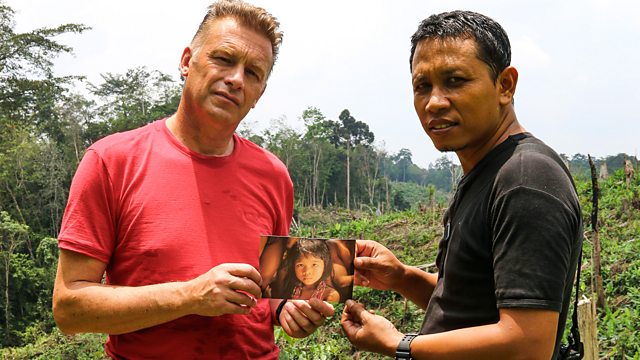
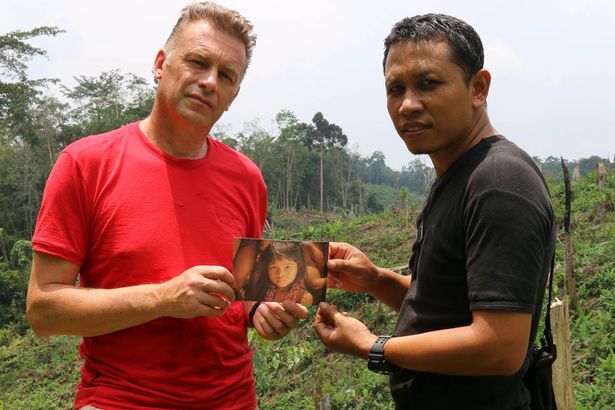
In 1998, wildlife enthusiast and photographer Chris Packham had a remarkable encounter with the Orang Rimba, a tribe of hunter gatherers in the rainforests of Sumatra, Indonesia. It was the first time he had ever seen people living in perfect harmony with their environment. One photograph in particular that Chris took, a picture of a young tribal girl, has since become immensely important to him as a barometer of how we are treating our planet. In this real-life detective story, with no clues as to her identity or whereabouts other than his original photograph, Chris sets off to Sumatra 20
years on to try to find her; the girl in the picture.
Chris's search is further complicated because her tribe is nomadic and often cover vast distances on foot, and since he was last there, millions of hectares of her rainforest habitat has been destroyed. Piecing together the clues, Chris discovers to his horror that the girl's close-knit group of Orang Rimba was attacked not long after he met them, and a number of them killed. But was the girl among them?
Chris travels into the heart of Sumatra and tries to discover the girl's fate by meeting the men who pulled the murdered tribespeople's bodies out of the river. On his way, he discovers just how much of Sumatra's once pristine rainforests have been replaced by palm oil plantations, palm oil which
is in around 50% of the products we buy in our supermarkets. Chris learns some uncomfortable truths about how we are all in some way connected to deforestation.
As Chris's investigation reaches its dramatic conclusion, will he find the lost girl alive? If so, will she be living in harmony with nature as she was 20 years ago? Or will Chris discover the deforestation of her island has had terrible consequences for her?


BBC Two - Chris Packham: In Search of the Lost Girl

Over the past twenty-five years, there has been huge loss of rainforest habitat:
Humans have destroyed a tenth of Earth's wilderness in 25 years – study | Environment | The Guardian

And this has meant loss of the homes for indigenous peoples from Brazil to Borneo:
Futures Forum: Eco-imperialism, zero-deforestation and palm oil
Futures Forum: Saving the rainforests....... indigenous communities' and palm oil corporations' commitment to "zero-deforestation"

The people Chris Packham went in search of are the Orang Rimba, or 'the people of the forest':
Indonesia's forest fires threaten Sumatra's few remaining Orang Rimba | Global development | The Guardian
Indonesia's Orang Rimba: Forced to renounce their faith - BBC News
Housing Not a Solution for Indonesia’s Orang Rimba Tribe: Experts
Indonesia: Tribe attacked in palm oil plantation - Survival International

This account is from the Mirror:

How 20 years of fear at girl's fate led Chris Packham to search jungle for her

A year after his original visit to see the Orang Rimba tribe in 1998, TV's Chris heard the shocking news that they may have been wiped out by raiders - so when telly bosses offered him a "big adventure" he knew just where to go


27 JAN 2018


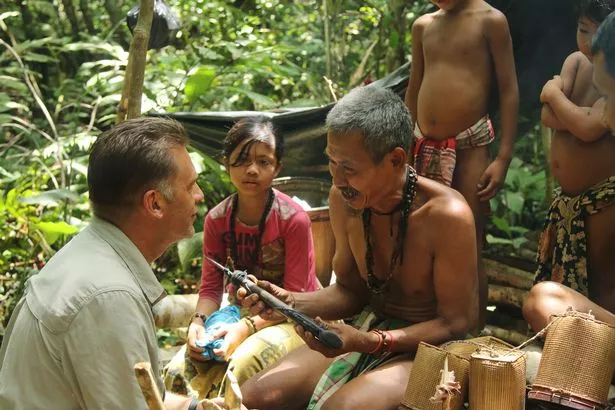
When he stumbled across a tribe of hunter gatherers in the rainforests of Sumatra, 20 years ago, Chris Packham was only the second white man the Orang Rimba had ever seen. But they were happy to let him photograph them – and one picture in particular, of a young girl around six years old, has haunted him for two decades.

Since 1998, he has never stopped wondering what has become of her and her people who were living innocently in total harmony with nature. “They were sustainable, they were entirely connected to that forest, they didn’t over-exploit it, they didn’t damage it, they understood it and were an intrinsic part of its ecology,” he says. So, when BBC bosses said they wanted to send 56-year-old Chris off on a “big adventure” for his next project, he knew exactly what he wanted to do.


Chris Packham has never forgotten the girl in 20 years (Image: BBC)

A year after his original visit, he’d heard some of the tribe had been murdered by thieves – but no one could say for sure who, or even how many, had been killed. He needed to find out if the girl in his picture had survived. With no clues as to the girl’s identity or whereabouts, other than his original photograph, Chris set off for Sumatra to try find her – and make a documentary of his quest, to be screened on Sunday.

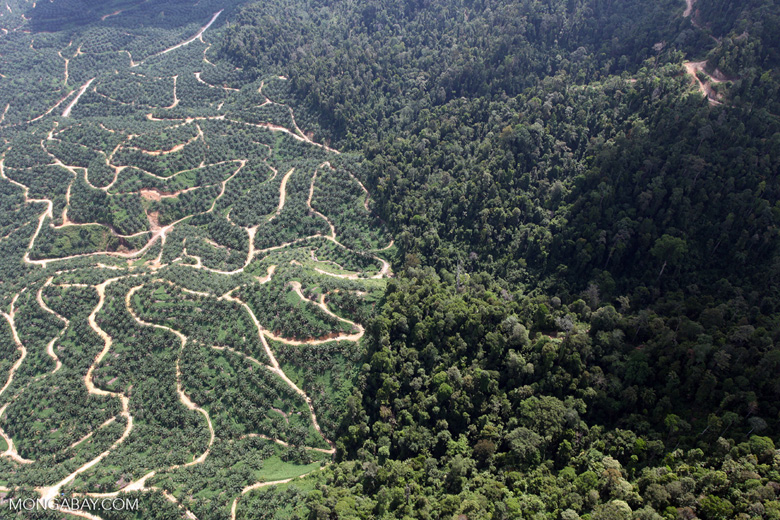
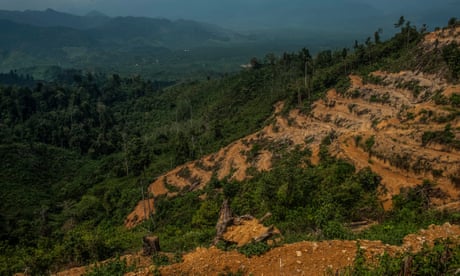
One concern was that the widespread deforestation in that region of Indonesia would have ended the tribe’s nomadic existence. Since he was last there, millions of acres of rainforest have been destroyed by palm oil plantations. And – driven to the edges of the rainforest by the developments – the Orang Rimba started selling fruit to villagers and exchanging cash for gold jewellery. And Chris later discovered it was this stash that the thieves were willing to murder two men, three women and two children for.

Researchers feared the girl in Chris’s picture was dead because her father was among the victims. But then came the breakthrough. Locals had found out the girl’s childhood name, Sumping Tependung, and put out feelers. Chris’s interpreter found her alive.


Being gifted a spear by a tribe elder (Image: BBC)

But Chris said he knew it was not all good news, the night before he was taken to her. “I knew from where we were staying, in a hotel in the city, that she wasn’t going to be in the jungle,” he says. “Finding her alive and healthy was brilliant and she had retained that natural beauty.”

But the camp he found them in, under blue tarpaulins, was on the edge of a palm oil plantation. “They’re living in hell,” he says, “among the very thing that is destroying them. I think it’s absolutely heartbreaking. It’s devastating, there’s no other word for it. In my heart of hearts, I knew when I went out there I was asking for trouble.”

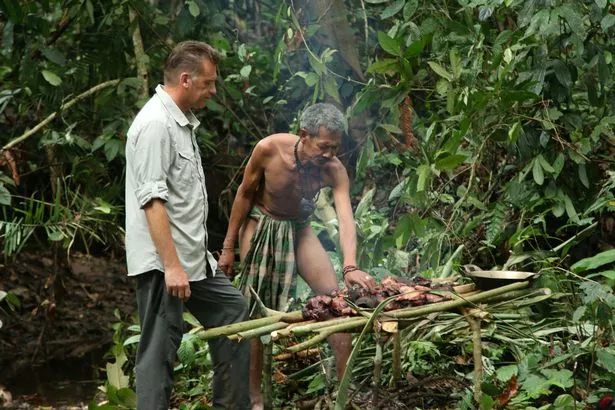
But, along the way, as he searches for the girl within another tribe, he meets a family who are still managing to eke out an existence as hunter gatherers.

Chris was particularly inspired by a young boy, Njarang.


The TV presenter was particularly impressed by local boy Njarang (Image: BBC)

“He is living the life – pretty much – that she did. We walked through the jungle for two hours and he cavorted along barefoot, finding food, eating it, climbing trees, jumping on spiky vines. There are few children in the world who have the knowledge, ability and freedom to live in their environment. So there is a vestige of hope left. I was scrabbling around to find that after the horror of finding her living in that squalid camp in an oil plantation.”

When he meets with Sumping, who is now married with three children, he finds that she is quite shy, possibly because women are only allowed to meet men in the company of their husband. “Had I have been a woman, I could have met her without her husband being there and the whole thing might have been a bit more free-flowing,” he says.

That said, she was more forthcoming when the cameras were switched off. “When we weren’t filming and she was off with her friends she was ecstatic about the gifts that we’d given her and she was loving being the centre of attention.


The tribe is under threat due to deforestation (Image: BBC)

“The enforced shyness came from the fact she wouldn’t normally have that contact with any man, let alone some strange English bloke who’d come all the way from the other side of the world to find her.”

Chris believes that the murders that devastated the tribe were caused by the deforestation, which had forced them to move closer and closer to civilisation.

“Palm oil is what is affecting these people and it’s about our consumption, what you or I buy in a supermarket. So we have a profound impact,” he says. He believes, rather than simply trying to avoid palm oil products, more drastic measures are needed to ensure the future of these precious parts of the planet. “There are too many of us. We need to cut our consumption and ultimately there needs to be less people,” he says.


The girl Chris was searching for, 20 years on (Image: BBC)

Chris, who has a 22-year-old step-daughter, would like to see world leaders talking seriously about compelling people to have smaller families.

“We have the means to start regulating our population if only we’d start talking about it and thinking about it. It’s imperative we do, sooner rather than later. We’re bringing children into a world where we don’t know what that future is and that’s pretty irresponsible.”

For the moment, he is committed to helping the Orang Rimba. “As a people, they are destined for destruction,” he says. “We’ve got to restore habitats, reduce consumption and make our exploitation sustainable.”

He’s pretty optimistic that positive change is around the corner. “We’re the most intelligent, adaptable species the planet has produced. If we don’t stop this nonsense we’ve had it.”

Chris Packham: In Search of the Lost Girl, Sunday, 9pm, BBC2.