... A FORUM TO STIMULATE DEBATE ... ... JUST ADD A COMMENT AT ANY ENTRY BELOW... ... FOR THE SUSTAINABLE DEVELOPMENT OF TOWN AND VALLEY ...
Showing posts with label devon wildlife trust. Show all posts

Saturday, 11 May 2019

A Green Action Plan for Devon

Recently, the County Council declared a climate emergency:
Futures Forum: Climate change > County Council declares 'climate emergency' but fails to commit to becoming carbon neutral by 2030

Building on this, a motion has been put forward by Independent Councillor Claire Wright:

10 POINT GREEN ACTION PLAN MOTION FOR DEVON

Friday, 10 May 2019 2 Comments by Claire

I have just submitted the following motion for the next Devon County Council full meeting, which takes place on Thursday 23 May.

At this stage it’s not clear whether the motion will be heard on the day itself or be referred to cabinet and return to the next full council in July….

I will post updates when I know more!


This council notes its resolution on declaring a climate emergency in Devon, in February.

This council notes also that officers launched the policy on wildflower verges earlier this month. Huge congratulations to the officers who helped bring this about.

The government has now declared a state of climate emergency across the UK, following the actions of Extinction Rebellion.

Climate change and other human activity is now causing species to decline at a rate unprecedented in human history, with three-quarters of land-based environments and two-thirds of the marine environment significantly altered.

Devon County Council, with its positive record on the environment is well placed to work with others to help mitigate the catastrophe coming our way.

Therefore, this council agrees to:

1. Call on the government to offer all pollinators full legal protection from harm

2. Write to all Devon outlets stocking bee harming pesticides, and urge them to permanently cancel their order with the suppliers

3. Take action to phase out all glyphosate pesticides used in council weed spraying or any other council related activity, by December 2019 (there may be exceptional circumstances such as dealing with specific non native species, such as Japanese knotweed)

4. Support Devon County Council tenant farmers in phasing out the use of inorganic fertilisers (such as nitrogen) by December 2023

5. Support Devon County Council tenant farmers in setting aside 10 per cent of their land for wildlife and/or wildflower mixes for pollinators

6. Work with community groups and non-government organisations such as Devon Wildlife Trust and the Woodland Trust to support Devon County Council tenant farmers to set aside five per cent of their land for tree planting

7. Work with community groups and non-government organisations such as Devon Wildlife Trust and the Woodland Trust on supporting town and parish councils, schools and community groups to set aside land for tree planting

8. Develop a policy on soil health good practice, with an emphasis on allowing land to recover and phasing out damaging chemicals, which are ultimately sterilising the land. This would include setting appropriate and reasonable targets for Devon County Council tenant farmers

9. Work with South West Water on a campaign to save water across the county, with an emphasis on education about future water scarcity. Specifically target town and parish councils, community groups and schools to raise awareness of the importance of good water practice

10. Support Devon Wildlife Trust’s campaign by calling on the Environment Secretary to allocate a further eight Marine Conservation Zones to Devon’s waters. Details can be found on the DWT website - https://www.devonwildlifetrust.org/take-action/marine-conservation-zones

Comments

1. At 04:08 pm on 10th May rob williams wrote:

Claire, i honor your determination to get these points through. It would be great to get these points through, and ban / work around these toxic chemicals in our countryside. The farmers need to understand the effects and use less and less. Im pleased to see this.

2. At 04:35 pm on 10th May Chris Burhop wrote:

Claire this looks like an admirable ambition which I would like to support in whatever way I can. In the event that it doesn’t get the support it deserves, can we petition for something similar at EDDC too? Best of luck with it at DCC.


10 POINT GREEN ACTION PLAN MOTION FOR DEVON - Claire Wright.
.
.

Friday, 10 May 2019

Ash dieback in Devon

Trees are seen as increasingly important in the fight against climate change:
Futures Forum: Climate change and deforestation
Futures Forum: Planting billions of trees to address the climate and natural environment crises together

The Forestry Commission celebrates a hundred  years:
Futures Forum: Forestry Commission: centenary event "Evolving the Forest": Wednesday 19th - Friday 21st June at Dartington Hall

And the Sidmouth Arboretum will be bringing a week of events:
Futures Forum: Tree Week > 20th - 25th May

We need to look after our trees:
Ash dieback | Devon Wildlife Trust
Ash dieback | Environment - devon.gov.uk
East Devon Area of Outstanding Natural Beauty - Ash trees need your help

As reported by Devon Live - with good news: 
Tree planting scheme to replace trees lost through Ash dieback - Devon Live 

And not so good news:

Tree disease will cost Devon £30million a year as county worst hit

"The consequences of tree diseases for people really haven't been fully appreciated before now."


Neil Shaw

Head Of Digital, Live And Trending For PlymouthLive, DevonLive And CornwallLive
06:42, 7 MAY 2019

An invasive fungal disease killing ash trees will cost the British economy nearly £15 billion in total, a study has warned, and Devon will be the worst hit county in the country. Ash dieback which is lethal to European ash trees, originated in Asia and is thought to have been brought to the UK on imported ash trees some years before it was first identified in Britain in 2012.

Now experts have calculated a multi-billion pound bill for the disease, with the costs expected will be more than £7 billion in the next 10 years alone. The biggest cost will be from the loss of benefits that woods and trees provide, such as clean air and water and storing carbon dioxide, the study published in the journal Current Biology found. Clean-up costs, such as felling dangerous trees on roadsides, railway lines and in towns and cities, will cost some £4.8 billion, researchers from the University of Oxford, Fera Science, Sylva Foundation and the Woodland Trust said.

Much of that burden will fall on local authorities, with an estimate the worst hit, Devon County Council, could face total annual costs from roadside ash trees of more than £30 million, vastly higher than the average council tree budget. There will also be costs of replanting, research and loss of profits to the forestry sector. The total bill is estimated to come in at £14.8 billion over 100 years, with half of those costs, £7.6 billion, falling within a decade.

The researchers also issued a stark warning that there are 47 other tree pests and diseases that risk costing £1 billion or more if they become established in Britain.

They have called for a nationwide replanting scheme could reduce the overall cost of ash dieback by £2.5 billion by ensuring that lost benefits are replaced.

A greater focus on and investment in biosecurity and sourcing of safe plant material is needed to keep new diseases out, they warn. And far tighter controls on imports of all live plants for planting should be introduced, as this is the largest pathway through which tree diseases come into the country, they urged.

The cost of dealing with ash dieback, which is expected to kill 95% to 99% of native ash trees, dwarfs the annual value of the import and export trade in live plants to and from Britain which totalled around £300 million in 2017.

Dr Louise Hill, from the University of Oxford and lead author of the study, said the number of invasive tree pests and diseases were increasingly rapidly, mostly through human activities such as plant trade and climate change.

"Nobody has estimated the total cost of a tree disease before, and we were quite shocked at the magnitude of the cost to society. We estimate the total may be £15 billion - that's a third more than the reported cost of the foot-and-mouth disease outbreak in 2001. The consequences of tree diseases for people really haven't been fully appreciated before now."

Dr Nick Atkinson, senior conservation advisor for the Woodland Trust and co-author of the paper, said: "When ash dieback first entered the country, no one could have fully predicted the devastating impact it would have on our native habitats. To see how this has also affected our economy speaks volumes for how important tree health is, and that it needs to be taken very seriously."

To avoid further economic and environmental impacts, more needed to be invested in plant biosecurity measures, including better detection, interception and prevention of pests and diseases entering the UK, he urged. He added: "We need to learn from past mistakes and make sure our countryside avoids yet another blow."

A spokeswoman for the Environment Department said: "Since ash dieback was identified in 2012, we have invested more than £6 million in ash dieback research and £4.5 million to strengthen border security. We currently have some of the strongest import controls in Europe."

She said the Government was funding research to make ash trees resistant to the disease, supporting replanting with other tree species, and helping local authorities manage the disease. "We will continue to do everything we can to protect our trees from pests and diseases, as set out in the Tree Health Resilience Strategy published last year."


Tree disease will cost Devon £30million a year as county worst hit - Devon Live
.
.
.

Friday, 7 December 2018

A Celebration of Trees > photos and thanks

A great time was had by all at last week's Arboretum event:
Futures Forum: A Celebration of Trees > Friday 30th November > stalls, songs, talks, quiz, snacks, bar...

Or so it seems:


Story-telling from Jon Freeman


Mousey display from the National Trust


Intent attention from attendees


Prize-giving from quiz-master Ed Dolphin


Song and movement from Sid Vale Folk

Sidmouth Arboretum - Home | Facebook

With a thank-you in today's letters pages of the Herald:

“The Sidmouth Arboretum would like to thank all those who generously gave their time to enlighten and entertain us all at last Friday’s Celebration of Trees.
Firstly, we are very grateful to Nikki and her team at Kennaway House for their as-ever professional preparation of the Cellar Bar for the occasion.
The evening was kicked off by the joyous melodies of Tess Bisson and the Sid Vale Folk, all in good voice and filling the space with songs celebrating trees.
A big thanks too to our speakers – to John Wilding MBE, head of Forestry and Environment at Clinton Devon Estates; to Tracey West of Word Forest, based in Lyme Regis but doing fantastic work with reforestation projects in Kenya; and to Jon Freeman of the Clyst Valley Ancient Trees project who gave us a wonderfully lively rendition of a folk tale from the wilds of old Scandinavia.
The fantastic array of stalls from other tree-minded groups added to the variety of the evening, including: Devon Wildlife Trust, Friends of the Byes, Forestry Commission, National Trust, Sid Vale Association, Sid Valley Bat Research Project and Sidmouth Rotary Club.
Not forgetting our thanks to local woodturners Diana and Martin Russell and to local artist Cherry Ferris and her beautiful pyrography work – who brought in craft as seasonal gifts to take away.
And thank you to all the members of the public who turned up to join in the fun.

We at the Sidmouth Arboretum look forward to seeing everyone again next year at our Celebration of Trees.”

Sidmouth and Ottery breaking news and sport - Sidmouth Herald
.
.
.

Wednesday, 21 November 2018

A Celebration of Trees > Friday 30th November

The annual celebration of trees from the Arboretum comes to Kennaway House next week:


And here's the programme:

www.sidmoutharboretum.org.uk
.
.
.

Saturday, 6 October 2018

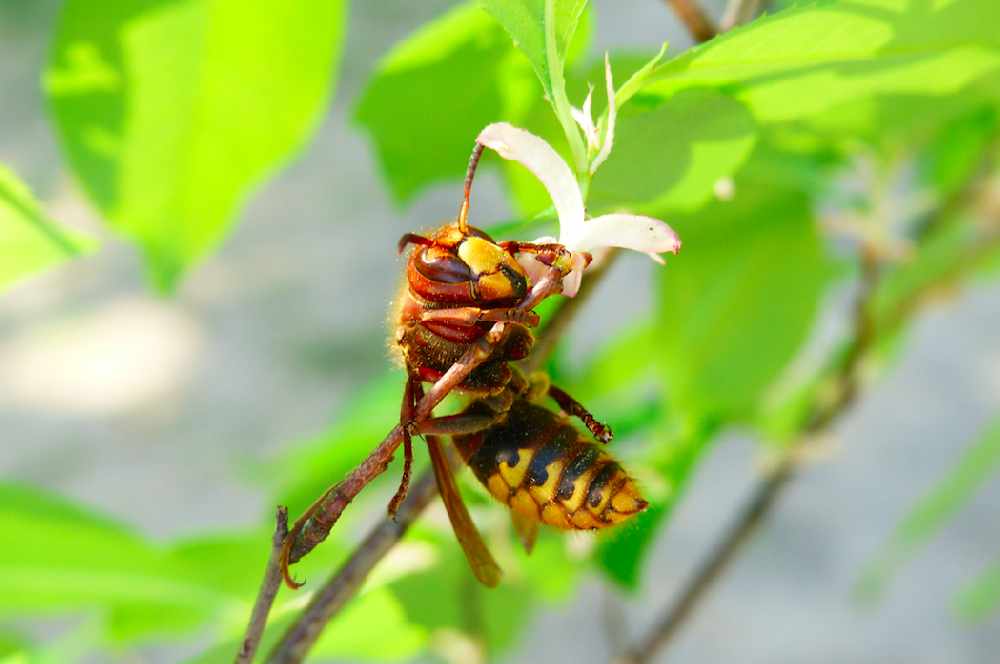
Learn to love the hornet

We love bees:
Futures Forum: How to Fall in Love with Honeybees @ Café Scientifique...
Futures Forum: "BUZZ: the nature and necessity of bees" @ Radio 4's Book of the Week

We should learn to love an equally important pollinator - and controller of pests: 

Learn to love the hornet

Thursday, October 4th, 2018 5:47pm
By Sam Sterrett
They are a vital part of our environment, says Devon Wildlife Trust
Steve Hussey, from the Devon Wildlife Trust, says: "Hornets are very useful animals, anybody that has a garden can thank the hornet. What it does it eat and hoover up garden predators, they same things that are attacking your vestibules and flowers. They will also pollinate our flowers and plants. The are very useful things to have about us."
Devon Wildlife Trust believes that fears over the arrival of the Asian hornet is now leading to the misguided persecution of another separate species, the native European Hornet. 
Asian hornets are devastating to honey bees, with the invasive insects raiding and destroying colonies. There is now growing fear among the UK’s beekeepers who are worried that the presence of Asian hornets threatens the future of the honey bee.

Learn to love the hornet - Radio Exe
.
.
.

Monday, 13 August 2018

The Otter @ Radio 4's Natural Histories

We have otters in Devon:
Where to see otters in the UK - Telegraph
Two juvenile otters playing on the mill... - Devon Wildlife Trust

And we have otters in the Sid Valley:
Otter watch lauch at River Sid | Latest Sidmouth and Ottery News - Sidmouth Herald

There are fears for their future:
Futures Forum: Brexit: and the County Council protecting Devon's nature >>> urging the government to guarantee protection for wildlife after Brexit

But there is so much interest in them that they should be guaranteed a place in our countryside:


With its playful, hand-holding, pebble-juggling ways, the otter wins the cuteness contest with its eyes closed. It's no wonder such a stunningly elegant and charismatic animal has been the star of films and books and the inspiration for thousands to make pilgrimages to rivers in Devon or rings of bright water in Scotland.
But do not be deceived. As Brett Westwood discovers, this elusive wild animal is a skilled and ferocious predator and, given half a chance, he'll have your fingers off!
Writer Miriam Darlington shows Brett the paw prints on the banks of the river Dart, and describes the first time she ever saw an otter.
Anthony Phillips, once the guitarist for global pop group Genesis, now composes music for screen and, he tells us, it all started with reading and feeling compelled to make music inspired by Tarka.
Dr Elizabeth Chadwick, who manages to slit otters open for science, explains how the otter's insides are a barometer of health for our environment.
Dr Daniel Allen charts the history of otter hunting from anglers removing fish-eating vermin, to a Great British summertime sport, and the legislation that saved them.
And Olivia Morgan reads Robert Macfarlane's spell for conjuring an otter, over the watery sounds of Joanna Newsom's Divers, in an attempt to evoke the slippery land fish that inspires such awe, devotion and fear.


BBC Radio 4 - Natural Histories, Otter
.
.
.

Tuesday, 31 July 2018

On the River Otter: 'Beavers and Business' > The University of Exeter invites business owners/managers in Devon and Somerset to contribute towards the ‘River Otter Beaver Trial’ by completing a survey to examine the impacts of the presence of beavers on local business.

From the latest East Devon AONB newsletter:
 
 
Calling all East Devon Businesses 
 
Has the Beaver re-introduction programme affected your business? The project research team at Exeter University have created a survey and are keen to hear from businesses to learn if they have (or have not) seen impacts (whether positive or negative) as a result of beaver presence.
 
Responses to the survey are anonymous and participants will be offered the opportunity to see the outcomes when they become available. Businesses within and outside of the river catchment area (the Otter and tributaries) are encouraged to respond so that comparisons might be drawn.

The survey should take approximately 10-15 minutes to complete, and will be open until the end of 2018. Businesses only please. To contact the team directly, please email
Roger Auster: 
rea213@exeter.ac.uk  


AONB Summer Newsletter
East Devon Area of Outstanding Natural Beauty - Welcome - East Devon Area of Outstanding Natural Beauty

The link takes you to the University project:

  
Beavers and Business - A Survey

The University of Exeter would like to invite business owners/managers in Devon and Somerset to contribute towards the ‘River Otter Beaver Trial’ by completing this short online survey to examine the impacts of the presence of beavers on local business.

The survey should take less than 15 minutes to complete.
 
Study Information

The multi-organisational ‘River Otter Beaver Trial’ was established in 2015 to monitor a free-living population of Eurasian beaver (Castor fiber) living on the River Otter. Research is being conducted by the various partners, focused in multiple areas and continuing until 2020, following which the UK government will consider the results when making a decision on the future of beavers in England.
Beaver reintroduction is also being considered in Scotland and Wales, with decisions being/to be made by devolved governments.

This survey seeks to understand whether the presence of beavers on the River Otter has affected local businesses positively, negatively or not at all.

The results from this research will be reported on for the end of the ‘River Otter Beaver Trial’ and for UK government. They will also be reported in a PhD thesis, and perhaps academic papers. Information gained from your participation may be used for any of these but would only be used in a way that would not disclose your identity to others.

You may complete this survey if your business is based anywhere in Devon or Somerset.


Beavers and Business Survey - University of Exeter
.
.
.

Monday, 9 July 2018

Housing and wildlife

Cambridgeshire is an innovative place when it comes to planning:
Futures Forum: Busway or railway or cycleway?

The Wildlife Trusts take us to a new housing development in the county: 

Housing and wildlife: examples of our work

Trumpington Meadows


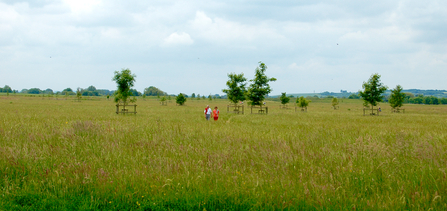
Trumpington Meadows is a meadow nature reserve that is part of a large housing development on the southern fringe of Cambridge. When the land was allocated for development, the local council required the provision of large green corridors to connect the centre of Cambridge through the new development to the countryside beyond. 

Trumpington Meadows Land Company wanted to create a high-quality development and viewed a new country park as integral to this. The Wildlife Trust for Bedfordshire, Cambridgeshire & Northamptonshire helped to design and create the development’s green spaces and now manage the country park.

Local play areas, swales and tree avenues are included throughout the development. The 58-hectare country park is designed to be both a space for people and a ‘nature reserve’. The creation of over 40 hectares of new species-rich meadows, hedgerows, woodlands and restored floodplain meadows began before the first houses were built to allow the landscaping and habitats time to mature.

The country park sits beside the River Cam. The river habitat has been restored and the river re-connected with its floodplain meadows, reducing flood-risk downstream. A new pond with overflow area and open ditch features, slows rainwater runoff to the River Cam whilst providing additional habitat for wildlife.

Read more

Housing and wildlife - examples | The Wildlife Trusts

Here is their recent report:


Homes for peopleand wildlife- How to build housing in a nature-friendly way 
From Gloucestershire Wildlife Trust: HAB Housing Scheme Uses Building with Nature Benchmark | HAB - Custom Build Homes
.
.
.

Sunday, 28 January 2018

On the River Otter: BBC Two's Hugh's Wild West goes in search of East Devon's beavers

Beavers are now turning up in the most unlikely of locations:
Futures Forum: Rewilding Chernobyl

And are turning out to be the most unlikely ally in financially sustainable farming:
Futures Forum: Rewilding Britain > restoring intensive farmland back to it's natural and uncultivated state - and becoming financially sustainable

The biggest colony in the UK is here in Devon, up the River Otter:
Futures Forum: On the River Otter >>> Adopt a beaver!
Futures Forum: On the River Otter: Radio 4's Natural Histories goes in search of East Devon's beavers

Hugh F-W went in search of beavers on yesterday's edition of Wild West on BBC Two:
.
.

On the Trail of the Beaver

Hugh joins biologist Mark Elliot to discover how local beavers are making their mark on the landscape by felling huge trees – and it's all down to their incredible teeth.


BBC Two - Hugh's Wild West, Series 1, Episode 4, On the Trail of the Beaver

Episode 4
Hugh's Wild West,

Series 1 Episode 4 of 12

Nature lover Hugh Fearnley-Whittingstall continues to explore the wildlife of the West Country and meet the people helping to safeguard the region's wild creatures. 

This time, Hugh is on his home patch of theDorset/Devon border, where he investigates the return of an animal that hasn't been spotted here since the 16th century - the beaver - and discovers how these dam-building rodents are changing the landscape.

Nearby, Abbotsbury Swannery has been home to a huge colony of mute swans since the middle ages and it is the job of resident swan herder Dave Wheeler to round up all the adults for a health check with the help of dozens of volunteers. And thanks to bat enthusiast Colin Morris, Dorset's greater horseshoe bats are now enjoying very plush living quarters - a former mansion that has been renovated just for them, affectionately known as the Horseshoe Hilton.


BBC Two - Hugh's Wild West, Series 1, Episode 4
.
.
.

Tuesday, 21 November 2017

On the River Otter >>> Adopt a beaver!

Beavers are being brought back to Cornwall:
Futures Forum: Reintroducing beavers to Cornwall - to mitigate flooding - to filter water - to enhance biodiversity

And meanwhile, their reintroduction to Devon has brought considerable attention:
Futures Forum: On the River Otter: Radio 4's Natural Histories goes in search of East Devon's beavers
Futures Forum: On the River Otter: Beaver Trial awarded the ‘Wildlife Success Story of the Year’

The press continues to follow the success of the project - with the latest on their growing numbers:
Beaver numbers living in the River Otter treble - Devon Live

Here's what the Herald has to say:

Celebrations as River Otter beaver numbers grow

PUBLISHED: 10:50 21 November 2017 | UPDATED: 10:50 21 November 2017


Female adult beaver with her kits, taken near Otterton. Credit: Mike Symes.

The River Otter’s ‘thriving’ beaver population has grown by 300 per cent since 2015 with six family groups now living around its waters.

The Devon Wildlife Trust [DWT] says the reintroduction project is going from ‘strength to strength’ and estimates there are 27 animals living along the river, rising from nine when it launched its beaver trial two years ago.
DWT’s Stephen Hussey said: “The beavers are doing well, they are not fast breeders and each pairing will have one litter a year and usually two or four kits.
“It is suggesting there is a lot of room for the beavers and we are a long way from beaver maximum numbers on the river, what is happening is the beavers are spreading along to different territories.”
The charity is now halfway through its project after it was granted a five year licence to study the creature to 2020.
The trial is led in partnership with landowners Clinton Devon Estates and also working with Exeter University, who is co-ordinating research into the impacts the beavers have on the local environment.
Devon Wildlife Trust reports increase in beavers numbers on River Otter - Latest Sidmouth and Ottery News - Sidmouth Herald

And here's a suggestion for that perfect stocking filler:

Adopt a beaver to raise funds for River Otter trial

PUBLISHED: 11:34 21 November 2017 | UPDATED: 11:34 21 November 2017


Devon Wildife Trust is giving people the chance to 'adopt a beaver' to raise funds for the River Otter beaver Trial


Devon Wildlife Trust has launched an ‘adopt-a-beaver’ campaign to raise funds for the River Otter Beaver Trial, due to end in 2020.

A virtual beaver adoption campaign has been launched to raise vital funds for a conservation project.
Devon Wildlife Trust is hoping the ‘Adopt-a-Beaver’ campaign will raise cash for its five-year River Otter Beaver Trial.
The project, which is due to run until 2020, aims to gather evidence on the beavers’ impact on the landscape and wildlife, infrastructure and farm businesses in the Otter Valley.
Now people have the chance to ‘virtually’ adopt a beaver and those who do will receive a special pack including a toy beaver wearing a Devon Wildlife Trust t-shirt.
Dan Smith, of the trust, said: “It’s heartening to see the continued enthusiasm for Devon’s beavers, more than two years after DWT first re-introduced beavers back on to the river after their health screening.
“Again this year, dozens of wildlife watchers gathered on the River Otter’s footpaths on summer evenings to spot parent beavers swimming with their new-born kits.”
• Beaver gifts are available from www.devonwildlifetrust.org/support-devon-beavers or by calling 01392 279244.
Adopt a beaver for River Otter Beaver Trial - Latest Sidmouth and Ottery News - Sidmouth Herald
.
.
.

Tuesday, 31 October 2017

On the River Otter: Radio 4's Natural Histories goes in search of East Devon's beavers

Beavers are being reintroduced to Cornwall:
Futures Forum: Reintroducing beavers to Cornwall - to mitigate flooding - to filter water - to enhance biodiversity

They've now been well-established for some time in Devon:
Futures Forum: On the River Otter: Beaver Trial awarded the ‘Wildlife Success Story of the Year’

Bret Westwood has popped down to the River Otter to see:


Beavers are back in the UK, hundreds of years since they last lived among us. 
Brett Westwood asks if we can recover our cultural links with these architectural animals, as well as remember how to live with thechanges they bring to the landscape. 
Nature writer Jim Crumley talks about their green engineering skills and writer Rachel Poliquin brings the Canadian perspective on what she calls the four great human romances with the beaver: with its castoreum, its musk, its architectural skills and its ecological abilities. 
With readings by Lia Williams of extracts from Castorologia and Winter by Geoffrey Ursell, and The Beaver by Vernon Watkins.


Rachel Poliquin

Rachel Poliquin is a Vancouver based writer concerned with all things orderly and disorderly in the natural world.
Her book Beaver was published by Reaktion in 2015. 

Jim Crumley

Jim Crumley is a nature writer, journalist and poet. His book Nature's Architect: The Beaver's Return to Our Wild Landscapes, was published by Saraband in 2015.
He is a passionate advocate of species reintroductions, especially of wolf and beaver, the widespread restoration and expansion of native habitats, and a radical reappraisal of the relationship between the people of Scotland and the land. He writes columns for the Scots Magazine and The Courier and now lives in Stirling. 

Stephen Hussey and Jake Chant of The Devon Wildlife Trust

The Devon Wildlife Trust is home to England’s only known wild beaver population on the River Otter in East Devon.


BBC Radio 4 - Natural Histories, Beaver
.
.
.