... A FORUM TO STIMULATE DEBATE ... ... JUST ADD A COMMENT AT ANY ENTRY BELOW... ... FOR THE SUSTAINABLE DEVELOPMENT OF TOWN AND VALLEY ...
Showing posts with label natural england. Show all posts

Tuesday, 12 February 2019

District Council defers decision on application to demolish habitat of 11 species of bat >

The District Council's planning committee met today:
Futures Forum: District Council to consider application to demolish habitat of 11 species of bat > Tuesday 12th February

And things did not quite go according to plan, as reported by the East Devon Watch blog: 

BATS (AND BATMEN AND BATWOMEN) IN EAST BUDLEIGH – TODAY’S DEVELOPMENT
12 FEB 2019

Owl hears that, somewhat surprisingly, EDDC’s Development Management Committee voted to defer the bat habitat decision.

It also appears that yesterday’s activity in and around the barn, reported by Owl here:

https://eastdevonwatch.org/2019/02/11/bats-in-east-budleigh-barn-cleared-24-hours-before-eddc-planning-committee-meets-to-decide-their-fate/

has been reported to the Police who have allocated a crime number to it.


Bats (and Batmen and Batwomen) in East Budleigh – today’s development | East Devon Watch

The Exmouth Journal gives further information: 

Controversial East Budleigh bat barn plan deferred

PUBLISHED: 16:05 12 February 2019 | UPDATED: 16:05 12 February 2019

Daniel Wilkins


A decision on the future of a bat habitat in The Pound, East Budleigh, has been deferred. Picture: Google

Campaigners fighting the proposed demolition of a known bat habitat in East Budleigh have been given ‘breathing space’.


Residents from East Budleigh protesting outside Exmouth Town Hall ahead of the meeting which will decide the future of The Pound. Picture: Daniel Wilkins

More than 20 members of a conservation group gathered outside Exmouth Town Hall this morning (Tuesday, February 12) ahead of a crucial meeting to decide the fate of an East Budleigh barn known to be home to rare and protected bats.

East Devon District Council’s development management committee decided to defer their decision pending additional information from Natural England about wildlife mitigation on the site.

Landowner Clinton Devon Estates (CDE) is looking to knock down the barn and build a new dwelling on the site and has offered to build a separate ‘bat barn’ on the plot as mitigation.

Speaking after the meeting, Karen Alexander-Clarke, secretary of the East Budleigh Parish Conservation Group told The Journal this decision gives them ‘breathing space’ in their fight to protect the bats’ home.


The Pound, in East Budleigh, which is subject to a planning application to demolish a barn which is thought to be home to speciies of rare bats. Picture: Google

She also said they would be writing to Natural England to lobby them and ‘emphasise that there are councillors that feel as strongly as we do’.

Speaking at the meeting, councillor Brian Bailey also raised concerns over whether the bats would take to their new home.

He said: “The bats, I feel, have been served poorly because there is no guarantee what so ever that the bats will survive the demolition or would accept their new home.”

Cllr Geoff Jung said: “This is one house and one family that is going to benefit and how many bats and other wildlife are going to benefit?”

An independent ecology report commissioned by the council recommended that the mitigation being offered by CDE be accepted.

Cllr Mark Williamson said he did not feel confident that, if they refused the application and CDE appealed, the Planning Inspectorate would back their original decision.

He said: “As we do frequently, we would look to our statutory consultees to guide us. Natural England is giving quite detailed guidance and they recommend the planning authority follow advice from the ecologist.”

Councillors voted in favour of deferring the application pending information from Natural England on the suitability of the proposed ‘bat barn’.


East Budleigh bat barn demolition plan deferred | Latest Exmouth News - Exmouth Journal
.
.
.

Tuesday, 13 November 2018

Brexit: and "panic and desperation" at Defra

DEFRA are sorting things out:
Futures Forum: Brexit: and Defra 'working on contingencies'

Sort of:
Leaked memo reveals Defra Brexit panic - Rural Services Network
Environment department accused of Brexit ‘panic’ after urgent staff demand | Environment | The Guardian

The Farmers' Weekly reports:

‘Disappointment’ as 400 Defra staff moved to Brexit roles


Michael Gove © David Hartley/REX/Shutterstock

About 400 staff have been seconded from their roles at Defra’s four main agencies to help boost the department’s Brexit preparations.

In a letter to Mary Creagh MP, who chairs the Environmental Audit Committee, Defra secretary Michael Gove confirmed that Defra has recruited more than 2,000 staff to work on EU exit, “including fixed-term appointments, interims and staff redeployment”. Of these, more than 400 posts have been filled from across the Defra group – the majority coming from Natural England, the RPA, the Environment Agency and the Animal Plant and Health Agency (Apha).

Mr Gove said care was taken to minimise the effect on the agencies’ core functions. “Priority roles such as those that are required to enable delivery of statutory responsibilities are being backfilled,” he added.

In the case of Natural England – which has lost about 50 staff on two-year secondments – the main work area affected relates to Sites of Special Scientific Interest (SSSIs).

Disappointing

In response, Ms Creagh said it was “disappointing” Defra had raided Natural England, “the organisation responsible for protecting some of the most highly valued wildlife areas of England”.

“Preparations for leaving the EU must not get in the way of protecting our treasured natural spaces and iconic British wildlife,” she said. “Natural England must not become a poor relation of Defra. Ministers must ensure the valuable work it does to promote biodiversity is given the priority it deserves.”

Figures from Natural England have shown a fall over the past two years in the proportion of SSSIs assessed as being in a favourable condition, she added.

‘Urgency’

The news follows a report in the Guardian earlier this week that reveals managers at the Environment Agency were given just 24 hours to name 75 staff to be sent to Defra “as a matter of urgency”. According to the newspaper, an Environment Agency memo was sent on 22 October, with staff asked to redeploy within a week.

“We realise this is an extremely short deadline,” it said. “However, please do your best as part of our ambition to go the extra mile to help at this challenging time.”

Liberal Democrat MP Tim Farron said the call for assistance by Defra “smacks of panic and desperation”.

Defra is responsible for almost one-fifth of all the Brexit-related work streams across government.


'Disappointment' as 400 Defra staff moved to Brexit roles - Farmers Weekly
.
.
.

Monday, 27 August 2018

Beach Management Plan: District Council press release on meeting of 9th August > "£2.4million funding shortfall"

The steering group of the BMP met up in May: here's the District Council's take on it:
Futures Forum: Beach Management Plan: District Council press release on meeting of 10th May > "Outline business case makes steady progress"

The group met up again earlier this month: again, because no minutes are taken, we have to rely on the 'official' press release:


Positive project update for Sidmouth and East Beach Management Scheme steering group

When this content has been created

23 August 2018


Photo impression of the raised splashwall on Sidmouth promenade – please note this visual is shown without the planned enhancements which could include seating and planting and a better finish to the wall.

However £2.4million funding shortfall still needs to be provided locally if beach management scheme is to go ahead


The Sidmouth and East Beach Management Scheme steering group received a positive project update from East Devon District Council and its consultants Royal HaskoningDHV when it met recently.

The project steering group is made up of local groups and organisations, as well as statutory bodies such as Natural England and the Environment Agency, who act as an important link between the community, businesses and regulatory bodies.

Royal HaskoningDHV explained the more detailed technical, economic and environmental assessments of different permutations of the scheme, which they have undertaken since they last met with the Steering Group in May 2018.

They have analysed the differing groyne lengths and the impact that variations in length can have on the erosion of East Beach, to agree a final design for the outline business case, which is the best balance of capital and maintenance costs.

The steering group was also shown draft visualisations of the scheme from key view points along the coast, which form part of the landscape and visual impact assessment for the scheme. Views from the town towards the sea have been considered and consultation with East Devon’s heritage and landscape officers is ongoing, to see how the impact on these views can best be mitigated, without compromising the objective of the scheme, which is to reduce the risk of flooding to low-lying areas of the town centre.

The steering group asked that the visualisations are circulated after the meeting although at present the finishes, and enhancements which will be added at detailed design are not shown. East Devon have included in the business case funding to enhance the splashwall with good quality finishes, relocated openings to make sure they are best situated in relation to where people wish to walk, to explore opportunities to declutter and improve seating so that people can benefit from the sheltering effect of the higher splashwall between the road traffic and promenade.

Cost estimates for the scheme have also been updated, with Royal HaskoningDHV working closely with experienced coastal contractor J T Mackley to ensure estimates are realistic. 
The revised cost estimate for construction of the scheme is £8.9million. Based on the economic analysis and the number of properties at risk of flooding in the town, this means that around £3million of funding needs to be provided locally for the scheme to go ahead.

East Devon has been working to help fill this funding gap, with £0.5M currently committed towards the scheme by East Devon, with Devon County Council indicating that they could contribute £0.5M as the scheme reduces waves overtopping onto the seafront road and Sidmouth Town Council able to provide £100,000 towards improved water access at Port Royal. Discussions around funding are continuing with other sources including developer contributions for better water access.

However, it was stressed at the meeting that if additional funding doesn’t come forward from the Town, then the scheme would be delayed until such time more funding was available.

Cllr Tom WrightEast Devon District Council’s portfolio holder portfolio holder for the Environment and Chair of the steering group, said:
We’ve made great progress with the steering group in getting the scheme to this stage. We now have an excellent scheme which is environmentally acceptable to reduce the risk of flood and erosion to the town. Much has been done to reduce the funding gap, however as discussed by the steering group, a significant amount is still needed from the local community to help secure the future prosperity of the town. 
It was really helpful to hear from the community groups who make up much of the steering group, and their reaction to the images, showing the increased height of the splash wall, shows how supportive they are of this change in order to reduce the risk to the town. They were excited by the opportunity to enhance the seafront through these changes which could include seating and planting. All plans will be subject to further consultation. 
23 August 2018 - Positive project update for Sidmouth and East Beach Management Scheme steering group - East Devon

Not everyone is so positive:
Futures Forum: Beach Management Plan: "In the long-term, we need to build more offshore breakwaters across the front and these could be semi-submerged so that they would not be visible for most of the time."
.
.
.

Sunday, 13 May 2018

How to connect communities with nature

We need to connect better with nature.

There was the State of Nature Report from 2013 which showed that nature is 'depleted' - and that we need to do something about it:
Futures Forum: State of Nature
Futures Forum: State of Nature: one year on ....... the Conference for Nature
Futures Forum: State of Nature ... and paving paradise

Last year, the WWF, the National Trust, the Wildlife Trusts and the RSPB came together to urge the setting up of a new independent Policy Commission on the future of the natural world:

This was a response to the government's 25 year plan. Not everyone was convinced:

Meanwhile, the government has asked for opinions on how rural communities will work with the environment:
Futures Forum: Brexit: and "The future for food, farming and the environment" >>> DEFRA consultation ends 8th May 

The following piece from the Rural Services Network makes the point that ultimately, it is going to be local communities who should be empowered to make decisions on these crucial matters:

MAKING MORE SPACE TO CONNECT WITH NATURE

  
Jessica Sellick examines ways policy-makers might reconnect rural communities to nature.
The second State of Nature Report, published back in September 2016 by more than fifty nature conservation organisations, provides an overview of how nature is faring the UK. In the long term (1970-2013) 56% of the nearly 4,000 species studied had declined and 13% of the nearly 8,000 species assessed were found to be at risk of extinction.
Changes in the way we manage land was found to be having the greatest impact on species. In the foreword Sir David Attenborough described how “our wonderful nature is in serious trouble and it needs our help as never before…if conservations, governments, businesses and individuals all pull together, we can provide a brighter future for nature and people.” With the UK viewed by some as ‘nature depleted’ what is being done to (or might be done) to help nature – and what might this mean for rural communities? I offer three points.
Firstly, how does Government (through its policies and public investment) seek to secure the future of nature?
In 'A Green Future: Our 25 Year Plan to Improve the Environment', Government sets out what it will do to improve the environment, within a generation. This 25 Year Environment Plan, published in January 2018, contains proposals to deliver a Green Brexit in restoring nature and focuses on six key areas for action (i.e., air, water, plants & wildlife, environmental hazards, resource sustainability and the natural environment). It also lists 4 ways of managing pressures on the environment: by adapting to climate change, minimising waste, managing exposure to chemicals, and enhancing biosecurity.
There are a number of policies underpinning the Plan – from improving how Government manages and incentivises land management (farming) through to clean seas (sustainable fisheries) and resource efficiency (food waste, litter). Chapter 2 of the Plan, for example, focuses on how to ‘protect and recover nature’. Here proposals include publishing a strategy for nature, developing a Nature Recovering Network, the reintroduction of native species and reviewing National Parks and Areas of Outstanding Natural Beauty (AONB). The emphasis in chapter 3 is on connecting people with the environment to improve health and wellbeing. Here proposals include the development of environmental therapies, encouraging children to be close to nature in and outside of school, creating greener infrastructure and making 2019 the ‘Year of Green Action.’
This Environment Plan sits alongside the Government’s Industrial Strategy – which considers how productivity can be increased through the environment; and the Clean Growth Strategy which seeks to mitigate climate change and deliver green growth.
The Natural Capital Committee (NCC) is an independent advisory committee established by Government to advice on the sustainable use of natural capital. Its current remit includes helping the Government with the 25 Year Environment Plan. The Committee’s latest annual report, sets out its work in 2017 with particular emphasis on working closely with Government’s four natural capital pioneer test beds; supporting the development of national natural capital accounts (and incorporating this into public sector appraisal guidance such as the Green Book); and developing other tools to assist the measurement of natural capital and how it is changing over time.
In March 2018 the Select Committee on the Natural Environment and Rural Communities Act 2006 published the findings of its inquiry into whether the NERC Act is fit for purpose. Titled ‘the countryside at a crossroads’, the document traces the abolition of the Commission for Rural Communities which was tasked with speaking up on behalf of rural communities in raising questions over the extent to which Government decisions are taking account of rural circumstances and needs?
The document also describes how the other body created by the Act, Natural England, has been subject to funding reductions leading to concerns over its ability to fulfil its wide ranging remit: how does Natural England balance its statutory, advisory and chargeable activities? Where will the management and maintenance funding for the National Trails network come from?
The document cites the ongoing loss of biodiversity since 2006, Government proposals to create a new environmental body to hold it to account following Brexit and the role of natural capital in altering the way we understand, approach and seek to manage nature. The Committee’s overall vision is for “balanced protection and promotion of the natural environment and a reversal of the biodiversity decline. This must be coupled with better recognition of the potential of rural communities and the rural economy, and a greater effort from the Government to ensure that policy changes do not work to the detriment of rural areas.”
Between 27 February and 6 May 2018 Defra ran a consultation on the future of agricultural policy in England. This 64 page document sets out the Government’s ambition for a ‘reformed agricultural and land management policy to deliver a better and richer environment in England.’ The document reiterates the Government’s commitment to payment for the delivery of public goods alongside a new environmental land management system underpinned by natural capital principles “so that the benefits the natural environment provides for people and wildlife are properly valued and used to inform decisions on future land management.
The new system aims to deliver benefits such as improved air, water and soil quality; increased biodiversity; climate change mitigation and adaptation; and cultural benefits that improve our mental and physical well-being” (page 8). On 1 May 2018 The Wildlife Trusts published a report ‘towards a wilder Britain – creating a Nature Recovery Network’. This document identifies a need to map important places for wildlife which need to be protected as well as key areas where habitats should be restored. With an ambition to ‘bring back wildlife to every neighbourhood’, the report calls for Nature Recovery Maps to be the foundation of future farming and planning policies.
For me these documents draw attention to six main themes: (1) the need for data and metrics – to define, measure and understand the current – and future – state of nature and the environment. (2) What should we try to protect? Should the approach be about the (sustainable) use of nature, preserving ‘pristine nature’, somewhere in between or something else? (3) Debates around valuing nature: should and/or how do we put a monetary value on nature and the environment? Does putting a monetary value on the natural world help or hinder us in seeking to protect it? (4) Governance –what institutions do we have or need to deliver a greener future? (5) The natural environment follows physical rather than administrative boundaries – how will the post Brexit approach be developed in England? And how will this align to policies being developed in Northern Ireland, Wales and Scotland and further afield? (6) The need to balance strategic visions, ambitions and long term goals with practical delivery on-the-ground.
Policy discussions around nature and the environment all too often focus on how nature is under threat or subject to loss. Funding is then subsequently targeted on designated areas, sensitive areas and the most degraded sites. This can leave people feeling disconnected or having no association with the place and landscape in which they live. How can we address this focus with fulfilling the potential of rural communities? How can we get more people to care and consider nature and the environment perhaps more than they might do at the moment?
Secondly, what other policy approaches to nature and the environment are there – and what might we learn from these?
It is apparent that an occupation with protected area status and meeting policy commitments often leads other approaches to be overlooked. While usually associated with urban areas – as a response to provide spaces where people can reconnect with nature – ‘regional parks’ are one example of how nature can be brought back into neighbourhoods at a local level.
A regional park is a special area of land which can cover a single or several administrative boundaries. In Scotland, for example, the Countryside (Scotland) Act 1967section 48A, defines regional parks as “large areas of countryside, parts of which are available for informal countryside recreation.” Currently Scotland has three regional parks: Clyde Muirshiel, Lomond Hills and Pentland Hills. In France, a parc naturel régional or PNRs cover ‘an inhabited rural area that is nationally recognised for its valuable local heritage and landscape, but also for its fragility. Such parks lean on extensive sustainable development plans allowing the protection and promotion of their resources.’ There are 40+ regional parks across France, covering some 13% of its total land mass. Lithuania has 30 regional parks, all established in 1992 but which can be traced back to the Nature Conservation Law in 1959. In New Zealand there are 31 regional parks, all administered by regional councils (the top tier of local government).
There is renewed interest in regional parks in a rural context. In June 2017, for example, the National Association for Areas of Outstanding Natural Beauty (NAAONB) joined representatives from 20 European states in signing a ‘regional nature parks – working for Europe’ declaration. The declaration calls on European states to make greater use of the regional nature park family: “Europe’s rural areas provide the life support system of our continent.
They are the locus of the management and nature conservation of our natural resources…It is clear that the long-term viability of rural areas needs an integrated, visionary approach. Europe’s regional nature parks make a significant contribution to the sustainable development of rural areas…Having strong parks means having strong rural areas” (page 2). The declaration focuses principally on three policy areas: (i) sustainable agriculture, (ii) nature conservation and landscape protection, and (iii) connecting citizens to their region.
The Association of German Nature Parks (Verband Deutscher Naturparke, VDN) project ‘Europe’s Nature, Regional, and Landscape Parks’ from October 2014 to July 2017, revealed how Regional Nature Parks were created throughout Europe from the 1950s against a backdrop of industrialisation, intensification of land use and some of the negative effects of this on people, nature, landscapes and species.
Since their inception, the focus has been on the sustainable development of rural areas and the benefits this brings for people and nature. Their work explores the development of regional nature parks (overall and in individual European States) and looks at their future development (as innovative and dynamic regions). Regional nature parks are viewed as “lovely places where people want to live…They are Living Landscapes.” The 24 May 2018 is the European Day of Parks and the EUROPARC annual conference in September is being held in the Cairngorms National Park.
There is no one size fits all model for regional parks, rather a variety of models have been used to establish and manage them. And whilst their geographical size and scale may be smaller compared to some protected landscapes, and there is not always a national policy driver for their establishment or development, they clearly contribute to community wellbeing as well as environment sustainability and economic growth.
Thirdly, what examples are there in England of bringing communities together around rural places to renew and promote their relationships with landscapes?
While there are no regional parks in England currently, Pennine Prospects has facilitated conversations regarding a proposed South Pennines Regional Park – and what this would mean for the area and its communities. This builds upon a track record of delivery which sees the regeneration company promoting, protecting and enhancing the heritage and environment of the South Pennines by working with and for local communities and businesses.
Our Common Cause: Our Upland Commons Enabling vulnerable communities to enhance iconic places’ is a Heritage Lottery Funded development project that is aiming to improve outcomes, trial practical conservation and increase people’s enjoyment and understanding of commons on Dartmoor, the Shropshire Hills, Yorkshire Dales and the Lake District.
Convened by the Foundation for Common Land, with the National Trust acting as the accountable body, project partners include: Dartmoor, Yorkshire Dales and the Lake District National Parks, Shropshire Hills AONB, Cumbria, Devon, Shropshire and Yorkshire Wildlife Trusts. NFU, Natural England, RSPB, South West Water, Duchy of Cornwall, Moorland Association, National Sheep Association and the Open Spaces Society.
While much policy attention has been on developing schemes to generate more green space in England's towns and cities; there are examples of rural communities (working in partnership with others) to create green spaces in the countryside: from planning ( incorporating green spaces into neighbourhood planning or designating Local Green Spaces in Local Plans) to projects that seek to make amenity land accessible to the local community.
Much of this work and the approaches emerging here chime with The Policy Statement from the 11th OECD Rural Development Conference held in Edinburgh in April 2018 and Rural Policy 3.0’ takes a ‘place-based view of rural development in considering the different conditions and needs of communities depending on their geographies…and their local specific assets, such as “natural capital”.’
If we are to take a place based approach where people feel connected to nature; what happens needs to be from the bottom up: by this I mean based on local desires, visions, values and ideas – which should not sanitise the environment nor attract the ‘usual suspects. ‘What happens needs to involve local communities developing a plan – perhaps taking practice from elsewhere but using this to fit local circumstances.
What happens needs to lead to practical delivery on the ground – actions that deliver what members of the local community want so they can see things happening and continue their support. And what happens needs to take account of the bigger policy picture but not be determined by it: no matter how clunky this policy context might seem local communities should seek to use their voice for people and the environment (what strategic conversations do you need to have to be able to fully deliver your action plan?)
Where next?
On the one hand there are concerns amid Brexit that there will be a policy vacuum, with further reductions in public funding, resources and expertise leading to further nature depletion. On the other hand, there are opportunities to develop new and more collaborative ways of working and to rethink rural communities relationships with nature and the environment.
What existing or new priorities should Defra, its devolved agencies and other Government departments champion to support rural communities? How or where are rural communities fitting in shaping these priorities going forward? And what more can be done to support rural communities who want to have a greater role in understanding, managing and appreciating nature?
Jessica is a researcher/project manager at Rose Regeneration; an economic development business working with communities, Government and business to help them achieve their full potential. Her current work includes helping public sector bodies to measure social value; supporting a community group to develop a new approach to delivering services; and evaluating two projects providing a range of help to past members of the armed forces. In her spare time Jessica sits on the board of a housing association. She can be contacted by email jessica.sellick@roseregeneration.co.uk or telephone 01522 521211. Website: http://roseregeneration.co.uk/ Blog: http://ruralwords.co.uk/ Twitter: @RoseRegen


.
Making more space to connect with nature - Rural Services Network
.
.
.

Friday, 6 April 2018

Back from the Brink > the Grey Long Eared Bat in Devon

Back in December 2015, a new project was launched to help flora and fauna on the brink: 

Bringing England’s wildlife ‘back from the brink’ of extinction

More than 100 species of England’s most threatened wildlife could be saved from extinction thanks to a new £4.6M grant from the Heritage Lottery Fund.


Published 4 December 2015

From: Natural England


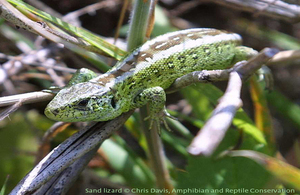
Sand lizard © Chris Davis, ARC

Heritage Lottery Fund (HLF) has approved the development stage and provided initial funding for ‘Back from the Brink’, a partnership project that brings together a range of conservation organisations to focus on protecting key threatened species – such as the grey long-eared bat, pasque flower, sand lizard, and Duke of Burgundy butterfly – from extinction.

The programme is being run by Natural England and the Partnership for Species Conservation – a coalition of seven of the UK’s leading wildlife charities (Amphibian and Reptile Conservation, Bat Conservation Trust, Buglife, Bumblebee Conservation Trust, Butterfly Conservation, Plantlife, and the Royal Society for the Protection of Birds). By working together at sites across the country, ‘Back from the Brink’ will save 20 species from extinction and help another 118 species that are under threat move to a more certain future.


Bringing England’s wildlife ‘back from the brink’ of extinction - GOV.UK

A message from the lead of the Sid Valley Bat Project has just come in: 

Craig Dunton has been given the post of the Grey Long Eared Bat Project Officer for the Bat Conservation Trusts role in the Lottery Funded Back From the Brink Project

This is not a bat that we have encountered in the Sid Valley yet and it maybe that the habitat is not suitable for this species here. I will be doing some surveys over in Kenton in the Exe Valley over the summer where I survey a breeding colony.

Below is a little intro from him and if you would like to get involved with this project please let myself or Craig know. cdunton@bats.org.uk


Many thanks

Louise

Louise Woolley BSc (Hons) MCIEEM - Ecological Services
louise@devonecologyandwildlife.co.uk
www.devonecologyandwildlife.co.uk  


INTRODUCING THE GREY LONG-EARED BAT


Starting this project has been an exciting time for me. Not only because the whole idea of Back from the Brink is so innovative, with conservation organisations working collaboratively at this scale, but because this project is so close to home.

Growing up in South Devon inspired my passion for bats and wildlife conservation, and now I am working to protect one of the rarest bat species in the country – that just happens to live on my doorstep (almost literally)!

The project will seek to engage with the landowners and managers who look after this complex and beautiful landscape, from the deep wooded valleys, to the wildflower meadows, to the marshes and wetlands – that are all vital to the future survival of the Grey Long-eared Bat. So far, it has been inspiring, with many landowners fully committed to the importance of managing the landscape in a sensitive and balanced way. Managing land for bats not only cares for the bats themselves – it also takes care of a vast array of other wildlife, whilst providing resources to support important crop pollinators, contributing to soil, water and nutrient conservation and providing a host of other ecosystem services that are difficult to quantify. Bat-friendly land management secures the land for future generations, not just ours.

The project will also be aiming to raise awareness of this enigmatic species with the wider community – through a range of walks, talks and other batty events. So, watch this space for opportunities to learn more about bats and other wildlife, learn new skills and get involved with biodiversity conservation on your doorstep.

Craig Dunton


Introducing the Grey Long-eared Bat - Back From The Brink
Where have all the bats gone? - Back From The Brink 


There have been sightings in East Devon:
Rare bat discovered roosting in East Devon | Honiton, Axminster and Seaton news - Midweek Herald
Second discovery of rare bat in East Devon | Breaking news & sport in East Devon | East Devon24
New Grey Long-eared Bat Roost Confirmed | Acorn Ecology | Ecologists for Wildlife Surveys - Exeter | Devon | Bristol | Guildford
Bats in Devon – Devon Bat Group
.
.
.

Thursday, 21 December 2017

The future of our woodland could be in doubt as we fail to plant enough trees > The UK has one of the lowest levels of tree cover in Europe.

Last night's exploration of the wonderful world which trees inhabit
Futures Forum: A passion for trees @ BBC One: Wednesday 20th December

... was a charming hour through the seasons:
Judi Dench: My Passion For Trees is definitely the best thing you’ll watch this Christmas - New Statesman
Judi Dench: My Passion for Trees review – from woodland stethoscopes to Shakespeare’s sonnets | Television & radio | The Guardian

Shot over the course of a year, this enchanting documentary followed the effect of the changing seasons on Dench’s leafy haven at her home in Surrey – which is Britain’s most wooded county.

Dame Judi Dench branches out in the gentle documentary My Passion for Trees: review

And Dame Judi is clearly helping to increase the woodland canopy in the county:
Dame Judi Dench unveils the reasons for her love of trees in new documentary | Life | Life & Style | Express.co.uk

Unfortunately, this enthusiasm is not reflected elsewhere in the country, with a piece from the Telegraph from earlier in the year:

England plants so few trees that the entire year's planting could have been done by three people


Woods at Lucy Hill in the New Forest, Hampshire CREDIT: IAN G DAGNALL/ALAMY

Olivia Rudgard, social affairs correspondent 15 MAY 2017

England's green and pleasant land is known for its great forests, from Sherwood to the Forest of Dean.

But the future of the country's woodland could be in doubt.

According to new figures, so few trees were planted last year that just three people could have easily done the job. Forestry Commission figures show that just 582 hectares of trees were planted in 2016 - the lowest number since records began in 1976. By contrast almost 2,700 hectares were planted in 2013/14.

According to industry figures, a professional planter can plant 1,000 trees each day. This means that three people, working full-time, could have planted the 887,000 trees which were planted over the course of the year.

Figures fell to a new low in the final part of last year, when just 34,000 trees were planted - making it the poorest quarter in six years. The trend has continued into this year, with just 63,000 trees planted between January and March 2017.

The figures mean that a Government pledge that 12 per cent level of woodland cover should be reached by 2060 is looking increasingly remote. Currently 10 per cent of England is woodland. Trees would need to be planted at around 10 times the current rate, or around 5,000 hectares a year, for the Government to hit this target. It also pledged that 11 million trees would be planted in England by 2020 - but the figures show that just 1.4m trees have been planted since the last general election.

In March a damning report by the Environment, Food and Rural Affairs Select Committee criticised the current regulation of forests as “not fit for purpose” and said it needed significant overhaul if the Government were to reach its targets.

However, Thérèse Coffey a minister in the Department for Environment, Food and Rural Affairs, said she was "confident" the Government would "easily" fulfil the pledge.

Landowners who wish to plant a forest must negotiate a "complex and bureaucratic" system in order to obtain a Government grant, the report said.

Three agencies, the Forestry Commission, Natural England and the Rural Payments Agency administer the main grant available, the Countryside Stewardship Scheme.

Stuart Goodall, chief executive of Confor, which represents the forestry industry, said: "The proof of policy failure is the disastrous year for tree planting in 2016 - the worst on record. 2017 looks little better and we face a real prospect of deforestation – something we associate with the Amazon, not England."  The group is pushing for the Forestry Commission to take on sole responsibility for approving the grants, which are designed to incentivise the planting of forests.

Witnesses told the committee that the application process was “tortuous”,“bureaucratic”,“ overly complex” and “not fit for purpose”.

A Conservative spokesman said: "Woodland cover in England is at its highest level since the 14th Century and between 2010 and 2015 we planted 11 million trees, including one million trees in urban areas. We are proud of our work increasing tree cover even further and last November we opened the £19 million Woodland Carbon Fund to encourage more large scale planting."

The figures come as concerns are raised about tree-felling by officials because of health and safety. In January residents of the area near the Boconnoc Estate, Cornwall, complained that a mile-long stretch of beech trees had been cut down amid concerns about branches falling in the path of passing drivers. Officials on the estate said Highways England had asked them to cut back the woodland because it was a danger to motorists on the nearby A38. And last month locals protested after 20 trees planted in 1919 to commemorate victims of the First World War were earmarked for removal by Sheffield City Council amid concerns about their overgrown roots.

According to Confor, the UK is the third-largest net importer of timber in the world, after China and Japan. Just 13 per cent of the UK's land is covered with trees, one of the lowest levels in Europe.


England plants so few trees that the entire year's planting could have been done by three people - Telegraph
.
.
.

Sunday, 19 March 2017

Brexit: or not, Britain will still be a global pioneer on the environment

The monthly newsletter from the Devon Maritime Forum focuses on the latest on Brexit and the environment:

Devon Maritime Forum | Devon County Council

A highlight is a piece from Natural England:

Brexit or not, Britain will still be a global pioneer on the environment

5860924394_6fe437582a_oThis post is by Andrew Sells, chairman of Natural England, and is a response to the recent post by Lord Chris Smith
I very much welcome Lord (Chris) Smith’s return to the environmental fray in his recent blog. He knows better than most the politics of the environment and the delicate relationship between central government and public bodies.
Lord Smith focuses on his area of expertise, the Environment Agency, which has primary responsibility for air and water quality, flood prevention, waste and fisheries. I would like to offer Natural England’s perspective, as the government’s adviser on the natural environment. We have a statutory duty to “conserve and enhance for the benefit of present and future generations”. I understand some of Lord Smith’s concerns but may be able to offer some reassurance in relation to the areas we cover.
Chris Smith’s first concern is that Brexit could have an impact on the range of environmental protections we have in Britain. And indeed it could. As he says, many of our safeguards stem from European legislation. He wonders if parliament will be able to resist watering down these safeguards.
The European Union has given us the Birds and Habitats directives which form the cornerstone of the EU’s nature conservation policy. Both are enshrined in UK law. Likewise, there is the Water Framework Directive which improved on more piecemeal EU water legislation, establishing a framework for the protection of rivers and lakes, estuaries, coastal waters and groundwater. It too is already incorporated into UK law.
UK has been an international environmental legislation pioneer
What is less appreciated is that, long before the UK joined the EU, we were pioneers of environmental legislation, and that we are also signatories to many international treaties to protect the environment. Indeed, the UK has a proud record of promoting international conventions.
We were a founder signatory of the Ramsar Convention. Named after the Iranian city on the south side of the Caspian Sea where the Convention was signed in 1971, this treaty protects wetlands, which are among the world’s most productive environments. Their management is a global challenge; they act as hubs of biological diversity, providing an environment on which innumerable plants and animals depend. Wetlands bring us benefits too, ranging from freshwater supply and food, to flood management and climate change mitigation.
We are also signatories to the 1979 Berne Convention, designed to conserve and protect over 500 wild plant species and more than 1,000 wild animal species, together with their natural habitats; the Bonn Convention, also 1979, set up under the auspices of the UN to protect migratory species; and the 1998 OSPAR Convention which protects the marine environment of the north-east Atlantic.
Outside the EU, we will of course still be signatories to all these treaties, and more recent ones, such as the Paris Agreement on climate change. And we have a wealth of domestic legislation supporting our National Parks, SSSIs, access to the countryside, Marine Conservation Zones and so on.
We will still work together with the EU
None of this is to deny that the EU has had a positive impact, nor is it meant to sound complacent as we still suffer problems like declines in biodiversity and poor air quality. The EU has achieved a substantial reduction in most industrial sources of air and water pollution, particularly by improving urban air quality and in tackling diffuse water pollution, for example from farming. International conventions provide leadership, impetus and the understanding that many environmental issues are cross-border in character or impact, and are better addressed by working together rather than unilaterally. I’m sure this country will still play an active part in that.
Lord Smith’s second concern is that the Environment Agency’s public voice has been limited, and that it needs to provide high quality impartial advice to both government and the British public. Speaking for Natural England, since I have been its chairman it has spoken up publicly in favour of the greater protection of ancient woodlands and the introduction of conservation covenants. It has also made telling contributions to the debate about a planned energy development affecting the rare grassland of Rampisham Down in Dorset. We recently published our conservation strategy for the 21st century and a detailed report into the environmental impacts of HS2, setting out what it needs to do to meet its target of ‘no net loss of biodiversity’.
The challenge for us all is clear: we need to adopt, and maintain, the best of EU environmental legislation, and improve on its weaknesses, which often stem from a common approach applied to 28 countries with different problems; we need to extend our reach beyond static protection of individual sites and species, and build functioning ecological networks, at a landscape scale;  we need to continue to work at an international level; and, yes, we need to speak out to ensure that the voice of the environment is heard.
[Image: Meadow flowers, courtesy of Mike Freedman from Flickr Creative Commons]
Brexit or not, Britain will still be a global pioneer on the environment  (Blog post by Andrew Sells: Chairman of Natural England - www.greenallianceblog.org.uk)
.
.
.