... A FORUM TO STIMULATE DEBATE ... ... JUST ADD A COMMENT AT ANY ENTRY BELOW... ... FOR THE SUSTAINABLE DEVELOPMENT OF TOWN AND VALLEY ...
Showing posts with label national trust. Show all posts

Friday, 7 December 2018

A Celebration of Trees > photos and thanks

A great time was had by all at last week's Arboretum event:
Futures Forum: A Celebration of Trees > Friday 30th November > stalls, songs, talks, quiz, snacks, bar...

Or so it seems:


Story-telling from Jon Freeman


Mousey display from the National Trust


Intent attention from attendees


Prize-giving from quiz-master Ed Dolphin


Song and movement from Sid Vale Folk

Sidmouth Arboretum - Home | Facebook

With a thank-you in today's letters pages of the Herald:

“The Sidmouth Arboretum would like to thank all those who generously gave their time to enlighten and entertain us all at last Friday’s Celebration of Trees.
Firstly, we are very grateful to Nikki and her team at Kennaway House for their as-ever professional preparation of the Cellar Bar for the occasion.
The evening was kicked off by the joyous melodies of Tess Bisson and the Sid Vale Folk, all in good voice and filling the space with songs celebrating trees.
A big thanks too to our speakers – to John Wilding MBE, head of Forestry and Environment at Clinton Devon Estates; to Tracey West of Word Forest, based in Lyme Regis but doing fantastic work with reforestation projects in Kenya; and to Jon Freeman of the Clyst Valley Ancient Trees project who gave us a wonderfully lively rendition of a folk tale from the wilds of old Scandinavia.
The fantastic array of stalls from other tree-minded groups added to the variety of the evening, including: Devon Wildlife Trust, Friends of the Byes, Forestry Commission, National Trust, Sid Vale Association, Sid Valley Bat Research Project and Sidmouth Rotary Club.
Not forgetting our thanks to local woodturners Diana and Martin Russell and to local artist Cherry Ferris and her beautiful pyrography work – who brought in craft as seasonal gifts to take away.
And thank you to all the members of the public who turned up to join in the fun.

We at the Sidmouth Arboretum look forward to seeing everyone again next year at our Celebration of Trees.”

Sidmouth and Ottery breaking news and sport - Sidmouth Herald
.
.
.

Wednesday, 5 December 2018

‘Biodiversity offsetting scheme’ plans to allow developers to build on woodland and open countryside

The idea of 'offsetting' has been with us for some time:
Futures Forum: Biodiversity in East Devon

It's very controversial:
Futures Forum: Making space for wildlife > offsetting, rewilding or making half the planet a nature reserve

The most recent example locally is causing considerable alarm:
Futures Forum: East Budleigh objects to application to demolish habitat of 11 species of bat
Futures Forum: Demolishing the home of several species of rare bats - with the promise of providing a new building 'designed to provide conditions more suitable for breeding bats'

The government wants to make it easier:

DEVELOPERS ALLOWED TO BUILD ON COUNTRYSIDE

03.12.2018


New government plans reveal that developers will be allowed to build on woodland and open countryside areas if they pay a tariff to offset the damage and promote wildlife in other parts of the UK, according to The Times.

The wildlife offsetting scheme would see housebuilders paying a few hundred pounds per each new home to compensate for the damage caused. The value of the wildlife on the development site would be calculated using a government metric system to find the amount of ‘biodiversity units’ it was worth, the developers would then have to purchase 10 per cent more units than those that were destroyed to provide a biodiversity net gain.

Campaigners have complained because the new trees or improved wildlife areas do not have to be located anywhere near the destroyed site. Furthermore, the ‘compensatory habitat’ may not be permanent, with one option from the Government suggesting that it will be maintained for less than 25 years.


Developers allowed to build on countryside - Rural Services Network

With the Times reporting here: 

Damage levy lets builders use woodland

Ben Webster, Environment Editor

December 3 2018, 12:01am, The Times

Environment


The government wants 300,000 homes to be built each year in England by the mid-2020s ALAMY

Developers will be allowed to build on woodland and open countryside if they pay a tariff to promote wildlife hundreds of miles away under government plans published yesterday.

Cherished green spaces may be destroyed without alternative sites being created nearby, conservationists said.

Under the wildlife offsetting scheme, a developer could pay a few hundred pounds per home to a “land broker” or “habitat bank” to compensate for damage. The value of the wildlife on a proposed development site would be assessed using a government metric to calculate the number of “biodiversity units” it was worth. The developer would have to buy 10 per cent more units than were destroyed to provide a so-called biodiversity net gain.


Damage levy lets builders use woodland | News | The Times

With more from the Independent:

‘Biodiversity offsetting scheme’ plans to allow developers to build on woodland and open countryside

Controversial proposals aim to speed up house building

Harry Cockburn
1 day ago


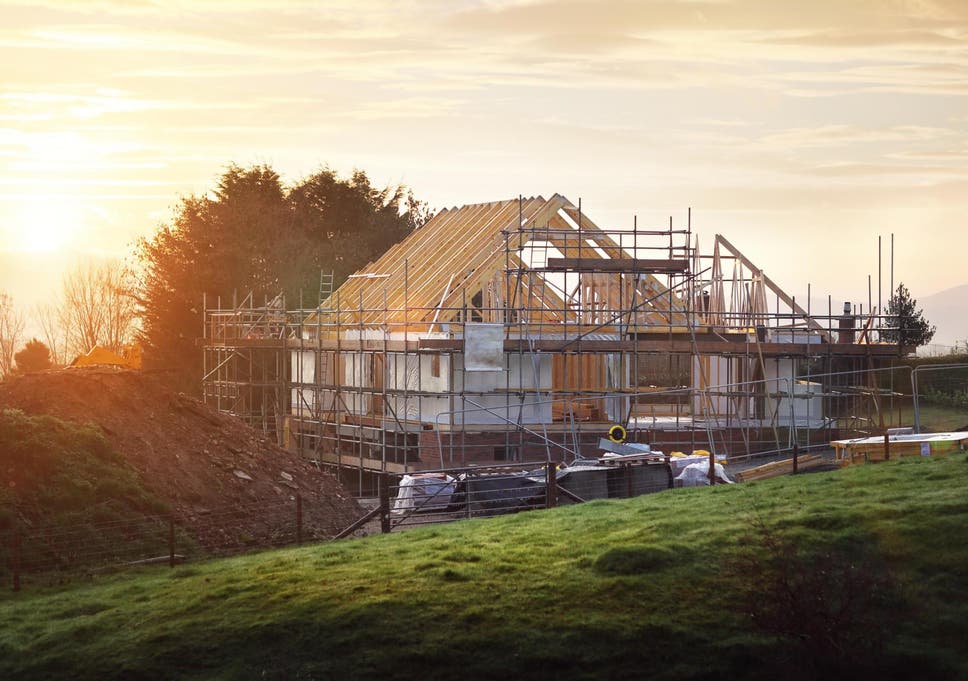
Home under construction in the UK. Developers could be forced to create 10 per cent more 'biodiversity units' for every project they undertake in England under government proposals ( Getty )

Developers could be given the green light to build in woodland and open countryside, if they pay a charge towards improving the natural environment elsewhere, under new plans published by the government.

The biodiversity offsetting scheme will help the government meet targets to build 300,000 new homes a year by the mid-2020s, but would also apply to commercial projects.

The proposals, which are currently out for consultation, would legally require developers to deliver a “biodiversity net gain” when undertaking construction projects – meaning habitats for wildlife must be enhanced and left in “a measurably better state” than they were pre-development.

Such a scheme aims to make planning regulation less onerous, helping to speed up building projects, “improving the process for developers”, the government paper says.

While the consultation paper states the government would prefer biodiversity net gains to be seen in the immediate vicinity of new developments, it states a tariff could be paid “so that biodiversity net gain can be achieved without delaying development”.

“Biodiversity net gain will be assessed using a government metric to calculate how many “biodiversity units” a tract of land is worth. “The metric takes relative levels of habitat importance into account when assessing the value of habitats for biodiversity,” the document says.

The development of existing carparks and industrial sites would “usually come lower on this scale, while more natural grasslands and woodlands would be given a much higher ranking for their environmental importance”.

Developers would then be required to demonstrate they are improving biodiversity – such as through the creation of green corridors, planting more trees, or forming local “nature spaces”.

The government said: “Green improvements on site would be encouraged, but in the rare circumstances where they are not possible the consultation proposes to charge developers a levy to pay for habitat creation or improvement elsewhere.”

In this instance a developer could pay damage compensation into a “habitat bank”. The developer would have to buy 10 per cent more biodiversity units than were destroyed to provide the net gain.

The resultant “compensatory habitats” may not be permanent, with the proposals suggesting under one option developers could only be mandated to maintain them for less than 25 years.

The environment secretary, Michael Gove, said: “Our commitment to protecting and enhancing our natural world can go hand in hand with our ambition to build more high quality homes.

“Mandating biodiversity net gain puts the environment at the heart of planning and development. This will not only create better places for people to live and work, but ensure we leave our environment in a better state for future generations.”

Thérèse Coffey, the environment minister, told The Times: “The whole point of this is that we are in favour of building homes but we believe it can be done in an environmentally even more friendly way. Some councils already do this. We are trying to give an element of consistency and certainty to developers in how this gets done around the country.”

The National Trust has previously said biodiversity offsetting schemes “should not be seen as a way to fast-track development”.

In a statement on its website, the Trust said: “We believe biodiversity offsetting, done properly, could help avoid the net loss of biodiversity so often brought about by development, and should be designed to deliver net gains for wildlife.

It added: “An appropriate, transparent and carefully tested framework is needed to make sure any impacts of development on wildlife are taken properly into account and compensation is agreed in a consistent way.”


‘Biodiversity offsetting scheme’ plans to allow developers to build on woodland and open countryside | The Independent
.
.
.

Thursday, 12 April 2018

Climate change >>> Shifting Spring @ Costing the Earth on Radio 4

All over the place, Spring is all over the place:
Maine gardeners facing realities, challenges of climate change — Homestead — Bangor Daily News — BDN Maine
5 Plants and Animals Utterly Confused by Climate Change - The New York Times
A spring nature almanac: Timing of events in nature increasingly affected by climate change, Drew Mionkman writes | ThePeterboroughExaminer.com 


Seattle Thinks It Knows Rain. Climate Change Begs to Differ.
04.09.2018

A city known for precipitation may be unprepared for the flooding that climate change has in store.

Seattle Thinks It Knows Rain. Climate Change Begs to Differ.


Washington DC's cherry blossoms bloom later this year - but they remain an indicator of climate change
7 days ago
National Park Service is now expecting the peak bloom to be the week of 8 April
Cherry tree buds are silhouetted against morning sky near the Washington Monument on 27 March, 2018 AP


Here in the UK it's equally confusing:
According to the calendar Spring has sprung - tell that to the weather as Britain braces itself for a cold Easter | Bradford Telegraph and Argus
Climate change causing earlier spring flooding in Britain | Daily Mail Online

Radio 4's Costing the Earth looks at what's been happening:  

Shifting Spring

Costing the Earth

Spring now begins on average 26 days earlier than it did 10 years ago. Lindsey Chapman investigates how shifting seasons are affecting our wildlife.

Bumblebees in January, daffodils blooming early, 'thuggish-vegetation' thriving as a result of mild winters and damp summers: the seasons are blurring and wildlife is becoming confused.

Last year was 'a bit all over the place yet again'. It's hard to put any single event down to climate change but overall the impact is 'quite staggering' according to Matthew Oates, butterfly expert from the National Trust.

In this week's Costing The Earth, Lindsey Chapman meets Matthew as he takes stock of our shifting seasons. He explains how early spring can throw several species out of kilter, creating a mismatch between wildlife and their prey. And what happens when- like this year- we get an icy snap in the middle of a mild spell?

Lindsey meets the scientists studying the mechanisms driving the UK's climate, phenologists who have been studying the link between seasons and species and the naturalists who are spotting new species turning up on our doorstep and familiar species that are moving north, and Lindsey visits her Springwatch friend and colleague Brett Westwood to hear if there are any species that are benefitting from a warming UK climate.


BBC Radio 4 - Costing the Earth, Shifting Spring

Here's an excellent piece 'getting skeptical about global warming skepticism':
How is climate change affecting the advance of spring?

See also:
Futures Forum: Looking for emerging butterflies at the start of spring
Futures Forum: "Climate change is making things worse"
.
.
.

Saturday, 10 March 2018

"The Wood for the Trees" > SVA lecture: Weds 14th March

This month's Sid Vale Association talk will be the second annual Bob Symes Memorial Lecture:

The Wood for the Trees – a long view of nature from a small wood. 
Speaker – eminent paleontologist, and natural historian Richard Fortey. 
After the lecture Dr Fortey will be signing copies of his books. 
Admission £3 to include tea/coffee. 
Arranged jointly by the SVA and the National Trust Sidmouth Centre.


Bob Symes Memorial Lecture – The Wood for the Trees - Sid Vale Association

Here's the book review from the Guardian:

The Wood for the Trees by Richard Fortey review – our deep-rooted connection to woodland

Renowned natural historian Fortey bought four acres of beech and bluebell wood and began a deep investigation into its fauna and flora. His enthusiasm for his new wonderland is infectious
Timeless spaces
 Timeless spaces. Photograph: Dave Haylock/REX Shutterstock
It is hard to think of a more treasured aspect of the British landscape than woodland, which is surprising when you consider how far we seem to have wandered from the trees. We have lower levels of woodland cover (13%) than our EU neighbours and nine out of 10 of us are firmly immured in the urban environment, yet the forest continues to thrive in the national psyche, as demonstrated by the outcry in 2011 that halted government plans to privatise England’s state-owned woods and forests.
This passion is partly aesthetic: who can really resist the stark beauty of cruciform trees backlit by winter sun, the rolling green seas of birdsong they become in summer, or their spectacular russet and scarlet autumn shows? Certainly not 19th-century philosopher John Stuart Mill who, after a walk through one patch of beech trees, proclaimed woods “the great beauty of this country”.
We love too the off-the-lead freedom to wander these ever-changing yet timeless spaces, to briefly decentralise ourselves from the world and experience nature’s otherness in counterpoint to day-to-day life. Public outrage at the proposed sell-off wasn’t just about the effect it would have on a favourite view or psychological retreat, however – the very character of the country seemed under threat. In its defence, protestors evoked everyone from Robin Hood to Winnie the Pooh. Also deployed were those iconic sylvan signifiers of English history: the yew bows that won Agincourt and the hearts of oak that helped the Royal Navy rule the waves.
Although slackened, our connection to woodland is deep-rooted. It is historical, cultural and personal, ingrained from millennia of habitation, dependency and usage. Even today, among a deforested population, clues as to how hard-wired and hands-on this relationship has been remain close. Take the surname Cooper, one who crafts barrels from oak, or Cartwright or Wheelwright. In my own family (tree), there is Brayshaw – meaning a broad, small wood – Woods, Holmwood and Turner, all with associations to a place or profession tangled up with trees. Small wonder that, whenever we do find a path back, forgotten memories are stirred. We half-recall a time not too distant when woods provided all we required. And in an unstable world they still provide a sense of reassurance we’re not ready to lose.
Responding to this need, the past few years have seen the release of a rich and varied list of books concerned with woods. Oliver Rackham’s definitive Woodlands, Richard Mabey’s Beechcombings, Sara Maitland’s Gossip from the Forest and Rob Penn’s revival of forgotten skills, The Man Who Made Things Out of Trees. The latest in this line, The Wood for the Trees, follows renowned natural historian and broadcaster Richard Fortey as he also focuses on the tree line, albeit through a narrower aperture, using one small wood to capture a wider story of the British landscape.
“I needed to explore the development of the English countryside,” he writes. “I was moved by a compulsion to understand half-forgotten crafts …plans were made to fell timber, to follow the journey from tree to furniture … in short, the wood became a project.”In 2011, after retiring from his role as senior palaeontologist at the Natural History Museum, and following a windfall from presenting a TV series, Fortey purchased four acres of prime beech and bluebell wood. Located in the Chiltern Hills, a mile from his hometown of Henley-on-Thames, Grim’s Dyke Wood is the very patch that had Mill so enraptured two centuries ago. Though it has changed in the intervening years, it is still a glorious spot – Fortey’s initial intention was to use the wood as a way to “escape into the open air”, to record a rich ecology of living wildlife following a career locked away in dusty museums studying dead things. He soon realised, however, that any portrait of the place would be incomplete without its human histories, too.
What follows then is, in one sense, an expanded diary of this project over the arc of a year, except Fortey is not just any retiree keeping notes on a new hobby. His remarkable scientific knowledge, intense curiosity and love of nature mean entries erupt with the same richness and variety as the woods they describe.
From recipes for ground elder soup to musings on bumblebee varieties or gruesome tales of murder, Fortey’s enthusiasm for his new wonderland is infectious and illuminating. His style echoes the great Gilbert White and his approach is proudly old school. He makes clear his distaste for “fuzzy” romanticism and the intruding emotions of the observer, but he too is romantic at times, not least in his resolve to collect things found in, or created from, his patch of wood. Mouse-gnawed cherry stones, glass made from flint, fallen birds’ eggs are among the things he preserves in a cabinet made from his own timber.
Of course, collections are the trade of scientists and curators too, and it’s clear old habits die hard. With some help from friends at the Natural History Museum, Fortey begins a deep analysis of the wood and its inhabitants – trees, insects, animals, plants and minerals. He starts with the substrate, slicing buried flint and putting it under a microscope to identify its origins, and ends up on a cherry picker in the canopy, all in the name of cataloguing the wood’s many mice, moths, bats, beetles, butterflies, crane flies, spiders, parasitic wasps, orchids, centipedes, millipedes and weird and wonderful fungi. These long taxonomies could easily be dry and exhausting, but they come alive thanks to Fortey’s vivid descriptions. Flat-backed millipedes “look as if they were assembled from some kind of kit that clicks together to make miniature armoured trains”; the Lithobius variegatus centipede’s striped legs stick out “like oars from a Viking ship, bent on pillage”.
Interwoven with these records are peripatetic investigations into human stories, from this patch’s iron age incarnation through Henley’s boom as a thriving river town supplying timber to the capital, up to the recent snapping up and fencing off of surrounding land by oligarchs and bankers. Along the way, Fortey unearths his wood’s changing fortunes and its significant ties to local estates, country houses and notable families. Taking a broader view of British history, he reveals how its survival and ecological richness have been due to its usefulness in providing the things we need – food, fuel, coppice, charcoal, chair legs, tent pegs and brushes.
And therein lies the conundrum. The future of British woodlands and their wildlife is precariously balanced, threatened by everything from climate change to the consumer preference for cheap imported woods. In this deep and interesting book, Fortey warns that without a return to hands-on management, a renewed sense of value and increased human engagement, our native woods are doomed to become empty “rural decoration” left “to age to a kind of senility that would benefit only wood-eating beetles”. Young trees need to replace the old, he writes; “new light needs to flood in”. Not only do we still need the trees, but they need us, too.
 Rob Cowen’s Common Ground has been longlisted for the Wainwright prize. To order The Wood for the Trees for £15.40 (RRP £22) go to bookshop.theguardian.com or call 0330 333 6846. Free UK p&p over £10, online orders only. Phone orders min p&p of £1.99.
The Wood for the Trees by Richard Fortey review – our deep-rooted connection to woodland | Books | The Guardian
.
.
.

Wednesday, 11 January 2017

'Planning systems favour developers over communities'

The struggle over the 'green wedge' between Seaton and Colyford shows the determination of both developers and the local community:
Futures Forum: Green Belts: the Seaton-Colyford 'green wedge'... a forth application is refused, preventing 'harmful encroachment of urban sprawl into the open countryside'

Even though the District Council (successfully) opposed this particular 'development', there is the fear that developers are not exactly being discouraged:
Futures Forum: East Devon is already a great place to live in and to visit - so why do we need to 'make' it such a place?

National campaign bodies certainly feel that developers have got the upper hand:
Futures Forum: Community Voice on Planning: National Conference report >>> NIMBY – reality or slur?

The EDW blog spotted this piece from the Public Finance website:
“Planning systems favour developers over communities” survey finds | East Devon Watch

Planning systems favour developers over communities, LGIU survey finds

11 Jan 17
Almost three-quarters of local councils believe that the planning system is weighted too heavily in favour of developers at the expense of local democracy, according to a survey.

Commissioned by the National Trust and carried out by the Local Government Information Unit, the survey canvassed 1,200 ward councilors in England on aspects of the planning system.
The results, published today, show that 72% of councilors feel the existing system puts the interests of developers over and above those of councils and communities. Also, half of councillors said planning departments are inadequately funded, and the same amount claimed sites that are not in line with their council’s local plans are being approved for new housing.
The government has pushed for the adoption of local plans throughout England. In a statement to the Commons in 2015, then housing and planning minister Brandon Lewis described local plans as the “cornerstone” of the government’s planning reforms. Produced in consultation with communities, they are designed to offer “certainty on where new homes are to be built”.
The survey findings come as the government puts the final touches to its housing white paper, which is expected to be published later this month. The National Trust and LGIU urged Whitehall to revise the paper to boost confidence in the way the system works.
In a joint statement, the organisations argued that the views of councillors were often ignored in debates around the future of the planning system. “Yet, as local decision-makers, and an important link with local communities, they have an essential role to play in ensuring development is sensitive to the needs of the area,” they said.
Theresa May’s government has responded to pressure over a lack of new housebuilding in the country by announcing a raft of new measures and significant funding to boost construction.
As such, communities secretary Sajid Javid last week invited housing providers to bid for a share of a £7bn fund in what was described as a “dramatic expansion” of the affordable house programme.
The survey also revealed anxieties about loosened planning restrictions, with 58% of councillors believing their council would allocate green belt land for housing in the next five years. There are also concerns about the introduction of permitted development rights for home extensions, office-to-residential use conversions and other changes of use.
Moreover, the National Planning Policy Framework does not appear to be having the positive impact it was intended to have on design quality. Only 18% of councillors say designs have improved, and only 12% believe that loosening planning restrictions has had any positive impact.
Jonathan Carr-West, chief executive of the LGiU, said that five years on from the adoption of the government’s planning reforms, it was worrying that councillors felt it hadn’t delivered the localism that was promised.
He said: “If ministers are serious about local plans being at the heart of the planning system, then they should invest in council planning teams and use the housing white paper to give them the tools to deliver good quality housing in the right places.”


Planning systems favour developers over communities, LGIU survey finds | Public Finance
.
.
.

Tuesday, 15 November 2016

Brexit: and the impact on the agriculture industry

The National Farmers' Union has been pushing for new approaches:
Futures Forum: Brexit: and Back British Farming Day >>> with the NFU's post-Brexit pledge

And it has a strong voice in the County:

Devon NFU lobbies MP on Brexit impact, bovine TB and asks for responses to consultation

By Crediton Courier Newspaper in Local People

CENTRAL Devon MP Mel Stride held two meetings in his constituency in October with the Devon National Farmers’ Union to discuss the impact of Brexit on the agriculture industry and the progress being made in tackling bovine TB.
Mr Stride met with NFU members in Zeal Monachorum and then Chagford, where funding for uplands farming, which relies heavily on EU support payments, was also discussed.
Speaking after the meetings Mr Stride said: “Farmers in Devon face a number of challenges. One relates to the possibility of financial support drying up due to Brexit and I was pleased to report that the government has confirmed that current arrangements will be protected until 2020.
“Beyond that we will have to see what the proposals are but I have already made it known in Westminster that I will be fighting very hard to ensure that appropriate support is provided.”
Devon NFU Chairman Jim Stephens, from Crediton, added: “It was very good to catch up with Mel and discuss a number of current pressing issues concerning our members. These include Brexit, bovine TB and the importance of a food chain that supplies high quality produce to the nation and fair trade to Devon farmers.

“The role of agriculture is fundamental to our county’s economy particularly providing much of the employment. “Our visit to the top of Dartmoor, hosted by the Jordan family, is typical of many dynamic businesses where we saw top quality livestock, South Devon cattle, Scotch Blackface sheep and Dartmoor ponies.
“All of which play a vital role in keeping the Dartmoor scenery that we all love and admire. Beyond 2020 the next generation of farmers need to be recognised for the valuable contribution they make to our economy and unique landscape.”
Mr Stride is encouraging farmers in his Central Devon constituency to take part in an NFU consultation on the future of British farming by visiting: www.nfuonline.com .

Alan Quick

Devon NFU lobbies MP on Brexit impact, bovine TB and asks for responses to consultation | News | Crediton Country Courier
Mel talks to farmers about the challenges they face in Devon | Exeter Express and Echo
.
.
.

Sunday, 19 June 2016

"Cronyism in the South West"

Cronyism is alive and well in the South West:
Futures Forum: Crony capitalism and lemon socialism in East Devon........ The costs of "substantial growth and expanding business"
Futures Forum: Economic freedom and political equality at the local level >>> or, the triumph of corporatism
Futures Forum: A history of the East Devon Business Forum, part nine ....... "The local development framework would enable businesses to progress land allocation. It was agreed that the strategy should reflect the Forum’s views."
Futures Forum: Corporate welfare in the Westcountry
Futures Forum: Redeveloping East Devon >>> the alternatives to a heavy-handed approach
Futures Forum: Corporation tax, small towns and small businesses >>> giving SMEs the same 'level playing field' as multinationals >>> from Google to Crickhowell and back again
Futures Forum: Hinkley Point: of big energy projects and big government

Blogger Georgina & Co has put together a significant Comment Piece for Western Morning News – cronyism - in turn reblogged by EDW:
“Cronyism in the south west” | East Devon Watch

Cronyism in the South West

The sheer amount of unsuitable and damaging development that has been pushed through against all objections in my home town of Totnes, but also throughout the south west, is making me question the role of cronyism in the deals made.

It starts at the very top of course in government, but appears to have sucked up many of our more august bodies that we are more used to seeing as our defenders and protection, into its net. The National Trust for example, now has a right wing business leader as its head (1). I wouldn’t suggest for a moment that this is as a result of any wrong doing, but I question why he is there, when he comes with no history of interest or involvement in conservation or the heritage sector. It is a coincidence of course that the National Trust appear to be engaged recently in the development business themselves, aiming to sell land, given to them in trust in Bovery Tracey (2) and also in Somerset, for housing. To say local people aren’t happy is a bit of an understatement.

Natural England also, is now headed up by a right wing business man, an ex-developer actually, with little to no interest up to now in the environment, or preserving the countryside, he was too busy working to concrete it over as head of Linden Homes. George Monbiot describes his appointment as, ‘The government wants a chairman who can flog nature and have chosen a Tory party donor with a background in investment banking and housing developments.’ (3)

So our conservation and heritage organisations appear to be headed by cronies, our secretive Local Enterprise Partnership appears to be also. This is the self-appointed group tasked with pouring vast amounts of public money into encouraging enterprise and business down here and with running our devolution bid. The fact that the majority of those on the board come from the construction and housing sector and a few who are involved in weapons manufacturing won’t come as a surprise when you see that our devolution bid, which they mostly engineered, is very heavy on giant construction projects, which the board’s companies appear to profit from and very weak on tourism, farming and sustainability. This bid is about growth. ‘I want to only build structures that you can see from space,’ the chair is quoted as saying. The fact that this undemocratically elected group hold their meetings in private, have no head office, very little accountability and have managed to keep the lid on their activities very successfully is worrying and the ultimate in cronyism. (4)

This culture goes down the line; housing developments pushed through when they are so obviously damaging and ridiculous. In Totnes, Great Court Farm was sold to developers in very suspect circumstances in my opinion. It is the last dairy farm in Totnes, the home to a fourth generation of farmers, a totally unsuitable spot for yet more mass building in this beleaguered town. The access is terrible, the logistics ridiculous and yet it was pushed through by a combination of cronyism and mis-management. The people who suffer, are the people who always suffer when cronyism is allowed to flourish and that’s us – everyone else and in this instance the farmer and his family and the people of Totnes, who see their landscape the plaything of those in power. (5)

Across the county, across the country in fact, the same story is played out endlessly. Local people left shocked and devastated as those in power, find the wherewithal to circumnavigate due process and make an absolute fortune flogging nature and our land to line their own pockets. (6)


Comment Piece for Western Morning News – cronyism | Georgina and Co.

Notes:

1: Tim Parker, one of the richest men in the UK, launches scathing attack on high pay and inherited wealth | Business News | News | The Independent
National Trust chairman Tim Parker says organisation must be more diverse - but not Disneyfied | Home News | News | The Independent
'Prince of Darkness' Tim Parker: 'Business does involve rough and tumble'

2: How we engage in planning: our role as a developer | National Trust

3: Why Andrew Sells is the wrong choice for Natural England | George Monbiot | Environment | The Guardian

4: In 2014 our enterprise partnership had an income of £250,000 so how come it can now run Devon and Somerset? | East Devon Watch

5: Friends of Great Court Farm
Planning: the untapped power of community consent. | Transition Network
Totnes 'at mercy of loophole that lets in the bulldozers' | Western Morning News
Totnes' Great Court Farm plans get the go-ahead despite demo | Torquay Herald Express

6: 
Futures Forum: Managed democracy: "The deliberate undermining of people's perception of the world, by creating confusion and contradiction ... undermining any opposition to existing power structures ... which leaves us feeling helpless and depressed and to which the only response is: 'Oh dear'."
Futures Forum: Making profits from changing land use: "Profits that under a fairer system should revert to the community whose needs and activities serve to create the land’s value."
.
.
.