... A FORUM TO STIMULATE DEBATE ... ... JUST ADD A COMMENT AT ANY ENTRY BELOW... ... FOR THE SUSTAINABLE DEVELOPMENT OF TOWN AND VALLEY ...
Showing posts with label mcz. Show all posts

Thursday, 17 January 2019

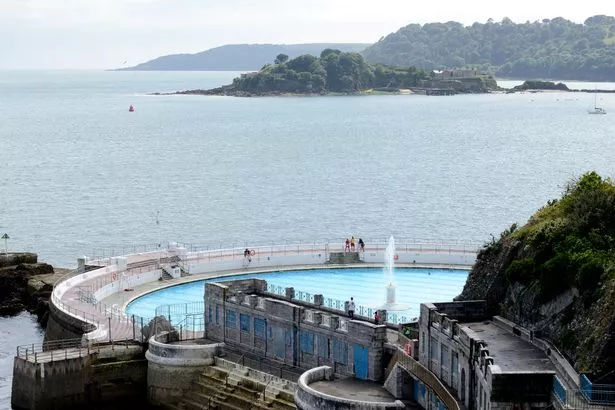
Making Plymouth Sound the UK's first national marine park > public consultation opens

A new project is emerging:
Futures Forum: Making Plymouth Sound the UK's first national marine park

And Plymouth City Council are really pushing for it to happen: 


Plymouth City Council 14.01.2019

We want Plymouth Sound to be designated the UK's first National Marine Park. Leader of Plymouth City Council, Councillor Tudor Evans OBE, and Cabinet Member for Environment and Street Scene, Councillor Sue Dann, along with a range of other local partners, talk about the ambitious plans. #MarineParkPlym 


What does Plymouth Sound mean to you and what do you think about plans for a National Marine Park in Plymouth? Have your say via our website here: Plymouth Sound National Marine Park | PLYMOUTH.GOV.UK

Plymouth Sound National Marine Park - YouTube

And the press has been very happy to take it up:
Plymouth commits to launching Britain's first National Marine Park - Plymouth Live
.
.
.

Wednesday, 3 October 2018

The “toughest” swim yet highlights plastic waste entering the seas

We are drowning in plastic:
Futures Forum: Drowning in Plastic @ BBC One > "Single-use plastics should be banned immediately in Britain."
Futures Forum: Drowning in Plastic @ BBC One > "This documentary is a must-watch, because it’s only if we raise awareness, tell our friends and spread the message that humanity will really have a chance at saving our oceans."

Someone who has really demonstrated that is the endurance swimmer Lewis Pugh:
The Long Swim « Lewis Pugh: Achieving the Impossible

Earlier in the summer, Surfers Against Sewage sponsored a very long swim:

The Long Swim: Lewis Pugh Announces Toughest Swim Yet to Protect the Ocean

26 June 2018


Lewis Pugh, the UN Patron of the Oceans and renowned endurance swimmer, has just announced his latest challenge, which will see him swim the full length of the English Channel wearing just Speedo swimming trunks, a cap and goggles.

The Long Swim will mark the start of a worldwide campaign entitled Action for Oceans, an initiative that is calling on governments to fully protect at least 30% of the world’s oceans by 2030.

Surfers Against Sewage has teamed up with Lewis, Speedo and UN Environment on The Long Swim to raise awareness of the issues our oceans face and to campaign for Marine Protected Areas.


The Long Swim: Lewis Pugh Announces Toughest Swim Yet to Protect the Ocean • Surfers Against Sewage

He finished his swim last month:
Endurance swimmer Lewis Pugh completes English Channel challenge - BBC News

And what he found was... lots of plastic:
Video: Swimmer Lewis Pugh retrieves plastic from sea during epic challenge | Daily Mail Online
Channel swimmer Lewis Pugh finds only plastic and jellyfish | News | The Sunday Times 

Endurance swimmer Lewis Pugh set to complete Channel swim 

29 August 2018 


Handout photo dated 04/08/18 issued by Lewis Pugh Foundation of endurance swimmer and United NationĂ•s Patron of the Oceans, Lewis Pugh collecting plastic pollution near Bill of Portland during The Long Swim campaign. Mr Pugh is due to complete his swim of the length of the English Channel next week at Land’s End. Photo: Press Association Images

Endurance swimmer Lewis Pugh is set to complete his 330-mile swim along the length of the English Channel as he urged the Government to better protect UK waters.

Environment Secretary Michael Gove will welcome the British swimmer to Dover, Kent, on Wednesday after a gruelling seven week-long swim.

Mr Pugh’s “The Long Swim” will come to an end at Shakespeare Beach after he set off from Land’s End in Cornwall in swimming trunks, cap and goggles on July 12.

With the end in sight, Mr Pugh on Tuesday encouraged his supporters to join him at the finish line as he tweeted: “Swam last night. Swimming today. Dover tomorrow!! Please join me at Shakespeare Beach at 1:30pm for the end. #TheLongSwim”.

His campaign, which he anticipated would be his “toughest” swim yet, aims to highlight plastic waste entering the seas.


Lewis Pugh Credit: Kelvin Trautman/Lewis Pugh Foundation/PA Images

Mr Pugh, who has been swimming the world’s oceans for three decades, has been covering 10km to 20km (six to 12 miles) per day.

The environmental campaigner and UN Patron of the Oceans also took part in beach cleans along his journey, organised by marine conservation charity Surfers Against Sewage.

Before setting off, he warned of a “shocking” figure which said just seven square kilometres of 750,000 of UK coastal waters were fully protected.

He earlier told the Press Association: “My message is going to be very, very simple: our oceans are in crisis. Unless we take real, serious action now, it’s very difficult for me to see how they can recover.


(PA Graphics) Credit: PA Graphics

“It’s not something you can keep putting off and putting off and putting off. We’ve done that for too long.”

His swim has been observed and verified by the Channel Swimming Association.


Endurance swimmer Lewis Pugh set to complete Channel swim - ITV News.
.
.

Thursday, 21 June 2018

Making Plymouth Sound the UK's first national marine park

An exciting report in today's national press: 

A kayaking family filmed a rare sighting of a killer whale off the coast of Devon


Orca in Plymouth Sound (Photo: Eileen Wright)

Josh Barrie
Thursday June 21st 2018

A large dolphin believed to be an orca has been spotted swimming off the coast of Devon in an extremely rare sighting. The huge orca, which while commonly known as a ‘killer whale’ is in fact a species of dolphin, was filmed by Eileen Wright in Plymouth Sound.

Orcas are sometimes seen in British waters, but not usually in great numbers, and are usually found in northerly areas of Scotland. This is the first orca sighting in Plymouth, which happened four years ago – and was then believed to be the first recorded.

This month, the Wright family were kayaking in Plymouth Sound when they saw the telltale killer whale fin in the water. The mammals can grow up to 30ft long.

Kayaker Neil Wright, from Plympton, said: “It was much larger than anything I had seen on previous trips out around the Sound, probably at least twice the length of the two-metre grey seals I have seen. The height of the dorsal fin is what really stood out but sadly the encounter was over almost before we had a chance to really think about what we might have just witnessed. It was much larger than anything I had seen on previous trips out around the Sound, probably at least twice the length of the two-metre grey seals I have seen”

Staff at the National Marine Aquarium (NMA) in Plymouth said they were hugely excited to be sent the footage. Experts said all the characteristics of the animal suggest it was an orca (Orcinus orca).

Mark Parry, conservation project manager, said to i: “It’s a really wonderful sighting. It’s an amazing sight to see.”

An NMA spokesperson added: “As a charity dedicated to connecting us with our oceans, and having just held a national meeting on the future of marine parks around the UK, it was almost perfect timing for an unusual sighting in the area of water just in front of the aquarium.”


Kayaking family filmed rare sighting of killer whale off coast of Devon

This has highlighted the importance of Plymouth Sound - and the promise of it forming part of a 'blue belt':
'Blue Belt' plan for Devon coast - Devon Live

This is part of the UK government's plans:
World-leading 'Blue Belt’ expands as new marine protections revealed - GOV.UK
Britain's 'blue belt' haven protecting marine life will increase by 50%, Theresa May announces - Telegraph

Which were announced on World Ocean Day earlier this month:
Futures Forum: "This week marked World Environment day and World Ocean day, both of which highlighted plastic global pollution as the most urgent problem facing our planet."

And part of that is the promise of a 'national marine park': 

Minister gives thumbs up to plans for new Plymouth national marine park

This new blue belt will mean that harmful economic activity isn’t allowed

Keith Rossiter
8 JUN 2018


Plymouth's hopes of becoming a new national marine park have won backing at the highest level.

Environment Secretary Michael Gove, who visited the Westcountry today, said he likes the imaginative plans to create the park. Mr Gove was speaking on the day he announced a third wave of marine conservation zones (MCZs), including 16 in the Westcountry and three near Plymouth. He has also commissioned a review which will look at extending Britain's national parks.

An international conference in the city this week brought together scores of supporters in a campaign to set up a new marine park that embraces the diverse range of protected coastal habitats in Plymouth Sound and the surrounding area.

Asked if the Plymouth campaign to create a new national marine park as part of the expansion of national parks was worth considering, Mr Gove said: “Yes it is. We are in the market of for imaginative ideas for making sure our marine environment as well as our landscapes can be better protected.

“Of course, each scheme has to be considered on its own merits, and we need to consider what the consequences might be for existing businesses. But yes, it’s an attractive idea, and we want to look very closely to see whether it’s a runner.”

Mr Gove also announced a third wave of 41 new marine conservation zones, including proposals for the Erme, Avon and Dart estuaries near Plymouth.

“We’re fortunate to have some of the healthiest and most productive seas in the world, but we need to do more,” he said. “We need to make sure our marine environment is protected for the next generation. This new blue belt will mean that harmful economic activity isn’t allowed in those parts of our seas, and we can see fish stocks grow.”

He said the MCZs had been designed to ensure that we “have the best possible prospects for our fishermen”, that fish stocks are protected and grown and that they have an opportunity in the future to fish even more so that coastal communities, which suffered while we’ve been in the EU, have the chance to revive.”

Consultation opened yesterday on the new MCZs, which will safeguard almost 12,000 square kilometres of marine habitats and mark the most significant expansion of the UK’s “Blue Belt” to date. The proposed protections – announced on World Oceans Day – will cover an area almost eight times the size of Greater London.

No new activities deemed damaging – such as dredging, or significant coastal or offshore development – will be allowed to take place in these areas. Existing harmful activities will be minimised or stopped to allow important habitats to be restored over time.


A marine parks conference was held at the National Marine Aquarium (Image: Keith Rossiter)

Rare or threatened marine habitats and species which will be protected include the short snouted seahorse, stalked jellyfish and peacock’s tail seaweed.

At the same time, the Prime Minister will be making a call for urgent global action to protect the world’s oceans from plastics and other harmful waste. Speaking at the G7 summit in Canada, she will implore other world leaders to follow the UK lead in working with business, industry and non-governmental organisations to find innovative and effective solutions to this issue.

Some 50 MCZs have already been designated around England, including the first tranche of 27 designated in 2013, followed by 23 sites in 2016. This third and final tranche will be designated within 12 months of the consultation, which will last for six weeks. It will cover approximately 11,700 square km, bringing the total area of protection to more than 32,000 square kilometres.

Marine Conservation Zones are just one type of the many Marine Protected Areas in place around the UK to conserve rare, threatened and nationally important habitats and species for future generations. Marine Protected Areas cover a total of 209,000 square kilometres.

If approved, the new tranche will take the total to about 220,000 square kilometres, or two fifths of the UK coast.

Mr Gove, said: “The UK is surrounded by some of the richest and most diverse sea life in the world. We must protect these precious habitats for future generations.”

The sites in the Westcountry are: Axe Estuary; Camel Estuary; Cape Bank; Dart Estuary; Devon Avon Estuary; East of Start Point; Erme Estuary; Helford Estuary; Morte Platform; North West of Lundy; Orford Inshore; Otter Estuary; South of Celtic Deep; South of the Isles of Scilly; South West approaches to Bristol Channel.


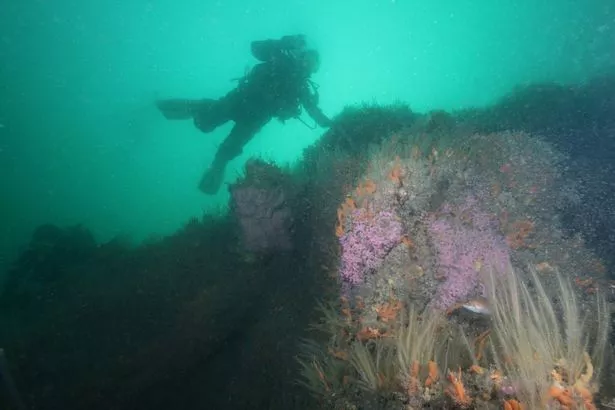
Firestone Bay from 'Exploring Britain's Hidden World' by Keith Hiscock (Image: Keith Hiscock)

The Marine Conservation Society said designation was only the first step to creating a network of sites, and that adequate funding must be found to ensure these final sites are not protected in name alone. 

Among the sites put forward for the public consultation, which starts today, is South West Approaches to Bristol Channel, an area that hosts a reef complex, and a sand and gravel seabed. Recovery of the fish populations and wider species in this rich sea would widely benefit the animals, and migratory species such as common dolphin, sharks and seabirds that regularly visit this site.

Further offshore, South West Deeps East is an area that could show phenomenal recovery following intense historical fishing pressure.


Minister gives thumbs up to plans for new Plymouth national marine park - Plymouth Live
.
.
.

Wednesday, 2 May 2018

Prof Callum Roberts @ Radio 4's Life Scientific >>> >>> Marine Conservation Zones are "useless 'paper parks' that offer no real protection from the dredging and trawling that has devastated large areas of England’s seas for decades."

We need to protect our seas:
Futures Forum: Campaigning for an Antarctic Ocean Sanctuary

Prof Callum Roberts of York University is pushing for a reserve to help its biodiversity recover: 

World's biggest wildlife reserve planned for Antarctica in global campaign 

13 January 2018

The seas around Antarctica are some of the most important in the world with a huge diversity of species. If successful, campaigners hope the sanctuary will build momentum towards a UN ambition to create a network of marine protected areas covering international waters.

Experts say that, as well as protecting wildlife by allowing ecosystems to recover in and around the Antarctic, the ocean sanctuary would provide global benefits, with recovering fish populations spreading around the world, encouraging vital biodiversity and providing food security for billions of people.

Callum Roberts, professor of marine conservation at the University of York, said the sanctuary would also play a key role in tackling climate change – soaking up huge amounts of carbon dioxide from the atmosphere.

“The Antarctic is very important in locking away carbon in deep-sea sediments. There is also a very rapid rate of sinking there – it has some of the coldest waters in the world … and this sinking is one of the great pumps of the global ocean system.”

He added that the new sanctuary would be an important step to preserving a sustainable global oceans system. “The Antarctic is a massively important area and you mess with it at your peril.”


World's biggest wildlife reserve planned for Antarctica in global campaign | Environment | The Guardian

Prof Roberts is certainly renown:
Roberts, Callum - Environment, The University of York
The incredible creatures living in our waters - Plymouth Herald

And he is pushing for Marine Conservation Zones around the UK - but ones which actually do the work they were designed for:
England's marine conservation network is worse than useless | Callum Roberts | Environment | The Guardian

That was in 2014. He continues to be scathing about the uselessness of the MCZs, as in this piece from last month: 

The MCZs have been also criticised as useless “paper parks” that offer no real protection from the dredging and trawling that has devastated large areas of England’s seas for decades.

“They have no management at all, so life within them remains unprotected,” said said Prof Callum Roberts, at the University of York and one of the UK’s leading marine conservation experts. “They will be worse than useless, giving the illusion of protection where none is present.”


Mass die-off of sea creatures follows freezing UK weather | Environment | The Guardian

Here he is on last night's Life Scientific on Radio 4: 

Callum Roberts on the urgent need for marine conservation

The Life Scientific


1 MAY 2018

Callum Roberts, Professor of Marine Biology at the University of York, learnt to dive in a leaky wet suit in the North Sea when he was a boy. 


As a student, he was introduced to the extraordinary diversity of marine life on a coral reef in the Red Sea. His job was to count different species of fish but he also noticed several different species of fish working together to defend a common resource, lurid green algal lawns. Life on coral reef is notoriously competitive and collaboration on this scale was unexpected. 

In 1991 he wrote a ground-breaking paper about marine reserves showing how it is possible to have our fish and eat them. It was a radical suggestion at the time. Now many countries are committed to protecting 10% of the ocean in this way by 2020. Aiming to maintain fish stocks in their current state is, Callum says, ridiculously unambitious. 

On sabbatical at Harvard University, he started reading historical accounts by pirates, travellers and fishermen and his eyes were opened wider still to just how rich marine life could be. As early as the 12th century laws were being put in place to help preserve fishing stocks. Two hundred years ago off the coast of Britain a diverse array of sea fans and sponges covered the sea floor. There were millions of oysters and scallops the size of dinner plates.

Monday, 11 December 2017

Blue Planet II > a celebration of ocean conservation > and what you can do to help save our oceans

The Blue Planet 2 series has been stunning - and has stunned viewers with messages on our marine environment:
Futures Forum: Blue Planet II > How plastic is slowly killing our sea creatures, fish and birds
Futures Forum: Climate change: optimism and Blue Planet II

The Telegraph considered last night's final show particularly resonating:

Blue Planet II finale was a celebration of ocean conservation that resonated deeper than a reprimand: episode seven review


A whale shark (Rhincodon typus) featured in Blue Planet II CREDIT: BBC

Gerard O'Donovan 10 DECEMBER 2017 • 9:00PM

The most entrancing and revelatory television series of 2017 was never going to be an entirely guilt-free pleasure. Blue Planet II (BBC One) held millions of us in thrall each week with the incandescent beauty, variety and, often, previously unrealised intelligence of our ocean creatures. But there were constant hints at the degree to which humanity and our polluting ways are spoiling it.

Attenborough laid it out straight: “The oceans are under threat now as never before in human history,” he insisted.

It is a mark of his genius as a communicator that he left us with a message of hope and encouragement, rather than one of doom and despair. Nudging us towards positive action, rather than whacking us over the head with a cudgel of blame.

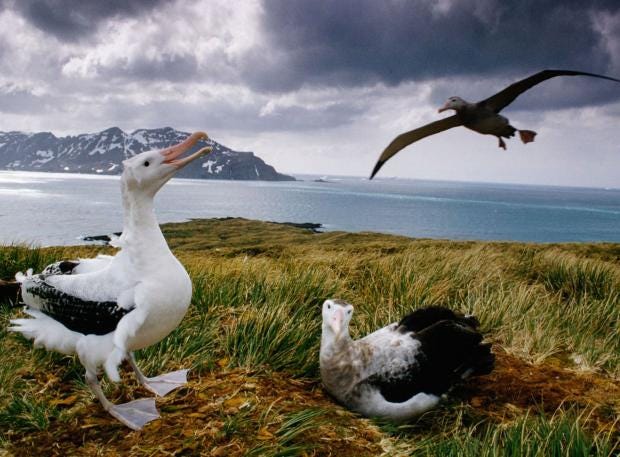
There were shocking moments. In particular those relating to the impact of the estimated eight million tons of plastic that we dump in the sea every year. Which not only ends up in the stomachs of albatross chicks in Antarctica but also breaks down into a toxic soup that pollutes marine life in every corner of the globe.

Yet the episode was primarily a celebration of conservation heroes and success stories – a practical demonstration of how the oceans can and will recover if only we would mend our ways. We saw how overfished herring stocks and orca numbers have recovered off Norway through strict management. How whale populations have increased globally since the Eighties hunting ban.


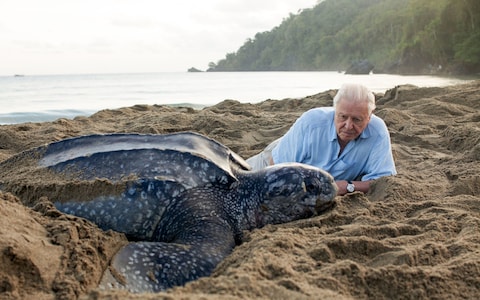
Attenborough with a leatherback turtle in Trinidad CREDIT: BBC

We learnt how, in Trinidad, giant leatherback turtles were saved from the brink of extinction through education and tourism; an exquisite Attenborough moment coming when this 91-year-old lay down in the sand alongside a nesting turtle to enable us to see how truly “giant” she was.

Ultimately, Attenborough’s own embodiment of enlightened humanity is the inspirational, and aspirational, image we were left with.

“Surely, we have a responsibility to care for our blue planet?” he prompted, in closing. A quiet call to action that resonated deeper than any reprimand.


Blue Planet II finale was a celebration of ocean conservation that resonated deeper than a reprimand: episode seven review

The Independent was more critical:


Blue Planet 2 episode 7 'Our Blue Planet' review: Not the gut punch we've come to expect


Christopher Hooton 10 December 2017


Attenborough-fronted BBC nature shows traditionally end with an episode on the environmental challenges facing the areas and the animals that have been covered that series and rightly so, with humanity's impact only getting more severe and yet the world in some cases taking steps backward in terms of tackling it (not least with President Trump's recent decision to pull out of the Paris climate accords).

And so tonight on Blue Planet II we were taught about the ugly and often unlikely ways in which the rapacious human being is ruining ecosystems with its excess. Albatross parents were seen unwittingly feeding their chicks plastic, mother dolphins were potentially exposing their new-born calves to pollutants through their contaminated milk, and the sheer noise of boats, ships and drilling rigs were found to be making it difficult for the marine animals who use sounds to communicate to even be heard.


Aware that an hour of utter bleakness probably won't have the desired effect on viewers, the episode focused instead on hope, reminding us that sperm whales were once saved from the brink of extinction thanks to the mutually agreed banning of commercial whaling and showing how one man convinced turtle poachers to become turtle conservationists.

And yet the episode fell a little flat. Planet Earth II's version of this episode still felt like Planet Earth in the way it was shot and as such was eerie and haunting, particularly that scene where hatchling turtles wandered confused into a bustling city, a dirty road being shot like a coral reef. This episode, however, relied too heavily on talking heads and felt more like an episode-length version of one of the 10-minute making-of sections that usually close episodes, to the point where it seemed more like a stock conservation documentary than a jaw-dropping Blue Planetinstalment.

Still, it's great that the show is dedicating so much time to highlighting the severe problems that may mean a Blue Planetseries won't even be possible one day. A call to action would have been nice though - 'Our Blue Planet' told viewers that they personally can make a difference with the issues featured, but never got round to explaining how.


Blue Planet 2 episode 7 'Our Blue Planet' review: Not the gut punch we've come to expect | The Independent

In which case:

Blue Planet II: What you can do to help save our oceans


From eating sustainably caught fish to cutting out single-use plastics, there is plenty we can do to look after ‘Our Blue Planet’


Josh Gabbatiss Science Correspondent
a day ago
10 comments


Albatrosses featured in Blue Planet II have been feeding plastic to their chicks Alamy

As Blue Planet II draws to a close, it has once again left viewers in awe of the marine world. The final episode of the series – “Our Blue Planet” – focuses on the terrible impact that human society is having on the world’s oceans, from coral bleaching to albatrosses feeding their chicks plastic.

But it also has a message of hope. Though many of the environmental problems seem insurmountable, we as individuals can take action to help save our blue planet.

“Blue Planet brought the marvels of the oceans to people’s living rooms. But it also showed clearly the risks which threaten them,” said Dr Lyndsey Dodds, head of marine policy at WWF.

Perhaps the issue that has touched viewers most is ocean plastic pollution, which is accumulating in vast quantities and being eaten by animals. This is an issue where people can take action and make a difference, according to Dr Dodds. In terms of lifestyle, the most obvious changes are avoiding single-use plastics and ensuring we recycle effectively.

At the other end of the scale, Dr Dodds emphasised the importance of lobbying the Government and businesses. This includes supporting the planned bottle deposit return scheme, and a possible tax on single-use plastic. Last year, a 40 per cent drop in plastic bags found on beaches was linked to the 5p charge on bags in supermarkets, suggesting this kind of action has real-world positive outcomes.

“Obviously it’s the Treasury that will make the decision on [the plastic tax] but the more the public can get behind things like that, the more acceptable they will be,” she said.

Such a tax was floated by Chancellor Philip Hammond in his recent Budget speech, in which he also alluded to the impact of Blue Planet II and announced he wanted the UK to become “a world leader in tackling the scourge of plastic”.

“I think that was probably about the most positively received thing in the Budget, so I think they recognise it is capturing the public interest,” said Dr Dodds.

Another key way in which people can change how they impact marine ecosystems is through their dietary choices.

“We are not powerless,” said Toby Middleton, UK programme director at the Marine Stewardship Council (MSC). “We can all play our part by choosing to eat sustainably caught seafood. We are really trying to get supermarkets and restaurants not to sell fish that we consider to be unsustainable, so people can make choices about the seafood they choose to eat, if they choose to eat it at all” agreed Richard Harrington, a marine biologist and head of communications at the Marine Conservation Society.

MSC provide labels to seafood products that they have verified as coming from sustainable fisheries. “You don’t need to be a marine biologist to choose sustainable fish,” said Mr Middleton. Looking for the MSC label when you’re shopping or eating out gives you the assurance that where your fish comes from has been independently certified as sustainable and is fully traceable,” he said.

The threats to marine ecosystems are multifarious, and one of the best ways to shield them from harm is to establish official marine protected areas. Human activities such as fishing and extraction of natural resources are restricted in these areas, allowing life there to flourish and even spill out into surrounding, non-protected regions.

“The UK has a wonderful array of marine life, and there aren’t all that many places where sea bed habitats and fisheries are well protected,” said Mr Harrington.

READ MORE

David Attenborough warns the ocean under biggest threat in history
‘Crab vs. eel’ is the new ‘iguana vs. snake’ in Blue Planet II
Blue Planet II accused of planting plastic ducks in sea for series


Environmentalists in the UK have pushed for the extension of the “Blue Belt”, a network of marine protected areas that will maximise the protection given to the nation’s marine ecosystems. “There has been a process to get marine protected areas around our shores, which is quite definitely being slowed down by other government matters such as Brexit,” said Mr Harrington.

Again, the more the public understands and cares about these issues the more they will move up the political agenda. Issues like climate change and ocean acidification seem so enormous that it’s difficult to see how we can have any real impact.

But the message coming from environmental groups and experts is the same as that espoused in Blue Planet II. “Businesses and governments need to act, but so do all of us,” said Dr Dodds. “The blue planet is something we can all enjoy, but we need to act now to make sure that some of the incredible wildlife seen in the show doesn’t become history.”


Blue Planet II: What you can do to help save our oceans | The Independent
.
.
.

Tuesday, 18 April 2017

What's your plastic footprint? ............................................... What's your nerdle count?

Last week, we had a beach-clean in this part of Devon:
Futures Forum: What's your plastic footprint? ... Surfers against Sewage beach clean in Sidmouth

In fact, these were happening across the county:

Watch as the environment minister sieves for nerdles at Croyde

PUBLISHED: 17:23 06 April 2017 | UPDATED: 17:23 06 April 2017

During a visit to North Devon environment ministerThérèse Coffey MP talked Marine Conservation Zones at Saunton and dropped in on a beach clean at Croyde

The Government’s environment minister turned out at Croyde today (Thursday) to help out at a beach clean.
ThĂ©rèse Coffey MP offered a helping hand to Surfers Against Sewage’s Big Spring Beach Clean – an annual event to clean up beaches nationwide and encourage more single-use plastic to be recycled. She joined SAS staff and volunteers plus Croyde beach ranger Rose Roberts to do a bit of sand sieving to find ‘nerdles’, tiny plastic balls that are polluting oceans in their millions.
She said: “I’m really pleased to see communities from across Devon coming together for such a great cause. Our beaches are enjoyed by millions of people  Not only is this event helping to improve our beaches and protect our wildlife, it’s encouraging people to reuse and recycle plastic wherever they can. The introduction of the 5p plastic bag charge was a great step forward and we remain committed to being the first generation to leave the natural environment in a better state than we found it.”
Earlier the minister visited Clovelly and Saunton as well as Petroc in Barnstaple to talk about rural education and skills.
Hugo Tagholm, chief executive of Surfers Against Sewage, added: “We’re delighted to welcome the environment minister to the Big Spring Beach Clean to help in our effort to tackle marine plastic pollution and inspire more action to reduce society’s collective plastic footprint on the environment. We look forward to seeing the Government’s upcoming Litter Strategy and hope it will build on successful measures like the plastic bag charge. We’ll be recycling over 50,000 plastic bottles through the Big Spring Beach Clean and it would be fantastic to see new measures to help reduce the number we see around our coastline.”
Ms Coffey said she had ‘learned some new things’ during her visit and added that South West beaches in particular were faced with a number of challenges such as pollution, but she said: “But here we are with a bunch of people who are passionate about keeping these beaches clean. Surfers Against Sewage have been really proactive with this in trying to take direct action. It’s good to work with organisations that are trying to solve the problems.”
The Government says since the introduction of the 5p plastic bag charge, more than six billion bags have been taken out of circulation, reducing the number of bags found on beaches by nearly half. It will shortly be publishing a new Litter Strategy, which will include a range of measures to reduce litter and drive behaviour change.
During her trip to the South West, Minister Coffey also visited Saunton Sands beach to look at possible areas for the third tranche of the Government’s Marine Conservation Zones to protect important species and marine habitats around our coast.
Government has already protected nearly 8,000 square miles of important marine habitats, with the total number of MCZs in waters around England now 50.

Watch as the environment minister sieves for nerdles at Croyde - Breaking news & sport in Devon | North Devon Gazette

This is what nerdles are doing to our beaches:

Most British Beaches Found 

to Be Polluted With Deadly 

Plastic


Christianna Reedy

BILLIONS OF BEADS ON BRITISH BEACHES

Britain’s beaches are covered with with tiny — but potentially deadly — plastic beads. These beads, called  “nurdles,” were found on almost 75 percent of 279 UK beaches that were recently surveyed.
These colorful, lentil-sized pellets might go largely unnoticed by us beach bums, but they can cause damage to birds and fish who mistake them for lunch. Additionally, the toxic chemicals nurdles release as they degrade, such as bisphenol A and polystyrene, can harm wildlife native to oceans and seashores, according to a study reported in the Journal of Chemical and Pharmaceutical Sciences.
Nurdles are used to make larger plastic objects and are notorious for falling off of cargo ships during transport. The plastic pelts have been estimated to make up 10 percent of the 165 million tons of plastic that is estimated to pollute our oceans.
Credit: Futurism
The survey (called “The Great Winter Nurdle Hunt”) was conducted by Brits who are eager to clean up their beaches. The volunteers who collected the most nerdles scoured Widemouth Bay, located in southern England, to find about 127,500 of the pellets on the 100-meter (328-foot) stretch of beach. All in all, the UK’s environment gets polluted with up to 53 billion nurdles every year, campaigners estimate.

MORE ACTION NEEDED

Madeleine Berg of Fidra, a Scottish environmental charity that organized the survey, said in an interview to the BBC that the hunt demonstrated that the UK government needs to take action.
“Simple precautionary measures can help spillages and ensure nurdles don’t end up in our environment,” Berg said. “We are asking the UK government to ensure best practice is in place along the full plastic supply chain, and any further nurdle pollution is stopped.”
Plastic waste is not just a UK problem, but a global one that requires every nation to step up. In 2015, the United States passed a Bill banning the use of microbeads in FDA-approved products as a measure to protect US waterways. However, critics say more needs to be done to regulate plastic pollution and hold countries accountable for the environmental impact their waste has on other countries.
Recently, scientists declared a new geological age, one that is determined by the influence of humans, like the ones polluting our waters with plastic. The Anthropocene epoch is said to be a “new age of man,” signifying the intense influence human activity is having on the future geological record. At some point, we must ask ourselves – is this how we want to be remembered?


Most British Beaches Found to Be Polluted With Deadly Plastic
.
.
.

Sunday, 19 March 2017

Brexit: or not, Britain will still be a global pioneer on the environment

The monthly newsletter from the Devon Maritime Forum focuses on the latest on Brexit and the environment:

Devon Maritime Forum | Devon County Council

A highlight is a piece from Natural England:

Brexit or not, Britain will still be a global pioneer on the environment

5860924394_6fe437582a_oThis post is by Andrew Sells, chairman of Natural England, and is a response to the recent post by Lord Chris Smith
I very much welcome Lord (Chris) Smith’s return to the environmental fray in his recent blog. He knows better than most the politics of the environment and the delicate relationship between central government and public bodies.
Lord Smith focuses on his area of expertise, the Environment Agency, which has primary responsibility for air and water quality, flood prevention, waste and fisheries. I would like to offer Natural England’s perspective, as the government’s adviser on the natural environment. We have a statutory duty to “conserve and enhance for the benefit of present and future generations”. I understand some of Lord Smith’s concerns but may be able to offer some reassurance in relation to the areas we cover.
Chris Smith’s first concern is that Brexit could have an impact on the range of environmental protections we have in Britain. And indeed it could. As he says, many of our safeguards stem from European legislation. He wonders if parliament will be able to resist watering down these safeguards.
The European Union has given us the Birds and Habitats directives which form the cornerstone of the EU’s nature conservation policy. Both are enshrined in UK law. Likewise, there is the Water Framework Directive which improved on more piecemeal EU water legislation, establishing a framework for the protection of rivers and lakes, estuaries, coastal waters and groundwater. It too is already incorporated into UK law.
UK has been an international environmental legislation pioneer
What is less appreciated is that, long before the UK joined the EU, we were pioneers of environmental legislation, and that we are also signatories to many international treaties to protect the environment. Indeed, the UK has a proud record of promoting international conventions.
We were a founder signatory of the Ramsar Convention. Named after the Iranian city on the south side of the Caspian Sea where the Convention was signed in 1971, this treaty protects wetlands, which are among the world’s most productive environments. Their management is a global challenge; they act as hubs of biological diversity, providing an environment on which innumerable plants and animals depend. Wetlands bring us benefits too, ranging from freshwater supply and food, to flood management and climate change mitigation.
We are also signatories to the 1979 Berne Convention, designed to conserve and protect over 500 wild plant species and more than 1,000 wild animal species, together with their natural habitats; the Bonn Convention, also 1979, set up under the auspices of the UN to protect migratory species; and the 1998 OSPAR Convention which protects the marine environment of the north-east Atlantic.
Outside the EU, we will of course still be signatories to all these treaties, and more recent ones, such as the Paris Agreement on climate change. And we have a wealth of domestic legislation supporting our National Parks, SSSIs, access to the countryside, Marine Conservation Zones and so on.
We will still work together with the EU
None of this is to deny that the EU has had a positive impact, nor is it meant to sound complacent as we still suffer problems like declines in biodiversity and poor air quality. The EU has achieved a substantial reduction in most industrial sources of air and water pollution, particularly by improving urban air quality and in tackling diffuse water pollution, for example from farming. International conventions provide leadership, impetus and the understanding that many environmental issues are cross-border in character or impact, and are better addressed by working together rather than unilaterally. I’m sure this country will still play an active part in that.
Lord Smith’s second concern is that the Environment Agency’s public voice has been limited, and that it needs to provide high quality impartial advice to both government and the British public. Speaking for Natural England, since I have been its chairman it has spoken up publicly in favour of the greater protection of ancient woodlands and the introduction of conservation covenants. It has also made telling contributions to the debate about a planned energy development affecting the rare grassland of Rampisham Down in Dorset. We recently published our conservation strategy for the 21st century and a detailed report into the environmental impacts of HS2, setting out what it needs to do to meet its target of ‘no net loss of biodiversity’.
The challenge for us all is clear: we need to adopt, and maintain, the best of EU environmental legislation, and improve on its weaknesses, which often stem from a common approach applied to 28 countries with different problems; we need to extend our reach beyond static protection of individual sites and species, and build functioning ecological networks, at a landscape scale;  we need to continue to work at an international level; and, yes, we need to speak out to ensure that the voice of the environment is heard.
[Image: Meadow flowers, courtesy of Mike Freedman from Flickr Creative Commons]
Brexit or not, Britain will still be a global pioneer on the environment  (Blog post by Andrew Sells: Chairman of Natural England - www.greenallianceblog.org.uk)
.
.
.

Thursday, 5 January 2017

This year, 'seek out and support one of the many conservation groups dedicated to protecting our natural resources: The battle ahead is still an uphill one, but at least it's beginning to look like one we can win.'

Last year was a very hot year:
2016 in review: climate change continues its deadly march | The National

Nevertheless, maybe we can 'do something': 
Futures Forum: In 2017, resolve to follow the news less closely: resolve not to be distracted by things you have no control over.

Here is a perspective on the natural world in 2016 and a couple of suggestions from the Plymouth Herald:

... so what, exactly, did 2016 do for us?

By WMNKRossiter  |  Posted: January 01, 2017


Back in the 1980s it became quite depressing to care about Nature. We had the likes of David Bellamy on telly, painting an apocalyptic vision of the future, and they were quite right – there was, and still is, a lot to be gloomy about.
But the danger in being too pessimistic is that eventually people feel so helpless they stop bothering altogether. Sir David Attenborough understood that, which is probably what made him a National Treasure.
Westcountry GP Lucy Obolensky with Sir David Attenborough during the filming of Planet Earth II 
Not much has improved since the 1980s – and in many ways Nature is in worse straits than ever. But conservationists say that 2016, for all its upheavals, has seen some "landmark" environmental successes.
Perhaps we really are learning to love the planet.
Global wildlife populations are expected to have declined by two thirds on 1970 levels by the end of the decade, but 2016 shows we can make a difference.
Some of the world's most charismatic species have seen an upturn, with tiger numbers increasing for the first time since conservation efforts began and giant pandas moved off the "endangered" list, according to the wildlife charity WWF.
Close to home, improved protection for whales has paid off. In January two humpback whales made a rare appearance in St Ives Bay in Cornwall. One who saw them, Vivian Stratton of the St Ives National Coastwatch Institution and an experienced marine wildlife watcher, said it was the first time he had seen the species in more than 60 years.
In September, kayaker Rupert Kirkwood, paddling near the Eddystone Rock off Plymouth, spent an hour in the company of a very rare visitor – a fin whale, the second largest creature on the planet after blue whales.
Paignton Zoo's efforts to raise money through its Great Big Rhino public art project have not been in vain. Africa's rhinos are still reeling from the rapacious demands of sexually insecure Chinese and Vietnamese, who want their horns as an aphrodisiac, but elsewhere the picture is improving. Nepal has achieved two years in a row with no rhino poaching. Even so, it's a lonely business being a Nepalese one-horned rhino: the total population has hit a new high of just 645.
This year the UK committed an extra £13 million to tackle the illegal wildlife trade, ratified the Paris Accord on climate change, and has now designated 50 Marine Conservation Zones.
Solar power – led by the South West – has overtaken coal in Britain, and marine renewable energy is at last showing signs of life, with three prototype devices now hooked up to the Wave Hub off Hayle in Cornwall.
The battle ahead is still an uphill one, but at least it's beginning to look like one we can win. How can you help?
Don't be a sceptic, for one thing – this is a real problem, and a man-made one.
Seek out and support - with time or money - one of the many conservation groups dedicated to protecting our natural resources. They are many and varied, from the Marine Conservation Society and Surfers Against Sewage to your local county Wildlife Trust and the WWF.
Best of all, easiest of all, find yourself a sandy Cornish beach on a sunny day. Stand with your bare toes in the water and soak up the beauty. If you had such a work of art on your livingroom wall, would you allow anyone to deface it?
Syria, Brexit Trump ... so what, exactly, did 2016 do for us? | Plymouth Herald
.
.
.