Some great things going on in the maritime world - as posted by the DMF in their latest newsletter:
We hope you had a fantastic February and a marvellous start to March, here is the latest newsletter from the DMF!
This month's newsletter features your usual roundup of local and national stories, key marine research and reports and information on consultations you can get involved with. There's also the latest on our Marine Pledge campaign and how you can get involved and a special feature on the 'SeaBin' project'. Read on to find out more...
Those who attended the #DMF19 Winter conference will be familiar with the Marine Pledge campaign (below) which will be launched soon.
WE NEED YOU
We are looking for locations to send the pledge cards to enable them to reach a wide and diverse audience. If your organisation regularly sees members of the public and would like to be a host for the pledge cards, please contact jay.boyle@devon.gov.uk
Drinking water fountains could be installed all over Plymouth three could appear before the summer and a fourth will be put in at Central Park more
Cabinet Minister sees world-leading marine and maritime excellence in action the Rt Hon David Lidington CBE MP, has seen first-hand how the University of Plymouth is carrying out world-leading research more
New Exmouth water sport centre 'to be open by summer 2020' a final agreement between developers Grenadier and East Devon District Council will be signed off more
South West Water leads ReFill revolution to combat plastic pollution South West Water is making 3,000 refillable bottles available to communities in Devon and Cornwall more
CONGRATULATIONS: East Devon’s Seaton Wetlands awarded top national accolade popular wildlife haven is runner-up in Best Nature Reserve category in BBC Countryfile Magazine’s 2019 Awards more
National & International News
Plymouth University leads first UK-wide assessment of changes in plankton community scientists have completed the first ever assessment of how plankton communities are changing in coastal waters and shelf seas around the UK more
Fishermen’s beacons stop sea life dying in lost nets fishing nets and pots lost or abandoned at sea are far more lethal to marine life more
Strengthened protections for Isles of Scilly seabirds Natural England announces plans to extend Isles of Scilly Special Protection Area by almost 13,000 hectares more
How plastic from clothing gets into seafood microplastics, meaning any plastic object smaller than 5 millimeters, constitute the vast majority of plastics polluting marine habitats more
BP Marine Unveils New Very Low Sulphur Marine Fuel BP Marine, part of British oil and gas major BP, is starting the sale of very low sulphur fuel oil more
Plymouth to trial innovative new Sea Bin to tackle plastic pollution
A new ‘Sea Bin’ is to be trialled as part of the city’s ongoing commitment to tackle plastic pollution.
A Sea Bin is a floating rubbish bin that can capture annually 90,000 plastic bags, 35,700 disposable cups or 16,500 plastic bottles. It is one of the latest projects to be developed to support the Plymouth, Britain’s Ocean City Plan for Plastics, led by the city’s Plastics Taskforce which is made up of a range of local partners more
Marine Management Organisation (MMO) South West Marine Plan
The UK Marine Management Organisation (MMO) Iteration 3 for marine planning for the emerging South West Plan is STILL OPEN.
If you want to have your say on: preferred draft policies; draft supporting text for policies including on implementation; and the next steps in marine planning.
Simply fill out the survey online by 29th March 2019.
Research and Reports
Marine Heatwaves Destroy Ocean Ecosystems Like Wildfires Destroy Forests more (Nature Climate Change)
Revised Salmon and Trout Protection Byelaws more (Environment Agency)
Scientists use acoustic tracking of marine predators to assess positive impacts of offshore mussel farms more (University of Plymouth)
Coastal Change Management Areas Opportunities for sustainable solutions in areas subject to coastal change more (Natural England / Royal Haskoning)
Plymouth Sound National Marine Park
'A gift from the city to itself - study creates a blueprint for city marine parks'
Experts in maritime law, marine ecology, marine policy, social science and ecological economics led new research more
A £1.6bn government fund has been launched to boost less well-off towns in England after Brexit. The pot is split into £1bn, divided in England using a needs-based formula, and £600m communities can bid for. More than half of the money, to be spread over seven years, will go to the north of England and the Midlands.
Labour called it a bribe to influence MPs to back the PM's Brexit deal and critics say it does not cover cuts to local authority funding.
In January, MPs rejected the withdrawal deal Theresa May has reached with the EU by 230 votes - the biggest defeat for a sitting government in history. To win another vote, which Mrs May has promised will be on or before 12 March, she could find herself relying on the votes of Labour MPs from Leave-voting parts of the country.
John Mann, MP for Bassetlaw, a former coal mining area in Nottinghamshire, told the PM last month to "show us the money" with "transformative investment" in areas that voted to leave. The Labour MP, who backed Mrs May's Brexit deal at the first vote, denied it amounted to "transactional politics". Stronger Towns Fund: £1.6bn post-Brexit cash announced - BBC News Other media get more to the point with their observations - at home:
The Government has announced its bribes to towns in order to persuade MPs, mainly Labour, to vote for its miserable Brexit deal. Although it claims to have used a “need-based formula,” the South West is to receive the second-lowest allocation of cash (£33 million) despite being among England’s most deprived regions.
Coincidentally, it also has very few Labour MPs — and Sheryll Murray, the Tory MP for South East Cornwall, appears to have spotted the discrepancy. “The fact this money appears to be directly routed to Labour-voting areas smacks of pork-barrel politics, and the public will know that,” Murray complains to The Times. “It would be a crying shame if Conservative-voting communities were being disadvantaged because of the way they voted.” Tory MP complains that Government isn’t giving Brexit bribes to South West MPs – because the region voted Conservative! « SEATON & COLYTON matters . . .
SUPPER & CONVERSATION: THE GREAT LANDSLIDE OF 1839 Speaker: Richard Edmonds The tumultuous accounts of Christmas Eve and Christmas Day 1839 record one of the most famous and celebrated landslide events in the World which took place in the undercliff between Axmouth and Lyme Regis. Eyewitnesses describe a huge convulsion in the earth where 16 acres of land, 8 million tonnes of rock, slipped seaward creating Goat Island isolated from the fields behind by a yawning chasm. The sea bed was heaved up to form a reef offshore, and the Victorians, being fans of the forces of nature, flocked to this coast to marvel at the spectacle.
Since then a number of scientists have developed theories to explain this complex landslide but there is no agreement and no detailed map to base any interpretations on, however, with the entire coast of England now being surveyed under a strategic monitoring programme the answers may be in sight.
Richard Edmond’s love of the Jurassic Coast started with the chance finding of a perfect pyrite (fools gold) ammonite when he moved to Lyme Regis in 1972. The spark of love for geology was lit for him. Having spent over 2,500 hours working on exploring and analysing the evidence of The Great Landslide there is no-one more informed than Richard to explain the geology of our local area and the dramatic change made to our coastline by the Great Landslide of 1839.
Supper and Conversation with Richard Edmonds takes place at Trill on Friday 8th March. Book a ticket with dinner, or for the talk only here...
There is little point in imposing rules if they cannot be enforced and
our police force, although excellent, has too much to do at the moment without
adding to the burden.
Sidbury12h ago
We have a 20mph zone in Sidbury that a Devon County Council vehicle
speed sensor showed that in a complete week last year 88% of drivers drove in
excess of the speed limit. And Sidbury Traffic Action Group, which is supported
by Sidbury WI, are battling to get DCC to take this matter seriously and put up
flashing speed signs. But as no one has yet been killed we aren’t taken
seriously.
Sidbury 11h ago
Some drivers take notice of speed limits but unfortunately it's the same
as parking restrictions - if there's no enforcement then many people just don't
give a .......
Beer 10h ago
Car brakes are many times more effective than when the 30 limit was set,
but as usual the weak link is the nut behind the wheel.
Branscombe
6h ago
I know when your walking along and some nutter come flying along it's
very scary. Let alone dangerous. Why people feel the need to drive so fast on
our small roads.!
Beer 3h ago
Certainly 30 is too fast in Beer Fore Street in summer with so many
people on the narrow sections of pavement. The short distance of visability
between the bends does not give some pedestrians time to cross safely.
I'm your County Councillor and I'm on a working party which is looking
at the situations in which 20 limits could be introduced in town and village
settings. If you want to propose a 20 limit for a specific area or roads in
Branscombe, Beer or elsewhere, the best thing to do is to discuss it first with
your parish or town council who will need to be involved in putting it forward,
and let me know (cllrmartinshaw@gmail.com).
North Sidmouth 17m ago
I think each road should be discussed on its merits. As I understand it
from Sgt. Andy Squires the 20 limit is an advisory limit only. As Chris
suggests, pedestrian safety is a key issue but perhaps only in certain areas.
In Sidmouth town centre it can be hard to get up to 20 mph and the narrow
streets and thronging pedestrians make a low speed essential anyway. That said,
not long ago there was a nasty accident where someone was knocked down, which
might belatedly make the case for a 20 mph limit in the town centre.
Sidbury 11m ago
In Sidbury we have had to investigate this suggestion that our 20mph is
not enforceable. As the limit has been adopted/agreed by DCC it is enforceable
and the police have accepted that point. So anyone of the 88% who drive through
Sidbury in excess of 20 mph is liable for prosecution. It’s been designed as a
20 mph zone for a reason. As the police resources to enforce this are stretched
Sidbury Traffic Action Group has submitted names of residents to the police who
will form a local speed watch group. The intention is for them to “police” the
speeding vehicles in liaison with the police.
I think the confusion may be caused by the fact that a 20 'zone' is not
enforceable but a 20 'limit' such as exists in Sidford (and presumably Sidbury)
is enforceable.
Nextdoor And this was reblogged on Nextdoor from a news piece earlier from Devon & Cornwall Police:
No need for speed
Police target excessive speed – one of the Fatal Five
Excessive speed is one of the Fatal Five top contributory factors to deaths and serious injuries on UK roads, because collisions where speed is a factor have a disproportionately high rate of fatalities associated with them.
For two weeks from 14 – 27 January Devon and Cornwall Police and partner agencies will be targeting drivers who selfishly endanger other road users not to mention themselves by speeding, as will police forces across the UK in support of a campaign led by the National Police Chiefs Council (NPCC).
There is no excuse for excessive speed when driving, either breaking the speed limit or traveling too fast for the road conditions, but that doesn’t stop drivers who are pulled over from offering them.
The highlights from the Alliance Roads Policing team’s activity in the first week of 2019 alone (see photo montage) supplied the following gems:
“Keeping up with the flow of traffic” when having just overtaken an unmarked police car and everything else (92mph)
“My cat is sick” (91mph, with children in the car)
“In a rush to get to my girlfriends house” (101mph)
“Didn’t realise I was going that fast” (100mph)
“Chatting and distracted” (94mph)
Far from just handing out “speeding tickets”, dependent on the severity of each offence drivers may receive penalty points on their licence and a fine, or they may have the option of attending a speed awareness course in which case those penalties will not apply.
In extreme cases of excessive speed, they may face a day in court which could result in a driving ban.
Operations will be carried out across Devon and Cornwall on arterial routes and A roads, and in areas where concerns have been raised about speeding through towns and communities.
Devon and Cornwall Police will deploy the No Excuse team and the Alliance and Alliance Specials Roads Policing teams, working with the Peninsula Road Safety Partnership (PRSP) which operates static and mobile speed safety cameras.
In a separate announcement, the PRSP have warned drivers that speed enforcement warning signs are not a legal requirement to validate the results of an operation.
Marcus Laine, Operations Manager for the Peninsula Road Safety Partnership: “In future we may operate for short periods without using camera warning signs at sites which have been assessed locally as needing an intervention, and require us to deploy in the short term.
“If the site continues to be used the partnership will consider adding camera warning signs to further improve compliance.”
A fuller statement about this will be available on the PRSP website next week.
Alison Hernandez, the Police and Crime Commissioner for Devon and Cornwall, is the national lead for road safety for the Association of Police and Crime Commissioners.
A survey run by her office last month showed that the public overwhelming supported tougher penalties for drivers who flout the law.
She said: “The new No Excuse roads policing team, coupled with the partnership’s work, means speeding drivers are less likely to be able to get away with endangering their lives and the lives of others.
“In 2017, the last year for which there are figures, there were 1,616 reported accidents in Devon and Cornwall and 63 deaths on our roads, this is simply unacceptable.
“I think it’s absolutely right that the mobile speed cameras can appear without warning anywhere on our roads – whether they be major routes or smaller rural locations where we know a disproportionate number of serious collisions occur.
“The simple message to drivers is that if you don’t want to be penalised for speeding, stay within the limits.”
The Fatal Five are the five main causes of serious injuries and deaths on the region’s roads.
More information about how we can all help to make our roads safer can be found in the Devon & Cornwall Police and Dorset Police Alliance booklet “A Guide to Safer Roads” which can be found online here:
If patients are either not treated in hospital or discharged at the earliest possible moment: Futures Forum: The value of community hospitals ... there needs to be a better care system - which is not yet forthcoming:
An extra £20 billion has been promised to the NHS over the next five years. Credit: PA
Today at last the long-term strategy for the NHS in England will be published. So long-term, it will take the health service right through the next decade, which is no mean feat.
NHS England’s Chief Executive, Simon Stevens, has written the plan at the request of the prime minister. He says it can save up to half a million lives by focusing on killer conditions and getting people to live healthier lifestyles. An extra £20 billion promised to the NHS over the next five years will be used to help achieve this. But how?
Well, we’re told diagnosis of major diseases will be made easier and quicker with technology, mental health provision will increase and patients will be looked after better in the community - keeping them out of hospital, ensuring they live longer and healthier lifestyles. This all sounds plausible when you take into account that GPs, local community and mental health will get a third of the extra funding.
So, less money you might say, going straight to hospitals.
The buzzword today is integration. Few really know what that means, but in essence it’s about the NHS working better with local authorities who control social care in the community. It might seem crazy that this isn’t joined up already, but it’s not, and while local authority funding has decreased, care in the community has had to be scaled back, putting huge pressure on hospitals.
That will change we’re told. It’ll all be joined up, hospitals will be able to discharge elderly patients more freely and community care will take over.
That’s all well and good but there remain some big unanswered questions. We’ve been waiting two years for a Social Care green paper, which will consult on the best way to fund and manage social care in England.
Without any plan to tackle the financial crisis in that system, it’s hard to see how the vision in this 10 year NHS plan can be achieved.
Health secretary Matthew Hancock. Credit: PA
That, along with dwindling local authority budgets, seems right now a fantasy. The health secretary Matt Hancock has promised the Social Care green paper will be published in the coming weeks so all eyes will be on whether it can deliver what the NHS needs.
It is also admirable to encourage healthier lifestyles and to offer healthy living programmes to those most at need, but that pledge is at odds with the massive cuts to public health budgets.
Local authorities, in charge of those finances, have had to cut back on key services which ultimately help those with drink problems, drug problems and weight problems. How will the government achieve this pledge if councils aren’t given extra money to keep vital service?
My last point is who will deliver this? The staffing crisis in the NHS is not a joke. Around 100,000 doctors and nurses are needed and unions have warned that this figure will just keep rising. If there are no medics to deliver this, the plan is pretty much pointless. The government has promised to tackle staffing in the service at a later date, but until that happens there will always be a fear this plan can’t be delivered in full.
There is a lot of good in this plan. Of course there is. But until these questions are answered there will, I think, always be doubters.
The Public Accounts Committee chair has been speaking “behind the scenes to persuade various players” to enhance the scrutiny of local government spending.
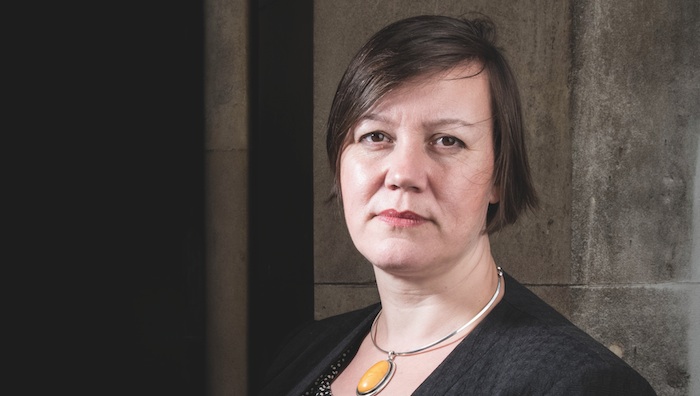
Meg Hillier [pictured right] has told PF how local government is spending money needs to be more “transparent” for an increasingly “savvy” British public.
“I think the British public are much more savvy about things - they don’t trust the authority to spend things well,” she said to PF.
Since the Audit Commission was formally dissolved in 2015 “there isn’t the same level of transparency locally”, Hillier said.
Local authority finances “used to be well demonstrated”, she said, “so I think [making them more transparent again] is just something that we need to keep pushing on.” PAC chair seeking ways to beef up local government spending scrutiny | Public Finance Which could also have an effect on LEPs: Finally a way to publicly scrutinise Local Enterprise Partnerships and other quangos? | East Devon Watch As a recent report from the Institute of Government suggests: Strong accountability provides the foundation of a healthy
democracy. It ensures a relationship between the public and those
in government who have power to shape their lives. People expect
performance to be rewarded if good or penalised if poor, and the
demonstration that this happens matters for their trust in
government. But the rules of accountability also need to enable
those in government to learn from failure.
POSTED ON NOVEMBER 7, 2018 Who would have known? The previously unaccountable quango, the Heart of the South West Local Economic Partnership, which dispenses public money but whose board is made up mainly of businessmen, now has a scrutiny committee all of its own, recently established in some haste to meet newly imposed legal requirements. The first meeting took place five days ago, but little seems to have happened, judging from the minutes. There is currently no opportunity for public participation and no webcast.
The committee will have 17 members, with 13 Tories (11 confirmed – two representatives of Conservative-controlled district councils to be named), 3 Labour members (2 from Plymouth and 1 from Devon) and 1 Lib Dem from Somerset. Thus Independent and Green members have been entirely excluded, while there is only minimal opposition representation. The ruling Tories on the two county councils have used their majorities – obtained with less than 50 per cent of the votes in the 2017 election – to collar three quarters of the county seats, in addition to all those from the districts they control.
It’s worth mentioning that the Heart of the South West (geographic Devon and Somerset – but few local residents will recognise it under its marketing name) also has a Joint Committee of the Councils, with 19 members even more unevenly distributed by party (16 Tories, 2 Labour, 1 Lib Dem, no Independents or Greens).
The pavements in Fore Street Sidmouth. Ref shs 34 17TI 9754. Picture: Terry Ife
There were calls for businesses to ‘get their act together’ as councillors debated the issue of Sidmouth’s dirty streets.
Sidmouth in Bloom’s chairman, Lynette Talbot, raised the problem of the increasingly dirty streets in an impassioned speech to the town council on Monday (November 5).
She said: “You’re going have to bite the bullet and start fighting for your patch. If Seaton can have great improvements done to it and Exmouth can have a nice new town square, why can’t we have new paving down the Fore Street and the market square? Why is Sidmouth being left a little behind?”
Lynette suffers from severe erosive inflammatory arthritis and fibromyalgia but manages to de-weed areas of the town.
She said: “The reason why there’s weeds down the streets is because no shopkeeper is going out on the whole, some are doing it but not all of them, are going out with a broom and sweeping into corners.”
Councillor and independent trader Marc Kilsbie said larger chains need to pull their weight.
He said: “I’m just about to start my 12th year of trading. In that entire time, Boots’ gutters have never, ever been cleaned out. I appreciate, we’ve all got a heavy work load and we’ve all got a lot to do but we all need to our bit - not just half a dozen independent traders.”
Boots had not replied to a request for comment at the time of going to press.
Cllr Ian Barlow said: “East Devon District Council (EDDC) were saying the other day of all the things they’ve achieved but perhaps what they should do is start looking at the town and perhaps they should start putting pressure on things that matter to people.”
A spokeswoman for EDDC said the authority does the ‘utmost to keep Sidmouth looking it’s best using our limited resources’.
“We have a dedicated team across the district and in Sidmouth we have two street cleaners and a mechanical sweeper driver. Recent feedback from our viewpoint residents survey showed that 71% of residents think that litter and rubbish ‘isn’t a very big problem’ or ‘isn’t a problem at all’.
Flybe, whose headquarters is in Exeter, is warning that no agreement is in place for services to mainland Europe after Brexit. With only eight months until Britain leaves the EU, airlines have no legal, commercial or political deals in place.
Flybe said it was already selling fares for next summer, with fingers crossed that common sense would prevail. But it warned there was no certainty.
There are a number of headwinds for the Exeter-based airline Hannah Finch 14:47, 19 JUN 2018 If you've ever flown from Exeter airport, the chances are you've flown with Flybe. The city is proud to have its very own airline - it is one of the region's biggest companies, employing more than 2,000 staff.
This morning, figures for Year End 2017/18 revealed that Flybe has cut its pre-tax losses from £48million to £9million as revenue increased by six per cent. However, it posted adjusted loss before tax of £19.2m in the year to March 2018, up from £6.7m in the prior year.
Chief Executive Christine Ourmières-Widener, who has been in post for just over a year, said operations have improved over the last year despite the loss increase. She has been transforming the business, cutting less-profitable routes and implemented an IT systems overhaul.
While losses have widened, Flybe's revenue has risen 8.3% to £732.0m. And it is making more from every seat - 10.1% higher at £53.79.
We look at the reasons why Flybe isn't making a profit:
1. Passengers are feeling the pinch
Just like the high street, Flybe is at the mercy of the consumer. It means things like the 'Beast from the East' puts people off flying or means flights are cancelled. And if consumers are losing jobs or feeling the pinch because of rising household bills, the first thing to drop off the budget is a trip abroad.
2. Brexit
The risks associated with Brexit and what regulation will look like for the aviation industry is a worry. Will there be additional tariffs and visas to think about. Air passenger duty continues to concern airlines - especially Flybe which has a lot of routes and partnerships with other airlines in mainland Europe.



 From BBC Spotlight
