... A FORUM TO STIMULATE DEBATE ... ... JUST ADD A COMMENT AT ANY ENTRY BELOW... ... FOR THE SUSTAINABLE DEVELOPMENT OF TOWN AND VALLEY ...

Sunday, 4 March 2018

The NHS and air pollution > "its interventions, such as providing more care close to people's homes, can have a big impact on waste, diesel fumes, noise and industrial chemicals, that have long-term health impacts"

Air pollution is clearly a problem - even around these parts:
Futures Forum: Improving Exeter's air quality and public transport through congestion-charging

The UK government has got to do something about it:
Futures Forum: UK government again told to act on air pollution

Because it's a health issue:
Futures Forum: "The UK government is “flouting” its duty to protect the lives and health of its citizens from illegal and dangerous levels of air pollution."

The question is who else should be reacting:
Futures Forum: "Unfairly shifting the burden" of dealing with air pollution on to local authorities

As pointed out by the East Devon Watch blog:

We can all do more – but big institutions can do a lot more. 
AND our councils can lead … sorry could lead if there was the foresight and will. 
Has our Clinical Commissioning Group – always thinking of our health (lol) – considered this? You bet not!

“Public at risk from ‘daily cocktail of pollution’ “ | East Devon Watch

With a report from the BBC:

Public at risk from 'daily cocktail of pollution'

By Nick Triggle Health correspondent

2 March 2018

Image copyright SCIENCE PHOTO LIBRARY 
Pollution must be recognised as a health risk, Prof Dame Sally Davies says

People are being exposed to a daily cocktail of pollution that may be having a significant impact on their health, England's chief medical officer says.

Prof Dame Sally Davies said the impact of air, light and noise pollution was well recognised in the environment. But she said its role in terms of health was yet to be fully understood.

Dame Sally added there was enough evidence to suggest action had to be taken. And, in her annual report, she said the NHS could lead the way in cutting pollution levels.

She said one in 20 vehicle journeys was linked to the NHS, either from patients or staff travelling. And making sure services were brought out of hospitals and closer to people's homes could help reduce that burden.

Dame Sally also pointed to the attempts being made to phase out ambulances run on diesel, a key source of nitrogen dioxide, which is linked to respiratory disease. And she said the NHS could cut its use of disposable plastics, landfill and incineration.

While air pollution does not kill people directly, it can shorten their lives by undermining the health of people with lung problems and heart disease. Previous research has suggested it may be a factor in one in 12 deaths and is the ninth leading factor for mortality in the UK - tobacco, diet and high blood pressure are the top three. But Dame Sally said there was also a question about how air, light and noise could coincide to have an impact on long-term health.

"With factors like air, light and noise, the public is exposed to a daily cocktail of pollutants," she said. "Some of these can be linked to chronic conditions like heart disease and asthma. This increases the risk for some of the most vulnerable members of our society and places a huge burden on our health service."


Public at risk from 'daily cocktail of pollution' - BBC News

The Independent goes a little deeper: 

NHS must lead on tackling national pollution problem causing 'chronic sickness', chief medical officer says

'Five percent of all road traffic at any one time is estimated to be on NHS business, be it patients going to and from care or the NHS’s fleet of vehicles.'


Alex Matthews-King Health Correspondent

3 days ago

Chief Medical Officer Sally Davies has previously singled out antibiotic resistance and Alzheimer's as major health priorities


The NHS must take a lead on tackling a ”cocktail of pollutants” which are contributing to chronic sickness across the country, the UK’s most senior doctor has said. In her annual report, Chief Medical Officer Professor Dame Sally Davies said major industries should take more responsibility for the pollution they cause.

As one of the world’s largest employers, with over one million staff, the CMO says the NHS has a significant pollution footprint with health service traffic - including patients - accounting for one in every 20 vehicles on UK roads.

"It is the case that the health service in this country is a significant polluter simply due to its size," the report says.

But this also means its interventions, such as providing more care close to people's homes, can have a big impact on waste, diesel fumes, noise and industrial chemicals, that have long-term health impacts.

Campaigners estimate that health impacts of air pollution alone cost around £20bn a year, almost one fifth of the NHS budget, so work to reduce it makes financial and ethical sense. Air pollution is implicated in millions of deaths a year, and cities inGermany and Italy have recently announced bans of diesel vehicles to bring the crisis under control. This is also important in addressing health inequalities, with people living in more deprived areas typically exposed to much higher levels of air and noise pollution.

Professor Davies praised forward thinking ambulance services, like South Central Ambulance Trust, which have begun to trial fully electric ambulances that can recharge while dropping off patients, and efforts to phase out diesel emergency vehicles.

READ MORE
Rome to ban diesel cars to combat air pollution
Germany approves city ban for diesel cars in landmark court ruling
China reassigns 60,000 troops to plant trees in bid to fight pollution
Transport becomes most polluting UK sector as emissions drop overall


The report recommends that local NHS clinical commissioning groups, which already publish data on health measures and hospital performance, should also publish breaches of safe air pollution limits in their region. This should be presented alongside information on admissions to hospital admissions for heart and respiratory conditions, both of which are increased by long term and acute air pollution exposure.

“We all know the environmental impacts of pollution—but what is less recognised is the impact on health,” says Professor Davies. “With factors like air, light and noise – the public is exposed to a daily cocktail of pollutants. Some of these can be linked to chronic conditions like heart disease and asthma. This increases the risk for some of the most vulnerable members of our society and places a huge burden on our health service.

“Everybody has a role to play in cutting pollution but the NHS has more than a million staff, accounts for one in 20 vehicles on the road and is a big user of single-use disposable plastics. Some trusts are already blazing a trail and I urge others to follow.


READ MORE
Radical solutions to the air pollution crisis from around the world


More research is needed to understand how less studied chemical pollutants interact and affect our health, the report says, as well as the long term risks of our increasingly noisy and light polluted environments.

The wide ranging review calls on other groups to follow the NHS example, warning the Government’s air pollution strategy is too reliant on stretched local authorities to implement and needs more central oversight. It also says councils need comprehensive pollution plans covering noise and emissions, and says they should consider the full extent of long and short term pollution in future planning decisions.

Professor Davies also recommends that the Department for Environment, Food and Rural Affairs explore whether the public should be encouraged to have devices to measure indoor air pollution. While a pollutant free nation is not “do-able”, she says, the efforts to understand and reduce the various health harms of pollution need to be stepped up by the Government.

Doug Parr, Greenpeace UK chief scientist, told The Independent: “Air pollution alone is costing the NHS an estimated £20bn a year – a big chunk of its overall budget. So it makes perfect financial as well as ethical sense for the NHS to play a leading role in tackling the many sources of pollution that are threatening our environment and can make us sick. But it’s vital that government and local authorities step up to the plate too.“

The report’s editor, Andrew Dalton, said: “Pollutants are a part of daily life but, as this report shows, there is still a lot of uncertainty about the threat they pose to health. Improving data on this is the best first step we can take to protect the public’s health as it will help us to identify any currently unknown future threats.

“In the meantime, it is encouraging to see many local authorities, hospitals and other organisations finding innovative ways to reduce the health impacts of pollution.”


NHS must lead on tackling national pollution problem causing 'chronic sickness', chief medical officer says | The Independent
.
.
.

The end of 'clean coal'

The US budget is giving large subsidies to various energy sectors:
Budget deal has tax credit extensions for nuclear, fuel cells, carbon capture | Ars Technica

Not everyone is impressed by the largess:

Dear President Trump, Coal Is Neither Clean Nor Beautiful

President Trump praised “beautiful clean coal” in his State of the Union address Tuesday night. 

Far be it from me to question Trump’s sense of beauty—the former owner of the Miss Universe pageant is, ex officio, the universe’s leading beauty authority. 


"The phrase ’clean coal’ is a made-up branding slogan. It is not real. Nothing can make a coal plant clean," says Nicole Ghio, of the environmental organisation Sierra Club.


Mississippi Power’s Kemper County energy facility in central Mississippi near DeKalb, under construction on 21 October 2013. Initially hailed as one of the cleanest coal-fired power plants on the planet, the company recently announced it was switching to gas due to rising construction costs.
(AP/Rogelio V. Solis)


By Nithin Coca 5 February 2018

According to a recently announced deal between the ASEAN Center for Energy (ACE) and the World Coal Association (WCA), clean coal is coming to Asia.

However, the details are murky. Many environmental advocates believe this is by design. As the situation in the United States shows, clean coal has, so far, seen no success, leading many to fear that it is little more than a marketing ploy for regular, dirty coal plants.

Coal has long been derided as the dirtiest fossil fuel energy source, both in terms of greenhouse gas emissions and air pollution. Clean coal technology was developed by the coal industry in the 1990s to limit air pollutants such as particulates, nitrous oxides and sulfur dioxide. Since 2000, the coal industry has been pushing for investment in and the development of coal plants that, due to carbon capture and storage technologies, could also be greenhouse gas neutral.

However, despite billions of dollars in investment, no large-scale coal plant has so far been able to demonstrate zero-emissions coal.

In June of 2017, Mississippi’s Kemper County Energy Facility, which was meant to be the first large-scale clean coal plant in the United States, announced that it was switching to natural gas. The project was five years behind schedule and US$4 billion dollars over budget, and Mississippi taxpayers would have to cover more than US$2 billion.

Despite the failure of Kemper, and the lack of any functioning large-scale facilities in the decade-plus since the idea of clean coal emerged, the coal industry wants to promote clean coal technology in energy-hungry south-east Asia, a region of more than 600 million inhabitants.

One reason why the coal industry may be looking at south-east Asia is to make up for the decline of coal as the power of choice in the United States. Even the election of a pro-coal US President has not had an impact. According to the Sierra Club, coal plants were retiring in 2017 at the same pace as during the Obama administration.


The false promises of 'clean coal' - Equal Times 

With the long view from the Guardian this weekend: 

How America's clean coal dream unravelled

Exclusive: Kemper power plant promised to be a world leader in ‘clean coal’ technology but Guardian reporting found evidence top executives knew of construction problems and design flaws years before the scheme collapsed

by Sharon Kelly Fri 2 Mar

High above the red dirt and evergreen trees of Kemper County, Mississippi, gleams a 15-story monolith of pipes surrounded by a town-sized array of steel towers and white buildings. The hi-tech industrial site juts out of the surrounding forest, its sharp silhouette out of place amid the gray crumbling roads, catfish stands and trailer homes of nearby De Kalb, population: 1,164.

The $7.5bn Kemper power plant once drew officials from as far as Saudi Arabia, Japan and Norway to marvel at a 21st-century power project so technologically complex its builder compared it to the moonshot of the 1960s. It’s promise? Energy from “clean coal”.

“I’m impressed,” said Jukka Uosukainen, the United Nations director for the Climate Technology Centre and Network, after a 2014 tour, citing Kemper as an example of how “maybe using coal in the future is possible”.

.

Kemper, its managers claimed, would harness dirt-cheap lignite coal – the world’s least efficient and most abundant form of coal – to power homes and businesses in America’s lowest-income state while causing the least climate-changing pollution of any fossil fuel. It was a promise they wouldn’t keep.

Last summer the plant’s owner, Southern Company, America’s second-largest utility company, announced it was abandoning construction after years of blown-out budgets and missed construction deadlines.


...

How America's clean coal dream unravelled | Environment | The Guardian

There are questions over the future of the technologies which this plant was relying on to create 'clean coal':
Kemper County IGCC: Death Knell for Carbon Capture? NOT. | NRDC

See also:
Futures Forum: Climate change >>> Engineering the climate >>> 'As a technology of last resort, carbon removal is paradoxical. It may be impossible to manage and it may also be impossible to manage without.'
.
.
.

Climate change: and snow in Devon

There's been a lot of snow:
East Devon covered with inches of snow | Honiton, Axminster and Seaton news - Midweek HeraldStorm continues to grip Devon with snow, ice and high tides - Devon Live
Beast from the East meets Storm Emma, causing UK's worst weather in years | UK news | The Guardian

Apparently, though, all this snow shows 'there's no such thing as global warming':
Storm Emma proves climate change is fake, says Janet from Bromley | The London Economic

Actually, it's the warming of the Arctic which is causing problems in these parts:

'Beast from the East' and freakishly warm Arctic temperatures are no coincidence - The Conversation
Arctic set to be warmer than parts of UK as temperatures hit 30C higher than average | The Independent
Three Reasons Scientists Are Freaked out by Crazy-High Arctic Temperatures - Futureism 

Here's a simple guide to what might seem to be a contradiction: 


Q&A: What does all this snow mean for climate change?

Why are scientists worried about freezing temperatures in winter, is the beast from the east a freak event – and what is the polar vortex?


Snow in Bilbao … students throw snowballs in front of the San Mames stadium after sub-zero temperatures hit Spain. Photograph: Luis Tejido/EPA


Q: Snow in winter. That feels reassuringly normal. Does this mean the climate has fixed itself?

A: Unfortunately not. In fact, many scientists are concerned this is a prelude to more extreme and less predictable weather.

Q: What are they worried about?

A: In the past couple of weeks, there has been a heatwave in the sunless Arctic even though the northern polar region has not had any sunlight since October. At times it has been warmer than London, Paris or New York.

Q: What is so unusual about that? We have known for some time that the Arctic is warming.

A: Yes, but even veteran climatologists have been shocked by the recent temperature spike. Instead of the gradual year-by-year rise that they were expecting, there has been jolt upwards that experts have described as “crazy”, “weird”, “shocking” and “worrying”.

Q: What are the numbers?

A: From 17 to 25 February, there were 10 consecutive days where temperatures were above freezing for at least part of the day at the world’s most northerly land weather station – Cape Morris Jesup at the northern tip of Greenland. In total, the monitoring station has recorded 61 hours above 0C. According to Robert Rohde, lead scientist of the Berkeley Earth monitoring organisation, that is more time above freezing than the combined total of January through April for all previously observed years since the station opened in 1981. Plotted on a graph, this is so far outside of the historical range that Michael Mann, director of the Earth System Science Center at Pennsylvania State University, said the numbers represent “an anomaly of anomalies.”

Q: Could it be a one-off freak event?

A: Possibly. In climate terms, a few weeks is not nearly long enough to determine whether a new trend is emerging. Some scientists believe this could be an extreme case of natural variation. Temperatures fluctuate wildly at the north pole, though it is not normally as warm, as often or for so long.

Q: So why worry? I feel sorry for the polar bears, but nobody lives in the north pole.

A: There is another theory about what is happening that could have much wider implications. The biggest concern is that this might indicate a weakening or collapse of the polar vortex.

Q: What is the polar vortex?

A: It is the circle of strong winds, including the jet stream, around the Arctic that act as a buffer or insulation, keeping the cold air mass in and the warm out.

Q: Why would it weaken?

A: The polar vortex gets its strength from the difference in temperature between the normally freezing Arctic and warmer more southerly mid-latitudes. But climate change is reducing the gap because the north pole is warming much faster than the global average.

Q: Is this a problem?

A: The polar vortex is one of the world’s climate regulators. Any weakening would accelerate ice melt and add to instability and uncertainty. It could also trigger the release of methane – a very strong greenhouse gas – trapped in the tundra.

Q: Could it be connected to the blizzards that many people are experiencing?

A: In December, the US National Oceanic and Atmospheric Administration warned Arctic sea ice was declining at the fastest rate in at least 1,500 years with an impact that would be felt far outside the region and affect the lives of every single American. One of the research team, Jeremy Mathis, compared the Arctic to the planet’s refrigerator.

“But the door to that refrigerator has been left open,” he said. “And the cold is spilling out, cascading throughout the northern hemisphere.”

Q: What can be done?

A: Beyond blindly hoping this is an anomaly, climate activists say the warming of the Arctic highlights the need for urgent political action to rapidly reverse deforestation and phase out fossil fuels.


Q&A: What does all this snow mean for climate change? | Environment | The Guardian

Meanwhile, there are corporations taking all this very seriously:
Storm Emma and the Companies Fighting Climate Change | Jobbio Journal
.
.
.

Saturday, 3 March 2018

Plans for Port Royal: "What were all these plans, meetings and consultations actually FOR?"

Oh dear, is that it then...

A month ago, we got to see the consultants' plans for Eastern Town:
Revealed: Consultants’ conclusions on Port Royal | Latest Sidmouth and Ottery News - Sidmouth Herald

But all of that was swept away for something decidedly less ambitious:
Sidmouth seafront flats plan set to be axed for new restaurant and bar instead - Devon Live

Because apparently everyone wants a Nando's:


People want quality restaurants and bars for Sidmouth seafront site (including a Nando's) - Devon Live
High quality restaurant and a bar plan for Sidmouth seafront site - and improvements around The Ham to follow - Devon Live

This seems to be what happens with 'regeneration'... 
... we get either something nobody wants or nothing at all:

So, we must ask ourselves: what were all these plans, meetings and consultations actually FOR? What we are ending up with on both sites is nothing like what was initially planned, or discussed or consulted on.

Futures Forum: Plans for Port Royal: anticipatimg a Regeneration Board
“Regeneration plans and meetings” – are they worth the effort | East Devon Watch

And a huge amount of time, money, effort and commitment went into the promises of a 'regeneration project' - at the admission of the District Council from their rather out-of-date pages: 


Port Royal in Sidmouth – consultation update

Consultation Results

Sidmouth Town Council and East Devon District Council recently commissioned, as a first step, a scoping study to understand the key opportunities and constraints for possible improvements to Port Royal. 

A five-week consultation was then held over the summer and almost 250 responses were received from individuals and organisations. The anonymised raw data from this questionnaire is available to view together with the key for the codes that appear in the raw data.  

Additionally,  a Sid Valley Neighbourhood Plan Steering Group survey,  which included questions about Port Royal, was completed by more than 1,800 households and these responses are being included in the overall consultation.

The responses from both consultations have been discussed by the Port Royal Reference Group, which is made up of representatives of Sidmouth town organisations including the Sid Valley Neighbourhood Plan Group, the Sid Vale Association, Sidmouth Vision Group and the Sidmouth Chamber of Commerce along with Sidmouth Town, East Devon District and Devon County Councils.

Having heard the debate and views of the Reference Group in connection with the draft, the consultant has requested further time to refine the study report and in particular to detail recommendations about further investigations in respect of flooding and covenants.  The final report will be considered by the councils jointly at which time it will be made public.

Given the request from the consultant, the report will not meet November council meeting deadlines, but it is expected that this will come forward early in the new year.


Port Royal Consultation - East Devon

And that was... the 'regeneration project in Sidmouth':
Regeneration projects in Sidmouth - East Devon

And so our local MP's 'vision' for Eastern Town has been dismissed:
Bring in Prince Charles’ design team for community-led Port Royal regeneration, says MP | Latest Sidmouth and Ottery News - Sidmouth Herald
‘Modest’ approach to Port Royal means Prince of Wales’ design team won’t be used | Latest Sidmouth and Ottery News - Sidmouth Herald

As have all sorts of other visionary prospects for the area:
Turner Architects' pier wins Sidmouth ideas contest | News | Architects Journal
Here's what Sidmouth seafront could end up looking like - Devon Live
1,800-signature petition backing ‘alternative’ vision for Port Royal handed to Sidmouth Town Council | Latest Sidmouth and Ottery News - Sidmouth Herald

What a shame:
Futures Forum: Plans for Port Royal: "Sidmouth has waited long enough to see something happen on this site"

But maybe there can be some 'vision' after all...
Sid Valley Neighbourhood Plan – Shaping our Future Together
Futures Forum: Plans for Port Royal: VGS and PRSG

To finish, a bit of a rallying cry:

We must not let others decide for us, we must not let standard corporate practice overwhelm the individuality of our town however easy or expedient that route may be. 
Our town attracts tourists because it offers an experience almost lost in other places. 
If we lose that character then we just become one of many similar holiday choices and tourism will suffer as a result. 
If tourism suffers then we all suffer.

Port Royal thoughts - Sidmouth Drill Hall Rescue
.
.
.

"Put more money into care services to help overflowing hospitals"

The pressures on hospitals is becoming unsustainable:
Devon hospital declares ‘internal critical incident’ - Devon Live
NHS England treats too many patients as an emergency, watchdog warns | Society | The Guardian

A month ago, a senior doctor in the Sid Valley made it clear that there needed to be more care provided at home to offset these pressures:
Futures Forum: "The loss of community hospital beds was intended to be offset by increasing the capacity of community care... Unfortunately there is not sufficient capacity in the home care services to do this job."

He has just reiterated this - saying that the only way the increasing demands on hospitals can be met is through proper provision in people's homes: 

NHS is like a overflowing reservoir with blocked up streams going in and out, says Sidmouth doctor

PUBLISHED: 08:00 03 March 2018

The NHS is like a reservoir – you can either build the walls higher and wait for it to overflow later, or look at the streams going in and out, according to a Sidmouth doctor.

This week Dr Mike Slot, from the Sid Valley Practice, spoke to the Herald about why the Devon GP Service was rated as one of the best in the country.
According to statistics released by Health Watch Dog Devon, the county’s GP service is rated as being in the top 20 per cent in the UK. There are 89 GP surgeries in Devon, 21 are rated ‘outstanding’ and 68 are ‘good’ by the Care Quality Commission.
Despite this, Devon’s GP service is still facing many challenges.
Dr Slot said GPs and A&E were both first response services that people went to before they saw any other professional. However, 90 per cent of patients’ first contacts took place at GPs. But at the moment, 92 per cent of all NHS funding goes to secondary care, like hospitals, and just eight per cent goes to general practice.
Dr Slot said: “The main challenge we face is the increase in demand. If you look across the country at what is happening, you can see A&E is bulging at the seams. If you picture a reservoir and the level of water is rising, you can either build the walls higher and then things will overflow later or you can look at the streams going in and out.
“If you see acute hospitals and A&E overflowing you can either buy more acute hospital beds or increase resources in A&E, which will be very expensive, or you can look at why patients go in the first place and what makes it difficult for them to leave.”
Dr Slot said there were two big things that could be done to help overflowing hospitals.
The first would be to put more money into the care services, so patients could be quickly set up with a carer plan. This would prevent them being admitted to hospital unnecessarily when they were temporarily unable to manage without help, for instance, because of an infection.
“It would mean patients can be discharged and could go home as soon as their medical treatment is complete, reducing the length of their stay in the hospital,” he said.
Dr Slot said the second was to put more money and resources into primary care – including practice nurses, GPs, pharmacists and community mental health workers, allowing them the time and resource to care for more people at home. He said that if NHS funding was increased by one per cent and it was all given to primary care it see a 12 per cent rise in GP funding.
“In my view this will help to reduce the pressure on hospital services and would in the end be cost effective,” Dr Slot said.

NHS is like a overflowing reservoir with blocked up streams going in and out, says Sidmouth doctor | Latest Sidmouth and Ottery News - Sidmouth Herald
.
.
.

Fairtrade Fortnight in Sidmouth > local breakfast and local afternoon tea > Sunday 4th March

We are now halfway through the Fairtrade Fortnight:
Futures Forum: Fairtrade Fortnight in Sidmouth > 26th Feb - 11th March

This is from the latest press release, giving a little more info:

Sidmouth has been a Fairtrade Town for just over a year (in  August  2016 we received our certificate) although Devon has been a Fairtrade County for over 10 years.
It is the second year that Growers have visited Sidmouth College - last year Isaac , a Cocoa farmer from Ghana  and this year Victor and Esther Tea growers  from Kenya and Sidmouth Primary School held a Fairtrade poster competition as well as an Assembly  about Fairtrade.
The Churches  and Sidmouth Library have been involved with Fairtrade for many years and ‘Sidmouth Fair Trade Group’  was formed in 2014  to try to expand community involvement.
We were delighted when the Town Council repainted the ‘Welcome to Sidmouth ‘ boards and added that we are ‘A Fairtrade Town’
We have a place on the town website and a Facebook page.
We also have a Banner up on the sea front during Fairtrade Fortnight.

And here's some info about tomorrow's big events:

Our next events include a Community 'Fairtrade and Local Breakfast' on Sunday March 4th  
from 9am at the Methodist Hall to which everyone is welcome. 
It will include Fairtrade cereals, bananas , orange  juice, tea, coffee, marmalade, jam, honey with local bread rolls, milk, butter, apple juice. 
Free entry (donations gladly received with profit to Traidcraft) everyone is very welcome. There will also be a Fairtrade craft stall.

Also Sunday March 4th 'Fairtrade and Local Afternoon Tea' 3pm  
at St Francis Hall Woolbrook. 
Delicious local scones, cream, Fairtrade jam and Tea.
Everyone welcome - also with a Fairtrade Stall 


Saturday March 10th at Sidmouth Library 10:30  Coffee Morning 
and award of Prizes for our Fairtrade Treasure  Hunt 

Sidmouth Fairtrade Steering Group's Events
Sidmouth Fair Trade Group - Home | Facebook

See also:
Futures Forum: Fairtrade Fortnight in Sidmouth > 26th Feb - 11th March > Treasure Hunt!
.
.
.

How viability assessments allow developers to break promises made to get planning permission and cut the number of affordable houses by half

Developers are 'gaming the system' and refusing to provide affordable housing:
Westminster Hall: Neighbourhood and Town Planning - 30.1.18 - YouTube
Hugo Swire Calls on Better Local Housing in Planning Debate | Hugo Swire

But this has been challenged:
Appeal: Inspector rejects developer's 20% profit requirement | The Planner

And is being further challenged by the Campaign to Protect Rural England:
Rural communities denied affordable housing as developers exploit loophole - Campaign to Protect Rural England

With a report and video out today:


The legal loophole slashing our rural affordable homes - YouTube

The Secretary of State for Housing, Communities and Local Government will be addressing these issues in a speech tomorrow:

Loophole used to cut affordable housing in rural England – report

Government urged to tighten planning laws that are currently being exploited by developers


Toby Helm Political editor Sat 3 Mar 2018


Developers are using viability assessments to reduce the number of affordable homes they are required to build. Photograph: UIG via Getty Images

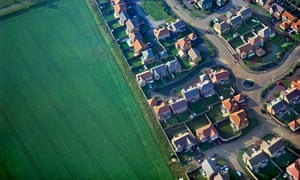
Developers are managing to dodge building tens of thousands of affordable homes in rural areas where they are most needed because of a legal loophole in planning laws, according to research by the homeless charity Shelter and the Campaign to Protect Rural England (CPRE).

The findings of a hard-hitting report by the two organisations will place added pressure on the housing, communities and local government secretary, Sajid Javid, to announce a tightening of the rules in a speech he is to deliver on Monday on how to change planning rules to tackle the housing crisis.

While developers are required by local authorities to provide a proportion of affordable homes – often about 30% – in any new development, many use “viability assessments” to negotiate down the number by arguing that the requirement would adversely affect their profit margins.

Last year Shelter conducted research showing that the use of viability assessments in 11 local authorities across England contributed to 79% fewer affordable homes being built in urban areas of England than would have been if local rules had been followed to the letter.

Now, with the CPRE, the charity has carried out studies highlighting the same problem in rural areas where prices are often high but wages low, meaning local residents and workers find themselves priced out of the market.


Loophole used to cut affordable housing in rural England – report | Politics | The Guardian


With the report from Shelter here:

It's all about 'confidential viability assessments', then:
Futures Forum: A solution to our housing problems: scrap viability assessments

As reported in the Times:

Loophole lets developers halve number of affordable homes


Jerome Starkey, Countryside Correspondent

March 3 2018, The Times


Confidential viability assessments allowed property developers to break promises made to obtain planning permission

Property developers have used a legal loophole to halve the number of affordable homes that they are building in the countryside.

A study of more than 150 new housing developments found that confidential viability assessments had been used to cut the number of affordable houses by 48 per cent. The assessments let developers break promises made to get planning permission, if they can show those commitments will eat into profits.


Loophole lets developers halve number of affordable homes | News | The Times

When it comes to 'confidential viability assessments', there is currently an FOI request with the District Council:
PegasusLife viability report - a Freedom of Information request to East Devon District Council - WhatDoTheyKnow
.
.
.