... A FORUM TO STIMULATE DEBATE ... ... JUST ADD A COMMENT AT ANY ENTRY BELOW... ... FOR THE SUSTAINABLE DEVELOPMENT OF TOWN AND VALLEY ...
Showing posts sorted by relevance for query save high street. Sort by date Show all posts

Wednesday, 26 September 2018

Save our high streets: "Isn’t it time our council did an audit and come up with a strategy for their future?"

Last night's BBC Spotlight news from the South West featured Goviers, the Sidmouth high street shop:
BBC One - Spotlight, Evening News, 25/09/2018

It will be shutting its doors for the last time:
End of an era for Govier’s of Sidmouth fine china shop stirs memories | Latest Sidmouth and Ottery News - Sidmouth Herald
Deep sadness as Goviers of Sidmouth to close its doors after 104 years | Latest Sidmouth and Ottery News - Sidmouth Herald

And as the BBC report made clear, there are several factors which has led to this - as a recent meeting also made clear:
Futures Forum: How to revive the health of Sidmouth's high street >>> making business rates 'more transparent, efficient and responsive to economic circumstances'
Futures Forum: How to revive the health of Sidmouth's high street >>> Does Sidmouth have too many charity shops?
Futures Forum: How to revive the health of Sidmouth's high street >>> a levy on internet shopping
Futures Forum: How to revive the health of Sidmouth's high street >>> "multi-storey or park-and-ride?"
Futures Forum: How to revive the health of Sidmouth's high street >>> "Packed meeting hears that business rates hitting our traders are 'not sustainable'." 


It's something which has been growing in concern:
Futures Forum: The shift in economic importance away from the high street "represents an opportunity for policymakers, businesses and communities to proactively choose a new direction"
Futures Forum: The 'Amazon tax' won't save the High Street > 'The nature of the offer on the high street is going to change over time. There's going to be less retail, more leisure, bars, community facilities.'

Earlier in the month, the Sunday Telegraph reported on the latest efforts: 

“RIP UP PLANNING LAWS TO SAVE THE HIGH STREET”

8 September 2018

“Coalition of retailers and landlords: rip up planning laws to save the high street:

A coalition of retailers, landlords, councils and pubs has called for planning laws to be reformed so that abandoned shops can be turned into cafes, galleries, gyms and other businesses more easily which could help rejuvenate Britain’s high streets.

It said empty units are often hard to let ­because it can be difficult and expensive to get permission to change their use and is calling for more flexibility in planning legislation to help compete with online businesses. 

The British Property Federation, Federation of Small Businesses, British Retail Consortium and Business Improvement Districts were among those calling for less red-tape with regards to planning, which will allow businesses the diversify their high street offerings.

The Local Government Association (LGA) said it is time to recognise “a contraction in retail floor space” might be needed to help high streets survive.

However, the Ministry for Housing, Communities and Local Government insisted high streets should specialise if they want to succeed.


Sunday Telegraph (Business & Money p1)

“Rip up planning laws to save the high street” | East Devon Watch
Coalition of retailers and landlords: rip up planning laws to save the high street - Telegraph

And at the Labour conference in Liverpool, there have been further calls to do something: 

Labour would scrap ATM charges in bid to 'save high streets'

Shadow business secretary is to announce policies to save their "slow agonising death"

Tuesday 25 September 2018


By Aubrey Allegretti, political reporter, in Liverpool


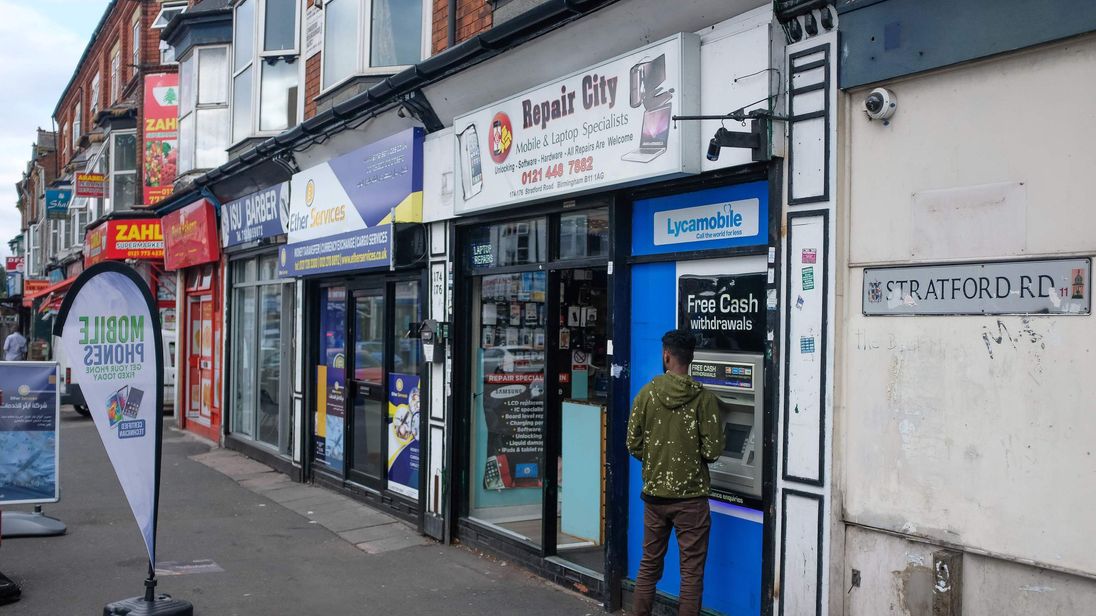
Charges to withdraw money from cash machines would be scrapped under a Labour government to "save Britain's high streets".

Attempts to stop their "slow agonising death" were announced by shadow business secretary Rebecca Long-Bailey with a range of measures - including stopping Post Office closures.

Sky News can reveal Labour would draw up a register of landlords of empty shops in every local authority.

And the party would deliver free public wi-fi in town centres, for those having a coffee or working in community spaces.

The other plans would see post offices owned by the government stopped from further franchising and closing.

Under-25s will also get free bus travel in local authorities where local bus services are either franchised or publicly owned.

Labour has also promised to "work with" councils to extend wi-fi roll-outs by commercial developers in public spaces.

And it will force shop landlords to make their identity and contact details public, creating an empty shop register to "make it easier to bring empty units into use".

A new annual business rates re-evaluation will also be introduced.

Labour would scrap ATM charges in bid to 'save high streets' - sky news

The East Devon Watch blog wanders if it's too late - or indeed, whether the local authorities are really that interested: 

RESUSCITATING HIGH STREETS – OR ARE THEY TOO FAR GONE ALREADY?

25 September 2018

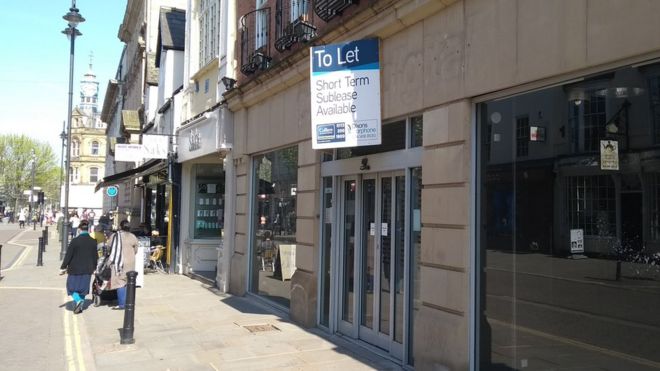
Owl is noticing more and more empty shops – even in places that seemed to be weathering the High Street decline so far (eg Sidmouth).

Isn’t it time our council did an audit of our high streets (empty shops, open shops, temporary pop-up shops, local-owned independent, chain stores, charity shops) to get a proper idea of just how bad this problem is in each town and what the mix says about the health of each town centre? And time to come up with a strategy for their future?

Tuesday, 30 October 2018

Will the budget save the High Street?

We need to do something to 'save our high streets':
Futures Forum: Is it the end of the road for the High Street?

One of the issues is business rates:
Futures Forum: How to revive the health of Sidmouth's high street >>> making business rates 'more transparent, efficient and responsive to economic circumstances'

The question is what we should be doing and who should be doing it:
Futures Forum: Councils and business rates: "their short-term focus on raking in money could end up destroying town centres weighed down by huge tax burdens"
Futures Forum: Save our high streets: "Isn’t it time our council did an audit and come up with a strategy for their future?"

The Chancellor has made a few suggestions:
Futures Forum: Is turning shops into homes the best way to save our high streets?
Futures Forum: Save our high streets > "Put things on the high street people want to do, and they’ll return"

He has also promised some rates relief:
Our Plan for the high street: Budget 2018 brief - GOV.UK

But will it work?


Philip Hammond vows to 'transform' UK high streets in Budget - YouTube

With comment from the BBC:

Budget 2018: Can Philip Hammond save the High Street?

Simon Jack

Business editor

29 October 2018
73comments


Almost one in five shops in Doncaster is empty

2018 has been an annus horribilis for the High Street. Big names like Toys R Us and Maplin have gone bust, while others like Debenhams and House of Fraser have closed city and town centre sites. Thousands of stores have shut, costing tens of thousands of jobs. Cries to save the High Street have become more shrill with every empty unit.

Many retailers have cried foul in the face of a perfect storm. There has been new competition from online firms that employ fewer staff and pay far lower business rates.

There are two ways you can level the playing field. Cut charges for the traditional retailers or increase them for online traders.

Mr Hammond has done a bit of both.
Tech giants face digital services tax
Hammond: Austerity coming to an end
At-a-glance summary: Budget key points


As trailed over the weekend, he has spent £900m knocking a third off the business rates bill of 500,000 small retailers. Very welcome to those who have premises with a rateable value below £51,000.

Second - he unveiled a new £400m digital services tax to be levied on the tech giants (those with revenues over £500m - here's looking at you Facebook and Google) on the money they make on digital services like advertising and streaming entertainment (but not online sales).

So will these two measures save the high street? Probably not - at least not on their own.

While some tenants and landlords welcomed today's move, the business rates discount for small retailers would certainly not have saved any of the high profile retail busts this year. Rateable values on prominent High Street sites are usually a lot higher than the £51,000 threshold. Industry body the British Retail Consortium was underwhelmed.

Chief executive Helen Dickinson said: "Rather than tinkering around the edges, struggling high streets require wholesale reform of business rates in order to thrive. The issue remains that the business rates burden is simply too high."


Budget 2018: Can Philip Hammond save the High Street? - BBC News

And from the Spectator:

Philip Hammond’s Budget plan won’t save the High Street


Martin Vander Weyer

30 October 2018

How much did Philip Hammond’s giveaway Budget help dying town centres? Not enough, say campaigners, but let’s give the Chancellor some credit. A one-third relief in business rates for retail properties with a rateable value of less than £51,000 means an annual saving of up to £8,000 for a huge number of small businesses; pubs where people still drink beer and spirits in old-fashioned style benefit from a duty freeze that one industry body says will ‘secure upwards of 3,000 jobs’; and there’s money to help convert disused premises into homes.

On the other hand, there was a £3 billion sting for the growing army of freelance ‘consultants’ and techies who contribute so much to the new urban economy but whom the Treasury suspects of helping companies that hire them to avoid payroll taxes. IPSE, a lobby group for the self-employed, called it ‘a short-term tax grab that will do lasting damage… by taxing out of existence the smallest and most agile businesses’. I suspect that’s right: abuse may be curtailed, but with too much collateral damage to those genuinely trying to go it alone.

Then there’s the ‘digital services tax’, aimed at the online advertising revenues of the likes of Google, Facebook and Twitter, but not at direct sales by Amazon et al. Even the Chancellor’s own figures say this will raise only £400 million a year: a Labour MP called it ‘pathetically tokenistic’. At best it’s a stumbling step in a direction other governments will follow, but I doubt it will make a jot of difference to the ragtag rearguard of bricks-and-mortar shopkeepers.

This is an extract from Martin Vander Weyer’s Any Other Business, which appears in the forthcoming issue of The Spectator


Philip Hammond’s Budget plan won’t save the High Street | Coffee House
.
.
.

Saturday, 23 June 2018

Save our high streets > government 'calls for evidence' in its review of the future of high streets

At the recent meeting between East Devon's MP and Sidmouth's businesses, several issues came up:
Futures Forum: How to revive the health of Sidmouth's high street >>> "MP vows to take town's high street woes to Government - and calls for future vision"

But the main complaint was the unfairness of the rates system:
Futures Forum: How to revive the health of Sidmouth's high street >>> "Packed meeting hears that business rates hitting our traders are 'not sustainable'."

There are other ideas for the revival of the high street - including getting people to live in town centres:
Futures Forum: How to revive the health of Sidmouth's high street >>> affordable housing in the town centre?

And making the high street more of a destination point:
Futures Forum: Save our high streets > "Put things on the high street people want to do, and they’ll return"

These are the ideas being put forward by the government's latest initiative:
High streets and town centres in 2030 inquiry launched - News from Parliament - UK Parliament

Although doing something about business rates is not one of them:


Planning rules could be ripped up in last-ditch bid to save Britain’s high streets

Ministers have launched a new review into ways to shore up struggling high street shops

PLANNING rules could be ripped up to breathe new life into Britain’s dying high streets, ministers declared today.
As exclusively revealed by The Sun, Communities Minister Jake Berry has launched a “call for evidence” into the future of the high streets. And he signalled the Government could ease planning restrictions to make it easier to convert empty shops to residential homes in struggling town centres – and bring in new “attractions”. He also vowed to review car park charges slapped on motorists.
As part of the review the public, for the first time, will be asked what “they want their high street to be like".
Mr Berry said: “My department will usher in a new era for high streets and town centres to bring them back into rude health.”

He added: “How do we bring people back to the high streets? We need to look at the all-round experience rather than just the product. This starts at the planning stage, creating attractive spaces where there’s a natural flow of people. And building new homes where it is quicker and easier for residents to walk to the store at the end of their road rather than ordering online.”
The move came as Debenhams announced a monster profit warning which saw its shares dive by almost 10 per cent. Thousands of jobs have already gone this year because of the collapse of chains such as Maplin and Toys R Us.
The Minister insisted he was confident in the future of the high street – given it had been with us since “the Middle Ages”.
But he was criticised yesterday by industry experts after appearing to rule out any shake-up to the business rate regime as part of his review.
He insisted the Government had already introduced £10billion-worth of business rate support. But sources claimed the Chancellor has ruled out any further concessions despite the collapse of big name chains.
Paul Turner Mitchell of Altus Group said: “It’s hugely disappointing that the High Streets Minister is completely silent on bricks n clicks business rates issues.”
The Sun last month revealed Tory backbenchers were calling on the Government to help cut the business rate bill suffered by high street stores by introducing a 3 per cent ‘sales tax’ on online giants such as Amazon.

Planning rules could be ripped up in last-ditch bid to save Britain's high streets - The Sun
.
.
.

Saturday, 18 February 2017

Revolt against business rates: UK entrepreneurs pay more than France and Germany combined

Local authorities are not happy about the incoming changes to business rates - mainly because of the uncertainty it will bring:
Futures Forum: County Council calls for "an urgent national review of local government funding" as "thousands of small businesses are set to be hammered by a rise in business rates"

A knock-on effect will be that NHS hospitals facing higher business rates will have to cut back on services - which local authorities will have to make up for:
Futures Forum: "Local authorities are going to become increasingly dependent on business rates and yet by so doing they will potentially drive up the costs of healthcare in their localities."

Meanwhile, actual businesses are going to be severely hit by hikes in business rates.

From today's Telegraph, 'Queen of Shops' Mary Portas comments:

Business rates are killing our shops. We should scrap them to save our high streets

MARY PORTAS 16 FEBRUARY 2017 • 10:00PM

In 2011 I was commissioned by the government to look at how we could save our high streets. Six years on and we were really making progress. So it’s strange to watch our leaders preparing to impose a new business rates revaluation that will cripple high-street shops. The tax bill which will hit retailers from April will be the single biggest blow to independent shops since the financial crisis. I would estimate that at least a third of them will die off.

Ministers say that most businesses will see their rates fall, and that’s true in areas where house prices haven’t increased. But that is no use to small businesses where they have. They will be destroyed by the new rates, some of which are truly astonishing.

Business rates are killing our shops. We should scrap them to save our high streets - Telegraph

Over the last six years, there has been a lot of effort made to 'save the High Street':
Futures Forum: Can anyone save the High Street?

And locally there has been a lot of concern voiced:
Futures Forum: Clone Town Sidmouth?
Futures Forum: "We don’t want a main shopping area of charity shops and coffee chains."

There is particular concern over competition from internet retailers: 
Futures Forum: Sidmouth high street and online shopping

And the FT reports on how the new business rates that will apply from April will skew competition further in favour of online retailers at the cost of high street shops
Rise in business rates favours online retailers over high street - Financial Times

Yesterday's Mirror had other retail pundits gunning for changes to the business rate changes:
Alan Sugar, Theo Paphitis and Mary Portas warn high street could be killed off as Theresa May faces revolt - Mirror Online

Things are getting personal:
Mary Portas brands minister a 'muppet' in rates row | Daily Mail Online

And last week's Observer reported from Devon. So much for the UK becoming a post-Brexit low-tax haven:

The high street was already under threat – and now this

Lucy Siegle 
Sunday 5 February 2017

Everyone seems to have a solution for fixing the high street, but nobody’s buying. Fifteen independent shops a day are lost and this genuinely pains me. Ever since I got my first Fisher-Price cash register, I’ve had a thing about bricks-and-mortar shops. The first true pangs of jealousy I ever felt were seeing a photo of my older cousin helping out in my great aunt’s hardware shop in Plymouth. Why wasn’t I being afforded that opportunity?

As soon as I could, I began working in retail. It’s a bug that has never entirely left me. When, a couple of years ago, my husband and I opened a gallery-craft shop in a pretty harbour town in Devon, it was like the fulfilment of a dream. For those who don’t understand the appeal: when you have your own shop you get to do a bit of everything – branding, stock control, marketing and, in our case, representing the local producers and craftspeople who made our stock.

You also learn much about human nature and patience. When one in three visitors announces: “Well, this is something a bit different”, you could happily throw a lamp base at them. But, instead, you just radiate goodwill. It feels a complete and constructive vocation. For a time, you even fool yourself that you can earn a living.

But the truth is the high street can’t really provide a sustainable livelihood for independent retailers who are disproportionately fined for being independent at every turn. And that’s about to get much worse. This is not even a managed decline of the British high street, more a blindfolded march into the abyss.


April’s new business rates will be the final nail in the coffin for many small shops. A re-evaluation means that overall high-street retailers will need to find an estimated extra £125m to pay increased rates (according to business rent and rates specialist CVS). This lumbers the average small shop with an extra £3,663 added to its rates bill and, as I can attest, there aren’t many that are going to be able to pick up their pricing guns with a devil-may-care shrug and get back to work.

Business rates, declared “idiotic” by novelist Jeanette Winterson (who is faced with closing her beautiful Spitalfields deli, Verde & Company), and “an unfit for purpose tax” by Mary Portas, have long been cause for consternation.

The system manages to be at once fiendishly complex and strangely binary. Instead of local authorities setting the rate (based on nuanced local market conditions, say), they are fixed values based on rentable space and surrounding commercial properties, doled out by central government. If you happen to be trading in a property hot spot (and, indeed, your brilliant business may have contributed to the success of that place, as in Southwold and Port Isaac, areas with notably good independent shops that will be hit by rate hikes), or big brands have arrived and now surround your enterprise, then your valuation goes up and you find yourself catapulted out of the small business relief zone. There are deductions for chains, exemptions for charity shops, but few workable graces offered to independent retailers in single shops.


But the revaluation works for the online retail giants. According to CVS analysis, the nine Amazon distribution centres in England and Wales will be able to knock £148,000 off their property tax liabilities this year (despite annual sales in excess of £6bn). Similarly, fashion retailer Boohoo gets 13% knocked off the bill for its distribution centre in Burnley; so it goes on.

If we were looking for a spectacular example of cognitive dissonance from a government that proclaims its commitment to supporting small businesses, I suggest this would be it. You might argue that that’s life. As we’ve all spent so long worrying about the demise of the high street, it might even be liberating to let it go. Also, some consumers, I sense, would like to shift wholesale to online shopping, where they can ruthlessly hunt down the cheapest without having to make eye contact with hungry-looking shopkeepers.

Or you might conclude the high street is an anachronistic ragbag of eccentric shops without currency in today’s slick, algorithmic-driven marketplace. (And I do find that everyone loves to criticise a shop.) I also concede that some shops aren’t very slick. (Although over the years I’ve developed a grudging respect for the Dr Fish Spa Experience in Norwood Road in south London, which appears to offer salad preparation units, musical instruments and in-store piranha pedicures.)


However, against all the odds, we do have some really brilliant shops in the UK, a testament to innovation, creativity and a lot of dedication. Because they hide their disadvantage so well, they make us forget that already UK entrepreneurs pay more in business rates than France and Germany combined.

Shame we don’t listen to them, because I’m sure these gifted shopkeepers have many other things they could do instead. Independent retailers have already been promised the moon on a stick. But when I look back at some of the initiatives, such as the Future High Street Forum, what I see is a panel including the CEOs of Costa Retail and the British Property Federation (neither known for championing the little guy). The major recommendations from the Portas Review – free parking and cheaper business rates – were shelved in the proverbial “file 13” by government. Instead, the retail establishment has channelled its energy, along with pension funds, into enticing mega-brands such as Pets at Home to take up spots in major retail parks.

So the true value of the high street remains undervalued, fiscally and culturally. Independent shops aren’t just things that appear in a community, they form the architecture for it (yes, even the annoying snotty interiors/gift shop that sells Alessi can openers). Independent retailers tick obvious boxes such as being local employers, but also, in the best cases, join the dots to local producers. You know, the type of stuff that’s actually priceless.

I will probably always be vulnerable to a bricks-and-mortar shop. But if you see me heading towards empty premises on a high street – at least before business rates are reformed – please divert me to the town square and encourage me to pile my money up there and set fire to it instead. It will save pain in the long run.


Sunday, 18 December 2016

Street trading, street markets and the High Street

Everybody wants a 'vibrant' centre for their town - the problem being what exactly makes it so.

Here are some thoughts - and 'evidence' - gathered over the last four years or so:

STREET MARKET/STREET TRADING:
Opinion is generally in favour of a 'street market': Futures Forum: Street Market Sidmouth
And yet opinion is against street trading - in Sidmouth: 'Essentially, the key outcomes of the consultation are that non-Sidmouth residents, non-Sidmouth town and parish councils (who took part), and street traders are overwhelmingly in favour of more markets and street trading.’ EDDC Street Trading Consultation. @ Streetlife AND EDDC Consultation about Street Trading @ Streetlife
Sidmouth doesn't want it: Futures Forum: Street trading in Sidmouth AND Councillors told: leave Sidmouth trading as it is - News - Exmouth Journal
But Exmouth does: Street trading and markets set to be allowed on every Exmouth street - News - Exmouth Journal AND Street trading - East Devon

FARMERS’ MARKET:
Opinion is clearly in favour of farmers’ markets: Why can't we have a farmers market by Fields? @ Streetlife AND Farmers Market. @ Streetlife
And there is of course the Vision Group's regular monthly Farmers’ Market @ Kennaway House: Vision Group for Sidmouth - Markets


INDEPENDENT SHOPS:
There is widespread opinion against chains: Chains to revitalise Sidmouth? @ Streetlife
In the USA, some cities have managed to keep them out: (Sept 2013) What It Means to Keep Chain Stores out of San Francisco - The New Yorker AND USA Today Cities put shackles.pdf AND (April 2006) Nantucket Votes to Ban Chain Stores From Downtown - The New York Times

CHARITY SHOPS/COFFEE SHOPS
Opinion is also generally against charity shops: Charity shops? Are there too many? @ Streetlife AND Interference on the High Street. @ Streetlife AND charity shops @ Streetlife
And coffee shop chains are not popular either: Futures Forum: Sidmouth: a town of charity shops and coffee shops? AND Futures Forum: "We don’t want a main shopping area of charity shops and coffee chains."

CLONE TOWN:
And there are fears for the future: Futures Forum: "Sidmouth's different shopping experience is disappearing."
It's clear that buying from local businesses is key: Futures Forum: Why buy local?

SUPERMARKET LEVY:

SMEs:
Small and Medium-sized enterprises are of great importance to the local economy: Futures Forum: "Statistics show us that small and medium-size businesses (including those in tourism) are our life blood."
Support comes from national campaigns: Futures Forum: Keep Trade Local... the campaign from the Federation of Small Businesses
And the push is coming locally too: Futures Forum: “Sidmouth needs more small shops”

HIGH STREET:
There are clearly fears over internet competition: Futures Forum: Sidmouth high street and online shopping

So, what makes a good high street? The Telegraph looked at this last week: Great British High Street Awards 2016: Is your high street as good as this?
And the awards have just been made: The Great British High Street Awards 2016: Winners | The Great British High Street


With a town just down the coast for Sidmouth to learn from perhaps:
Category: Coastal Community: Falmouth
In an incredibly tough category , Falmouth came out on top. Collaboration is key in this coastal community, with the local authority working closely with the BID and Town Team. The strong marketing and events on offer and the lowest vacancy rate in the South-West, blew our judges away. 
Falmouth named best coastal community | Coastal Communities Alliance
.
.

Sunday, 12 August 2018

The 'Amazon tax' won't save the High Street > 'The nature of the offer on the high street is going to change over time. There's going to be less retail, more leisure, bars, community facilities.'

One of the main complaints of retailers in Sidmouth is the 'unfair' business rates system which favours on-line companies:
Futures Forum: Councils and business rates: "their short-term focus on raking in money could end up destroying town centres weighed down by huge tax burdens"

The front pages of the weekend papers have been dominated by a proposed 'rescue package': 

Philip Hammond signals 'Amazon tax' as high street retailers feel the pressure

The chancellor said he was ready to consider an online-platform tax based on the ‘value generated’ by the company


Joe Watts Political Editor
1 day ago


Philip Hammond has said he will consider tax changes hitting online businesses to ensure there is a more level playing field for high street retailers. The hint at a so-called Amazon tax for online companies that sell products over the internet comes as high street stores – under pressure from soaring costs like business rates – demand a fairer system.

Just hours before the chancellor’s interview with Sky News, it was announced that retail giant House of Fraser was rescued in a last-ditch deal.


The chancellor said: “We want to make sure that the high street remains resilient and that we also make sure that taxation is fair between businesses doing business the traditional way and those doing business online.”

He explained that a change in the system “requires us to renegotiate international tax treaties because many of the big online businesses are international companies.” Mr Hammond added: “The European Union has been talking about a tax on online platform businesses based on the value generated. That’s certainly something we’d be prepared to consider.”


Several high profile retail chiefs have called publicly for a level playing field between bricks-and-mortar firms and online giants such as Amazon in terms of tax. They have pinpointed business rates as their biggest bugbear, labelling the tax archaic and not fit for purpose in the light of online competition. Amazon pays a minuscule amount in business rates despite its sales dwarfing those of high street retailers with similar property bills.

House of Fraser was bought out of administration by Mike Ashley of Sports Direct on Friday and is the latest in a long line of well known names to run into trouble. Poundworld, Maplin and Toys R Us have all gone bust this year, with several other firms such as Mothercare, Carpetright and New Look undertaking store closure programmes.


Philip Hammond signals 'Amazon tax' as high street retailers feel the pressure | The Independent

Looking at the broader picture, however: 

Mr Hammond pointed out that Britons are changing their shopping habits and increasingly flocking to the web to pick up what they want.
'More and more of us are buying online. Indeed, Britain has the biggest percentage of online shopping of any major developed economy. That means the high street will change. We're very clear that you have to support the high street through that process of change. The nature of the offer on the high street is going to change over time. There's going to be less retail, more leisure, bars, community facilities.'

Philip Hammond says UK could impose Amazon tax to save high streets | Daily Mail Online
Chancellor Philip Hammond considering 'Amazon tax' for online retailers - Sky News

Because it is not really the online giants who are to blame - but our changing shopping habits, as voiced by Janet Street Porter in the Independent: 

Consumers, not Amazon, are to blame for the death of the high street – we've chosen convenience over tradition

Instead of complaining about the minimal amount of tax these online giants pay, we need to shine a light on the calibre of people employed by HMRC to take them on. Are they up to the job?


Janet Street-Porter
Friday 3 August 2018 14:00

32 comments


Online shopping for household goods is impacting on iconic department stores like John Lewis, who are fighting for their lives ( AP )

Why am I not surprised that Amazon, in spite of increasing profits in the UK, managed to pay less corporation tax than it did last year? In the year to December 2017, its UK division (which handles warehouses and logistics) was told the company was liable for £4.6m in tax – a drop of around 50 per cent on 2016. Astonishingly, Amazon didn’t even have to pay the full amount, because it deferred £2.9m of the bill, meaning it only handed over £1.7m. The details of what Amazon pays to the UK government are hard to extract from its accounts, which are published in Luxembourg.

In the UK, Amazon employs around 20,000 people, and success means the work force is rising to 27,000. A new head office is an expense which must have helped to offset its tax liabilities. Another of its UK companies, Amazon Web Services, has almost doubled its revenue from £53m in 2016 to £99m last year – and yet only paid tax of £1.3m by filing profits of just £5m.

At the same time as there’s understandable outrage at the manner in which multinational companies like Amazon and Google “minimise” their tax liabilities by basing key parts of their business in low tax zones in the EU and elsewhere, an emotive campaign is being waged to “save our high streets”. It’s a mistake to link the two. We can’t blame Amazon for turning our high streets into dead zones, full of charity shops and boarded-up windows. We, the shoppers of the UK, have done that: every time we sit at home and click on a “buy” button on our laptops, another shop closes.

Fashions in everything – from breast size to wine – change with the centuries. Shopping is an activity which is no different. We have decided that our time is better spent on a keyboard placing an order for swimming shoes, bath salts, bio-oil or an audiobook than trudging around a shop, talking to an assistant, and then finding what we want isn’t in stock. We have reallocated how we spend our time, and shopping for basics (or even impulse buys) is not a priority.

High streets can’t be saved, not in their previous incarnation, when mum shopped every day and no one had a fridge, just a larder. People actually cooked their evening meal from scratch in those days. On Saturdays, men spent hours in ironmongers discussing screw sizes; every dad in my street wanted to emulate television handyman Barry Bucknell and build shelves, remodel fireplaces and put up room dividers. Those days will never return.Amazon’s fleet of automated warehouse robots

I am writing this in Long Melford, a delightful Suffolk small town which has a thriving high street with a beautician, antique stores, a butcher, a Co-op and chemist, several pubs, a village hall and a post office and newsagent. What it doesn’t have, in spite of the middle class population, is a greengrocer. That’s because, in spite of not wanting anything about picturebook Britain to change, the locals go to Tesco or Sainsbury’s down the road on the edge of Sudbury. That is a story repeated all over Britain as Tesco and retail giants systematically eliminate some (not all) small traders. Now the might of Amazon and online shopping for household goods is impacting on iconic department stores like John Lewis, who are fighting for their lives. Toys R Us, House of Fraser and Comet have all abandoned the unequal struggle.

Traditional retailers claim it’s an unequal playing field, that Amazon doesn’t have to buy property in town centres, pay staff wages or the rates they do. Amazon’s deliveries come from faceless boxes called (euphemistically) fulfilment centres, which are situated in industrial estates, and their workers are low paid, although the company does offer them a chance to participate in share deals.

Jeff Bezos, the founder of Amazon, is now the richest man on the planet. Does this annoy us, or should we just accept that he has removed a lot of niggles out of our lives? Recovering from my recent knee replacement, online shopping has been invaluable. When worthies tell me to stop, I laugh – there is zero chance of success with that particular campaign, particularly with older consumers and working women.

There’s no sign of online sales slowing down, in spite of wages flatlining. Online sales in May were nearly 20 per cent higher than the previous year. There was an astonishing rise of 74 per cent for gardening stuff bought online during the heatwave, everything from barbecues to loungers.

The battle we should be fighting is not to save our high streets – hopefully they will morph into residential and mixed-use zones, with primary schools and old people’s homes placed side by side, as well as specialist shops that are worth visiting because they sell products which are homemade, crafted, unique. Even pound shops are going to the wall because they don’t offer true value for money or a worthwhile shopping experience.

No, the real battle is to get HMRC to stop pussyfooting around companies like Amazon and Google, and doing special deals. Let’s shine a light on what goes on their HQ, and what calibre of people they employ to claim tax from these slippery giants. And the heads of these companies – like Amazon’s UK boss Doug Gurr – should stop making preposterous statements like his recent announcement that there could be “civil unrest” within two weeks if Britain left the EU without a deal.

That grandstanding approach reveals a sinister aspect to Amazon, Google, Facebook and co, the companies who have an increasing amount of our money and a direct link to our personal data. I suspect their bosses think this is the future: they are replacing governments and old-fashioned frontiers. They, not our democratically elected parliamentarians, will be shaping our future.

Amazon has already managed to whip our tax system into shape – so what next?


Consumers, not Amazon, are to blame for the death of the high street – we've chosen convenience over tradition | The Independent
.
.
.

Tuesday, 26 June 2018

Save our high streets > by entering them into the Great British High Street Awards 2018

The government has launched a consultation on the future of our high streets:
Futures Forum: Save our high streets > government 'calls for evidence' in its review of the future of high streets

The Ministry of Housing, Communities and Local Government have launched their annual High Street Awards:

CALL TO ENTER 2018 HIGH STREET AWARDS

  
Rural communities across the UK are being urged to back their local high streets by entering them into the Great British High Street Awards 2018.
Tun by the Ministry of Housing, Communities and Local Government, the awards recognise and celebrate local achievements on high streets, supporting the communities they serve.
The Great British High Street awards will also champion ‘Rising Stars’ – the most ambitious high streets which are taking a lead and working together to revive, adapt and diversify.
By shining a light on great examples of how high streets can meet the challenges of changing consumer behaviour, the awards will provide all communities with top tips for success.
Communities secretary James Brokenshire said: "The Great British High Street Awards acknowledge how vital high streets are to our nation.
"They are crucial in creating jobs, nurturing small businesses and driving local and regional economies.
"We want to celebrate the best examples of high streets, as well as those individual businessmen and women playing a leading role."
Mr Brokenshire said the government was committed to ensuring high streets continue to thrive and he was delighted to support this brilliant competition.
The awards, first held in 2014, have been simplified for 2018 with winning high streets to be named in England, Scotland, Wales and for the first time, Northern Ireland.
High Streets Minister Jake Berry said: "The Great British High Streets competition this year will celebrate the creativity of the many businesses in the UK which are providing the shops and services so vital to our economy."
The previous awards were hugely successful, proving the Great British public really cared about the centres of their cities, towns and villages, said Mr Brokenshire.
The 26 shortlisted entries in the Champion High Street category and 12 Rising Stars will be announced in October.
They will then go through to a public vote and be visited by a judging panel made up of industry leaders from across retail, property and business.
Britain’s best high street will be announced in November, with the winner receiving a £10,000 cash prize for a local community project.
Winners from each of the remaining nations will receive a £5,000 contribution to a street party or community project.
The awards can be entered here.


.
Call to enter 2018 High Street awards - Rural Services Network
.
.

Tuesday, 3 September 2013

Can anyone save the High Street?

On BBC2 we've just had the first of three in the series"Robert Preston Goes Shopping":

Robert Peston reveals how shopping in Britain was transformed over the 20th century. This episode charts how shopping was transformed from a chore to be endured in the 1950s into our favourite pastime by the 1980s.

BBC Two - Robert Peston Goes Shopping, Seduction

Plenty of people loathe them, but millions rely on them. Out-of-town superstores - bigger, uglier brothers of standard-sized supermarkets - are an inescapable part of the modern British landscape.

BBC News - How first out-of-town superstore changed the UK

There are continuing fears for the health of the high street:


Can anyone save the High Street?

Revitalising the UK’s high streets will be the centre of attention this week as Mary Portas updates her rescue plan. By James Hall .


Mary Portas told The Sunday Telegraph she is pleased with the work she has done since warning that our high streets are “in crisis”. 


When Mary Portas faces MPs on the communities and local government select committee on Monday afternoon, she will be her usual confident self.
It is 21 months since the self-styled Queen of Shops outlined her blueprint for the future of the high street, and she believes that solid progress is being made in regenerating some of Britain’s failing town centres.
But while the TV personality is likely to take a grilling by MPs in her stride, a more provocative challenge will present itself two days later. On Wednesday, Bill Grimsey, the former Wickes and Iceland chief executive, will unveil a rival vision.
His report will claim that Portas’s December 2011 review “promised the Earth but delivered little”. The former retailer claims Portas’s government-commissioned work was “little more than a PR stunt” for a tie-in television show.
The tussle will once again shine the spotlight on the UK’s high streets. If any more ballast were needed, a three-part BBC Two series – Robert Peston Goes Shopping – begins tomorrow night.
In one episode, Sir Stuart Rose, the former Marks & Spencer boss and the current Ocado chairman, gives a bleak prognosis of what should happen to Britain’s thousands of empty shops: “I say don’t try to resuscitate the dead. Concentrate on the living and make the living better.”
So amid all this gloom, whose vision for the future of the high street is right?

Can anyone save the High Street? - Telegraph


The British high street: why it's time for the chains to put something back

It will take resources and leadership, but we simply can't turn our backs on high streets, says author of Grimsey review
Hastings town centre
Bil Grimsey says big business can give high streets a chance not just to survive but to succeed. 
Photograph: Martin Argles for the Guardian
There is a school of thought that's starting to harden into a weary consensus. It goes like this: the high street is doomed. There's nothing we can do about it. We need to stop wasting time on rundown towns full of high streets with boarded-up shops and focus on places where the tills are still ringing and profits are there to be had.
"Don't try to resuscitate the dead," says the Ocado chairman, Sir Stuart Rose, in the BBC series, Robert Peston Goes Shopping. "Concentrate on the living and make the living better."
From a business perspective, I understand this thinking. There are many towns in Britain where crippling overheads make it very hard to make a living. Weak consumer confidence makes the job even harder. But from a social perspective this kind of thinking is disastrous. It creates desolate high streets and alienated communities. It breeds anger and a sense of hopelessness that ends up costing the taxpayer a great deal in the long run.
I've come to the conclusion that we simply can't turn our backs on high streets. Transforming the most challenging high streets into vibrant places where people feel a sense of belonging and community won't be easy. Mary Portas discovered that. But if we simply shrug and accept failure then we're storing up much bigger problems.
The answer, of course, is not to try and rekindle the glories of yesteryear and focus just on shops. High streets will have to be redesigned around community needs. Education, housing, leisure, training, arts and health will all have a big role to play. But making this transformation won't be easy and it'll require a much bigger impetus than the snail pace of ministers who have spectacularly failed to get to grips with the problem.
It will also require significant resources, serious muscle and leadership. That's why I believe the time has come for the major high street players – who've all benefited hugely from a 25-year consumer boom – to put something back into the high streets they're leaving behind to move their stores to an out of town mega-mall culture that's only going to become more dominant.
As someone who's run major retail organisations and spent 45 years in the industry I know how well the big chains have benefited. Their shareholders have enjoyed extremely good returns and continue to do so. Last year Tesco earned £1.4bn of profits, Next £508m and Sainsbury £614m, for example. If a tiny portion of their turnover – we're calling for 0.25% of sales – was invested through a one-off levy in a local economic development fund this could sponsor a wave of social enterprises and new ventures to help dramatically transform the high street.
We estimate this levy would raise around £550m. It would achieve a lot more than the £18m spent on Portas Pilots and leave a lasting and powerful legacy.
Of course, getting businesses to entertain this idea – and they will naturally be resistant – will require a lot of work. They'll want clear assurances that the fund would be wisely spent. It would have to be administered by trustees that include some of the biggest contributors.
There's no denying though that this is achievable. The biggest businesses can and should take it upon themselves to do what government has failed to do: give our high street, a great British institution admired the world over, a fighting chance of not just surviving but building a new model at the heart of communities that will last.
• Bill Grimsey, the former boss of now defunct DIY chain Focus and Big Food Group, the former owner of the Iceland food retailer, launches the Grimsey review, an assessment of the problems for the high street, on Wednesday
The British high street: why it's time for the chains to put something back | Bill Grimsey | Business | theguardian.com
Large retail chains urged to pay levy to help revive high streets | Business | The Guardian
.
.
.